
When a disaster hits-whether it’s a hurricane, wildfire, or power grid failure-having medicine on hand can mean the difference between life and death. But what if that medicine is past its expiration date? Many people assume expired drugs are useless or even dangerous. The truth is more complicated. In real emergencies, where pharmacies are closed, supply chains are broken, and help is hours or days away, expired medication may be your only option. Knowing when and how to use it safely isn’t about breaking rules-it’s about making smart, evidence-based choices under pressure.
What Does an Expiration Date Really Mean?
Expiration dates aren’t arbitrary. They’re based on stability testing required by the FDA since 1979. Manufacturers test how long a drug keeps at least 90% of its labeled potency under normal storage conditions. That doesn’t mean the drug suddenly becomes toxic or useless the next day. In fact, the FDA’s Shelf Life Extension Program (SLEP), which tested over 120 drugs for the military, found that 88% of them remained stable for years beyond their labeled expiration-when stored in cool, dry, sealed conditions. But here’s the catch: those tests were done in controlled military warehouses. Your medicine cabinet? Not the same. Heat, humidity, and moisture from flooding or power outages can degrade drugs much faster. A pill sitting in a hot attic for a week after a storm isn’t the same as one kept in a climate-controlled lab.Not All Medicines Are Created Equal
Some drugs hold up better than others. Solid pills like acetaminophen or ibuprofen often retain 90%+ potency for years past expiration if kept dry and cool. A 2019 University of Utah study found acetaminophen still effective up to four years past its date. Aspirin? It slowly breaks down into salicylic acid, which can irritate your stomach-but it’s not deadly. On the other hand, some medications degrade quickly and dangerously. Insulin loses about 10% of its potency per month after expiration at room temperature. Epinephrine auto-injectors (EpiPens) lose 2-4% per month. That might sound small, but in anaphylaxis, even 30% less potency could mean the difference between survival and death. Nitroglycerin tablets, used for heart attacks, lose half their strength within three months of opening-even before expiration. Antibiotics like amoxicillin are a gray zone. Studies show they retain about 80% efficacy up to a year past expiration. But if you’re treating a life-threatening infection, that 20% drop could mean treatment failure-and antibiotic resistance. The NIH found expired ciprofloxacin still worked against E. coli at two years out, but only 42% as effective against Pseudomonas, a tougher bug. That kind of variability makes guessing risky.The Real Danger: Contamination, Not Just Weakness
The biggest threat from expired meds isn’t reduced strength-it’s contamination. If a pill bottle got wet during a flood, or a liquid antibiotic was left in a car at 90°F for two days, bacteria and mold can grow inside. The FDA found that 92% of medications exposed to floodwater for 24 hours showed bacterial contamination. That’s not about potency-it’s about poisoning yourself. Some drugs actually become toxic when they break down. Tetracycline, an old-school antibiotic, degrades into compounds that can damage kidneys and cause Fanconi syndrome. Since 2000, 17 documented cases have been linked to expired tetracycline use. That’s why you never, ever take old tetracycline-even if it looks fine.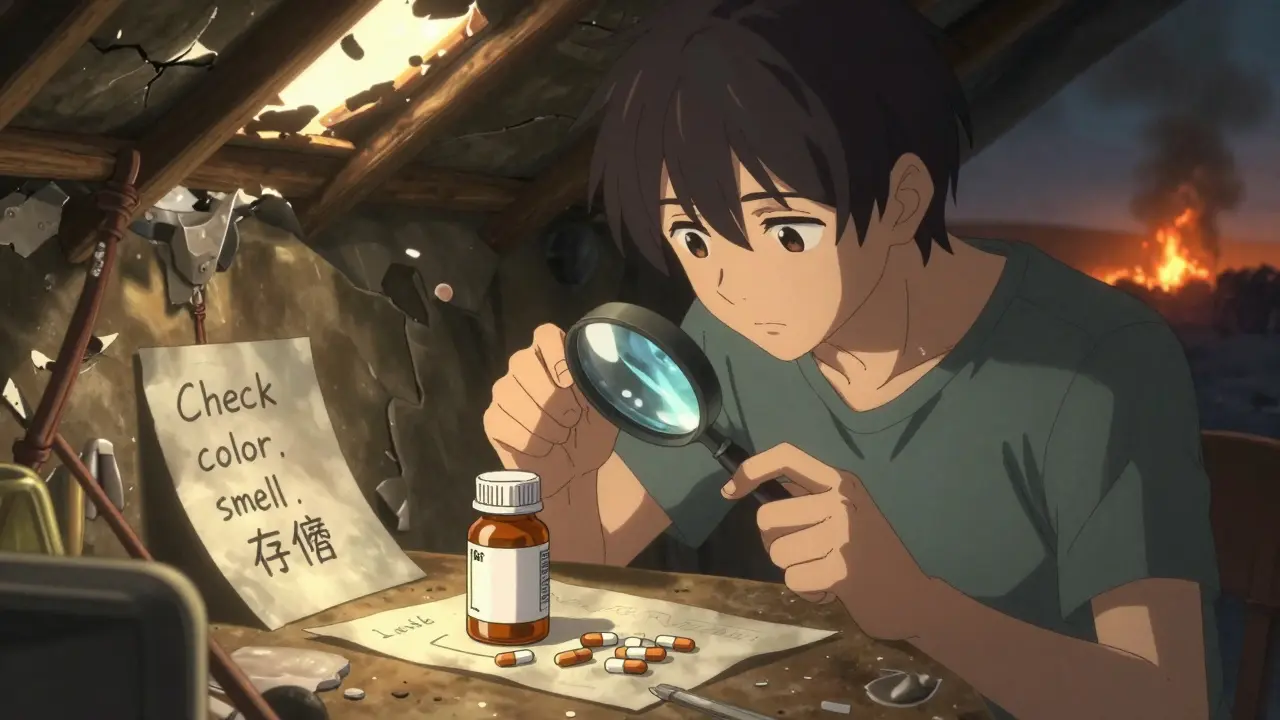
When Is It Okay to Use Expired Medicine?
There’s no universal rule. But emergency guidelines from the American Pharmacists Association and the FDA give us a practical framework:- Life-threatening emergencies with no alternative: If someone is having an asthma attack and has an expired albuterol inhaler, using it is better than doing nothing. Studies from Hurricane Ida show 50-70% symptom relief from expired inhalers used within a year of expiration.
- Chronic conditions with no access to replacement: If your blood pressure meds are expired and you can’t get new ones, taking them for a few days is likely safer than going without. But monitor symptoms closely. A 2020 California wildfire study found 37% of people using expired lisinopril had inadequate blood pressure control.
- Non-critical symptoms: Headaches, fever, or mild pain? Expired ibuprofen or acetaminophen is usually fine. The same study found 89% of evacuees got relief from expired painkillers.
What to Avoid at All Costs
Some drugs should never be used past expiration, even in emergencies:- Insulin: Potency drops fast. Using expired insulin can lead to dangerous high blood sugar or diabetic ketoacidosis.
- Epinephrine: A weak EpiPen might not stop anaphylaxis. If you must use one, double the dose if possible (but only if you’re trained).
- Warfarin: This blood thinner has a narrow safety window. Even small changes in potency can cause deadly bleeding or clots.
- Tetracycline: Toxic degradation products are real. Never use.
- Any liquid medication exposed to heat or moisture: Bacteria grow fast. Throw it out.
How to Assess Before Use
If you’re forced to use expired medicine, follow these five steps:- Check the physical condition. Discard if it’s discolored, crumbly, smelly, or has particles in liquid form. The USP found 73% of degraded meds show visible signs.
- Review storage history. Was it exposed to temperatures above 86°F (30°C) for more than 48 hours? Or flooded? If yes, toss it.
- Know the drug class. Use the risk-benefit scale: critical meds (insulin, EpiPen) = high risk; essential meds (blood pressure, asthma) = moderate risk; non-essential (painkillers) = low risk.
- Time since expiration matters. For most pills, under one year is safer. After two years, assume significant degradation.
- Get telehealth advice if possible. Even a 5-minute video call with a pharmacist can guide you. But only 38% of rural disaster zones had telehealth access in 2022.
What’s Being Done to Fix This?
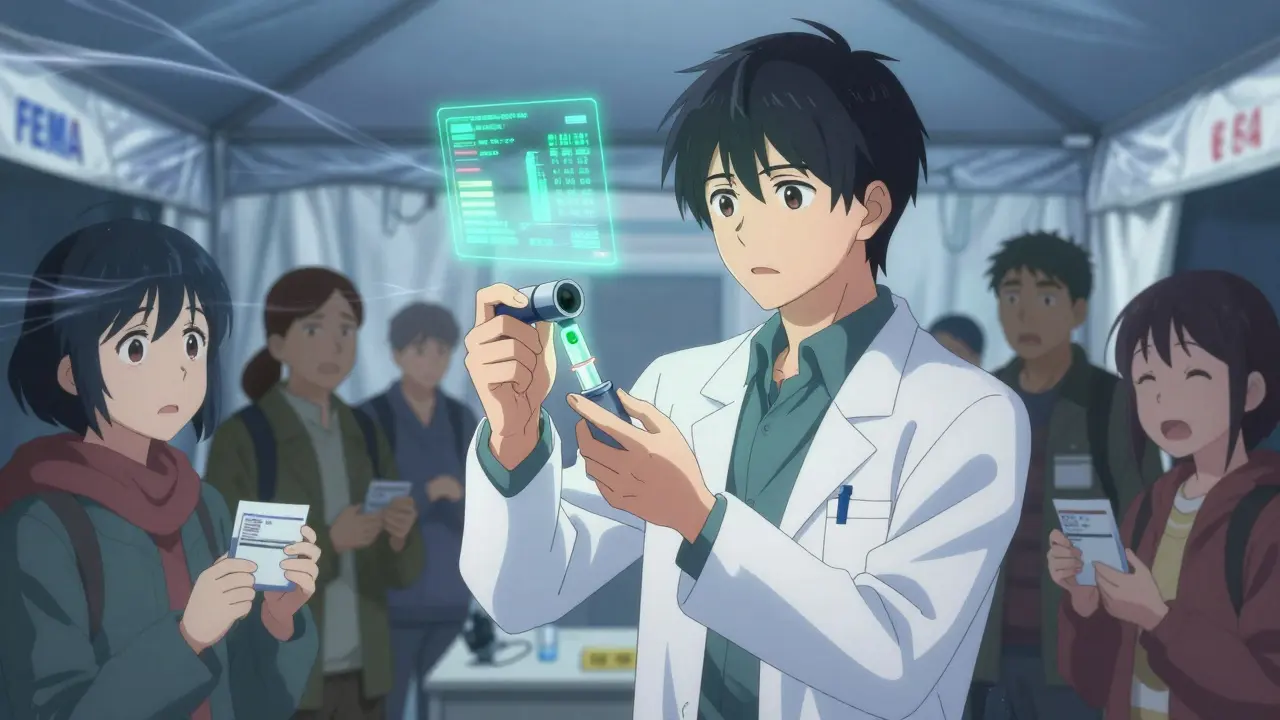
The system is catching up. In 2023, the FDA updated its emergency guidance to include specific advice for expired meds during disasters. During the Maui wildfires, 1,200 people received clinical guidance on using up to six-month-expired antibiotics. The CDC’s 2024 Public Health Emergency Response Guide introduced a color-coded decision matrix to help responders make quick calls. Pharmacies in 48 states can now legally give out 72-hour emergency supplies without a prescription during declared disasters. And the NIH is funding field-testing of portable spectrometers that can measure drug potency in under five minutes-prototype testing starts in 2024 hurricane season. But big gaps remain. A 2023 Government Accountability Office report found 63% of state emergency plans don’t mention expired meds at all. Only 61% of community pharmacists have completed required emergency training. And while 297 drug shortages are active as of late 2023, most involve critical meds like insulin, epinephrine, and antibiotics.What You Can Do Now
Don’t wait for a disaster to think about this. Here’s how to prepare:- Rotate your meds. Check your medicine cabinet every six months. Replace anything expired, especially insulin, epinephrine, or heart meds.
- Store properly. Keep meds in a cool, dry place-not the bathroom or car. A sealed container in a drawer is better than a window sill.
- Know your critical meds. If you rely on insulin, warfarin, or asthma inhalers, keep a 30-day backup if possible.
- Learn to recognize degradation. If a pill looks odd, smells wrong, or a liquid is cloudy, don’t use it.
- Know local resources. Find out if your county has a drug take-back program. Only 42% of U.S. counties have permanent collection sites.
Disasters don’t wait for perfect conditions. Sometimes, the safest choice isn’t the cleanest one-it’s the one that keeps you alive. Understanding when and how to use expired medication isn’t reckless. It’s responsible. It’s prepared. And in a crisis, that’s what matters most.
Is it safe to use expired insulin during a disaster?
No. Insulin loses potency rapidly-about 10% per month after expiration at room temperature. Using expired insulin can lead to dangerously high blood sugar, diabetic ketoacidosis, or long-term complications. If you have no access to new insulin, seek emergency medical help immediately. Do not rely on expired insulin as a substitute.
Can I use expired antibiotics if I have no other option?
It depends. Antibiotics like amoxicillin or ciprofloxacin may retain enough potency to work if they’re less than a year past expiration and stored properly. But they’re not reliable. Using them increases the risk of treatment failure and antibiotic resistance. If you must use them, take the full prescribed course and monitor for worsening symptoms. Never use expired antibiotics for serious infections like pneumonia or sepsis.
What should I do with expired medication if I can’t use it?
Never flush most medications down the toilet or sink. The safest option is a drug take-back program. If none are available, mix pills with coffee grounds or cat litter in a sealed container and throw them in the trash. Remove personal info from bottles. For epinephrine, insulin, or other injectables, check with local pharmacies-they often have special disposal bins.
Are there any legal protections if I use expired medication in an emergency?
Yes. Under the 2022 PREP Act amendments, individuals who use expired medication during a federally declared emergency are protected from liability if they act in good faith and without gross negligence. Pharmacists in 48 states can legally dispense emergency supplies without a prescription. This protection exists to encourage people to use life-saving meds when no alternatives exist.
How can I tell if my medication has degraded?
Look for changes: tablets that crumble, change color, or smell odd; liquids that are cloudy, discolored, or have particles; inhalers that don’t spray properly. If the medication was exposed to floodwater, temperatures above 86°F for over 48 hours, or direct sunlight, assume it’s degraded. When in doubt, throw it out.
Do pharmacies offer emergency supplies during disasters?
Yes. In 48 states, pharmacists can legally dispense up to a 72-hour emergency supply of most medications without a prescription during a declared emergency. Chain pharmacies participate in these programs at a 92% rate. If your pharmacy is open, ask. If it’s closed, check with nearby clinics, FEMA centers, or public health offices-they often have emergency medication caches.




Scott Easterling
Wow, so now we're just supposed to take expired meds like it's a survival game? I mean, I get it, but what's next? Drinking bleach if your Tylenol's old? The FDA's own data says 88% of drugs are fine past expiration, but you're acting like every pill is a ticking bomb. This whole thing feels like fearmongering dressed up as advice.
Janelle Pearl
I’ve been through three hurricanes, and I’ll tell you this: I used expired epinephrine once. Didn’t work. Had to drive 45 miles to a clinic. Don’t gamble with your life. The article’s right - if it’s insulin, EpiPen, or anything heart-related, don’t risk it. I keep a 30-day backup now. It’s not paranoia. It’s peace of mind.
Morgan Dodgen
The SLEP program? That’s a military lab fantasy. Real people store meds in humid bathrooms, hot cars, and flooded basements. The FDA’s 88% stat is a lie if you’re not a Navy SEAL. And don’t get me started on the 'color-coded matrix' - that’s bureaucratic theater. Who’s gonna have a smartphone when the grid’s down? This whole piece is corporate PR wrapped in bullet points.
Melba Miller
I'm sick of this 'emergency preparedness' nonsense. You think people in Puerto Rico or Texas are sitting around reading FDA guidelines after a storm? They're using what they've got. The real problem? Pharma companies profit from expiration dates. They don't want you to know drugs last longer. It's a scam. Stop being so scared. Use the damn pills. Your life matters more than a label.
Neeti Rustagi
Dear fellow citizens, I appreciate the detailed analysis presented herein. However, I must respectfully emphasize that the integrity of pharmaceuticals is governed by stringent scientific protocols, and deviation from these standards may lead to unforeseen consequences. In my professional opinion, even marginal degradation may compromise therapeutic efficacy, particularly in vulnerable populations. One must prioritize safety above expediency.
Peter Kovac
The article cherry-picks data. Yes, 88% of drugs in SLEP were stable - but those were stored at 25°C with 60% humidity in sealed aluminum foil. Your average medicine cabinet? 35°C, 80% humidity, and light exposure. That’s not 'stable' - that’s a chemical reactor. And the 2019 University of Utah study? Sample size was 12 pills. This isn’t science. It’s anecdotal confidence.
APRIL HARRINGTON
I used expired amoxicillin after Harvey and it saved my kid’s life 🙌 I don’t care what the FDA says - real life doesn’t follow manuals. If you’re too scared to use it, you’re not prepared. Period. My grandma took expired aspirin for 10 years and lived to 98. You’re overthinking this
Dan Mayer
I think the real issue is people dont even know how to read expiration dates anymore. Like, I had a bottle of ibuprofen that said 04/2023 and I thought that meant april 2023 so I used it in 2024. Turns out it was april 2023. I was so dumb. But it worked. So maybe the system is just broken. Not the meds.
Mantooth Lehto
I had a panic attack during the wildfires and used my expired inhaler. It didn’t help. I cried in the car for 20 minutes. Then I called 911. Don’t wait. Don’t hope. Don’t be brave. Just call. They’ll help you. I’m still traumatized. Please don’t do what I did. 😭
Leon Hallal
I don't care about studies. I used expired insulin after the power went out. My blood sugar went to 420. I almost died. Don't be a hero. Your life isn't worth a 10% potency drop. If you're thinking about using expired insulin, you're already in the wrong place.
Robert Bliss
I used expired painkillers after the earthquake. Felt fine. No side effects. I think people freak out too much. If it looks and smells normal, and it's only a few months out, go for it. We're not talking about poison here. We're talking about a pill that might be 95% as good. Big deal.
rafeq khlo
The government wants you to believe drugs expire so you keep buying them. The real truth is they are designed to degrade. The pharmaceutical industry is a cancer. They know insulin lasts 5 years. They just don’t want you to know. I have 12 vials from 2018. Still works. They are lying to you
Tom Sanders
I read this whole thing. Honestly? Too much. Just throw out the bad stuff. Get new ones. It’s not worth the risk. I don’t need a 15-paragraph essay to tell me not to take expired antibiotics. I know. Just don’t.
Judith Manzano
I love how this article doesn’t just say 'don't use expired meds' but actually gives real, practical advice. I’ve been storing my meds in a sealed plastic container in my basement since last flood. It’s not perfect, but it’s better than the bathroom. I feel way more prepared now. Thank you for not scaring me - just informing me.
Philip Mattawashish
The real tragedy isn't expired medication - it's that we live in a society where people have to choose between dying and taking a pill with a date on it. We’ve normalized scarcity. We’ve turned survival into a spreadsheet. If your life depends on whether your insulin is 3 months past expiration, then the system has already failed. No amount of 'practical frameworks' fixes that. We need healthcare, not hacks.