
Imagine standing in your kitchen, holding two identical white bottles. One contains your morning blood pressure medication; the other is a sleeping pill you take at night. The labels are tiny, printed in standard font that looks like a blur to you. You reach for what you think is the right one, but without clear visual cues or distinct markings, the risk of taking the wrong dose-or the wrong drug entirely-is real. This isn't just a hypothetical scenario; it’s a daily reality for millions of people living with low vision or hearing loss.
Medication errors among sensory-impaired individuals are not rare accidents. They are systemic failures. Studies show that visually impaired individuals are 1.67 times more likely to experience medication errors than their sighted counterparts. In the UK alone, approximately 1.8 million people face these risks daily. The problem isn’t just about convenience; it’s about survival. When packaging, labeling, and delivery systems fail to accommodate sensory impairments, the consequences can range from minor discomfort to hospitalization or worse.
The Hidden Dangers of Standard Packaging
Most prescription bottles are designed for people with full sensory function. For someone with low vision, standard labels often use 7-10 point fonts-far below the 18-point minimum recommended by accessibility guidelines. Color distinctions between pills are subtle or nonexistent. A Malaysian study involving 200 visually impaired participants found that while tablets and capsules were manageable for 82% of users, liquid preparations and eye drops posed significant challenges, with success rates dropping to 47% and 39% respectively due to measurement difficulties.
For those with hearing loss, the issue shifts from visual identification to communication breakdowns. Pharmacy environments are often noisy. Verbal counseling instructions from pharmacists can be missed entirely if the patient cannot hear them clearly. Auditory alerts from medication reminder devices may go unnoticed. These gaps create dangerous feedback loops where patients don’t realize they’ve made an error until symptoms appear.
| Sensory Impairment | Primary Challenge | Success Rate (Study Data) |
|---|---|---|
| Low Vision | Reading small labels, distinguishing pill colors/shapes | 59% mistakenly take expired drugs |
| Hearing Loss | Missing verbal instructions, auditory alerts | High risk in noisy pharmacies |
| Both | Complex regimens requiring multi-sensory confirmation | 73% fail to confirm correct medication |
Simple Low-Tech Solutions That Work
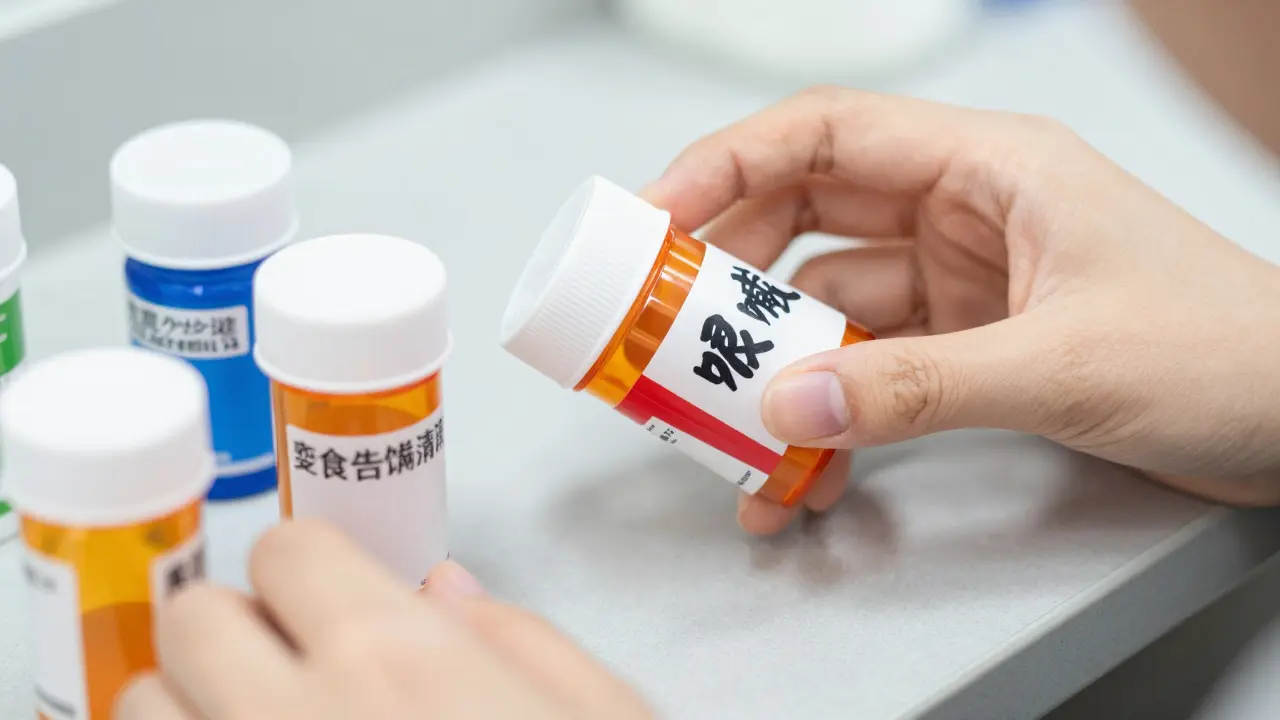
You don’t always need expensive technology to improve medication safety. Simple, low-tech strategies can make a significant difference. One effective method is color-coding prescription bottles. Use red markers for morning doses and blue for evening doses. Pharmacist surveys indicate this approach achieves approximately 78% effectiveness. Another option is using rubber bands around bottles to indicate frequency-one band for once-daily, two for twice-daily. While less precise (65% effectiveness), it provides a tactile cue that doesn’t rely on vision.
Labeling AM/PM directly on the bottle with a black marker takes only 30 seconds per medication. Applying high-contrast tape or stickers can also help distinguish between similar-looking containers. The key is consistency. Choose a system you can stick with and apply it uniformly across all your medications.
- Color-Coding: Assign specific colors to different times of day or medication types.
- Rubber Bands: Wrap bands around bottles to indicate dosage frequency.
- High-Contrast Markers: Use thick black markers to write large, bold letters on labels.
- Tactile Stickers: Apply raised dot stickers to differentiate between similar pills.
Electronic Aids and Smart Devices
When low-tech solutions aren’t enough, electronic aids offer enhanced reliability. Devices like the Talking Rx provide 60 seconds of customizable verbal directions, achieving 92% effectiveness in improving medication adherence among test subjects. Basic electronic organizers start at $29.99, while advanced systems with voice recognition cost up to $199.99. These devices often include alarms, reminders, and even connectivity features that notify caregivers if a dose is missed.
Blister cards and color-coded pill boxes work well for simple regimens but struggle with complex schedules. Braille labels are highly effective (85%) for braille-literate users, but penetration remains low (15%) because many adults lose vision later in life and never learn braille. Electronic solutions bridge this gap by providing audio feedback regardless of literacy level.
However, adoption comes with a learning curve. Patients typically need 2.7 weeks to adapt to new systems. Color-coding requires the least training (1.2 weeks), while electronic organizers take longer (4.3 weeks). Patience and practice are essential during this transition period.
Working With Your Pharmacist
Your pharmacist is a critical partner in medication safety. According to guidelines from the American Foundation for the Blind (AFB), pharmacists should spend an additional 3-5 minutes per visually impaired patient during dispensing to ensure proper labeling and counseling. Unfortunately, only 28% of pharmacies routinely do this. You have the right to request accommodations.
Ask your pharmacist to:
- Use large-print labels with high-contrast lettering.
- Avoid glare-inducing materials like shiny tape on labels.
- Provide verbal descriptions of pill shape, color, and markings.
- Implement consistent coding systems across all prescriptions.
- Offer braille labels if you are braille-literate.
If your current pharmacy doesn’t support these practices, consider switching to one that does. Some major chains have standardized protocols, though only 17% currently implement them consistently. Don’t hesitate to advocate for yourself-it’s your health on the line.

Regulatory Gaps and Future Improvements
Despite growing awareness, regulatory frameworks still lag behind. In the US, the Americans with Disabilities Act requires reasonable accommodations, but specific medication labeling standards remain voluntary. The FDA’s guidance lacks mandatory accessibility requirements. Similarly, in the UK, the Medicines and Healthcare products Regulatory Agency (MHRA) has acknowledged opportunities for improvement but hasn’t established concrete timelines for change.
The Safety Gap report highlighted that only 8% of medicine packaging includes accessibility features beyond basic braille names-and crucial elements like dosage instructions are frequently omitted. Without regulatory mandates, adoption will remain inconsistent. However, progress is being made. The AFB plans to launch a pharmacy certification program for accessibility compliance in 2024, and the RNIB is developing a standardized labeling system scheduled for rollout in 2025.
Industry experts predict a 35% increase in demand for accessible medication solutions by 2028 due to aging populations. Funding remains a barrier, but as awareness grows, so does pressure on manufacturers and regulators to act. Until then, proactive steps by patients and healthcare providers are essential.
Practical Steps You Can Take Today
Start by assessing your current medication routine. Identify pain points where confusion arises. Are you struggling to read labels? Missing verbal instructions? Once you pinpoint the issues, choose a solution that fits your lifestyle. Whether it’s color-coding, investing in an electronic organizer, or working closely with your pharmacist, every step counts.
Educate your family members and caregivers about your needs. Share your chosen system with them so they can assist when necessary. Keep a written record of your medications, including dosages and schedules, in an accessible format. If possible, use digital tools that sync with your device for easy reference.
Remember, medication safety is not just about avoiding mistakes-it’s about maintaining independence and confidence in managing your health. By implementing practical strategies and advocating for better systems, you can reduce risks and live more securely.
What are the most common medication errors for people with low vision?
Common errors include taking the wrong medication due to indistinguishable packaging, misreading dosage instructions, and accidentally consuming expired drugs. Studies show 59% of visually impaired individuals have mistakenly taken expired medications, and 73% fail to confirm they’ve taken the correct pill.
How can I make my medication bottles easier to identify?
Use high-contrast markers to label bottles with large, bold text. Apply color-coded stickers or rubber bands to indicate time of day or frequency. Consider tactile stickers or raised dots for non-visual identification. Ensure labels avoid glare-inducing materials.
Are electronic medication organizers worth the investment?
Yes, especially for complex regimens. Devices like Talking Rx achieve 92% effectiveness in improving adherence. Basic models start at $29.99, while advanced ones with voice recognition cost up to $199.99. They require a 4.3-week learning curve but offer long-term reliability.
What should I ask my pharmacist for better medication safety?
Request large-print labels with high-contrast lettering, verbal descriptions of pills, consistent coding systems, and braille labels if applicable. Ask them to spend extra time explaining your regimen and ensuring you understand how to manage it safely.
Why don’t more pharmacies follow accessibility guidelines?
Current regulations lack mandatory accessibility standards, making implementation voluntary. Only 17% of major chain pharmacies have standardized protocols. Additionally, reimbursement structures don’t compensate for the extra time needed to accommodate sensory-impaired patients.