Imagine you're a pharmacist. You dispense a generic version of a common blood pressure medication, but by the time you process the insurance claim, you realize the reimbursement check is actually lower than what you paid to buy the drug from your wholesaler. This isn't a rare glitch; it's a systemic reality for many independent pharmacies. The way we pay for medicine isn't just about the price on the sticker-it's a high-stakes game of laws, contracts, and middle-men that determines whether a pharmacy stays open or shuts its doors.
The Legal Bedrock: Hatch-Waxman and Generic Entry
You can't talk about generic payments without mentioning the HHatch-Waxman Act. Passed in 1984, this law changed everything. Before this, generic companies had to conduct nearly the same expensive clinical trials as the original brand. The Drug Price Competition and Patent Term Restoration Act (its formal name) created the abbreviated new drug application (ANDA) pathway. Essentially, if a generic maker could prove the drug was "bioequivalent," they could skip the redundant trials and hit the market faster.
This law created the very existence of the generic market we see today, where about 90% of all US prescriptions are generics. However, it also created a tension point: patent protections. When patents expire, the floodgates open for generics, and that's where the reimbursement fight begins. Some brand-name companies try to stall this through "pay-for-delay" deals, paying generic makers to stay off the market. The Federal Trade Commission keeps a close eye on these, as they artificially keep prices high by blocking the generic substitution that laws are designed to encourage.
Who Actually Controls the Money? The Role of PBMs
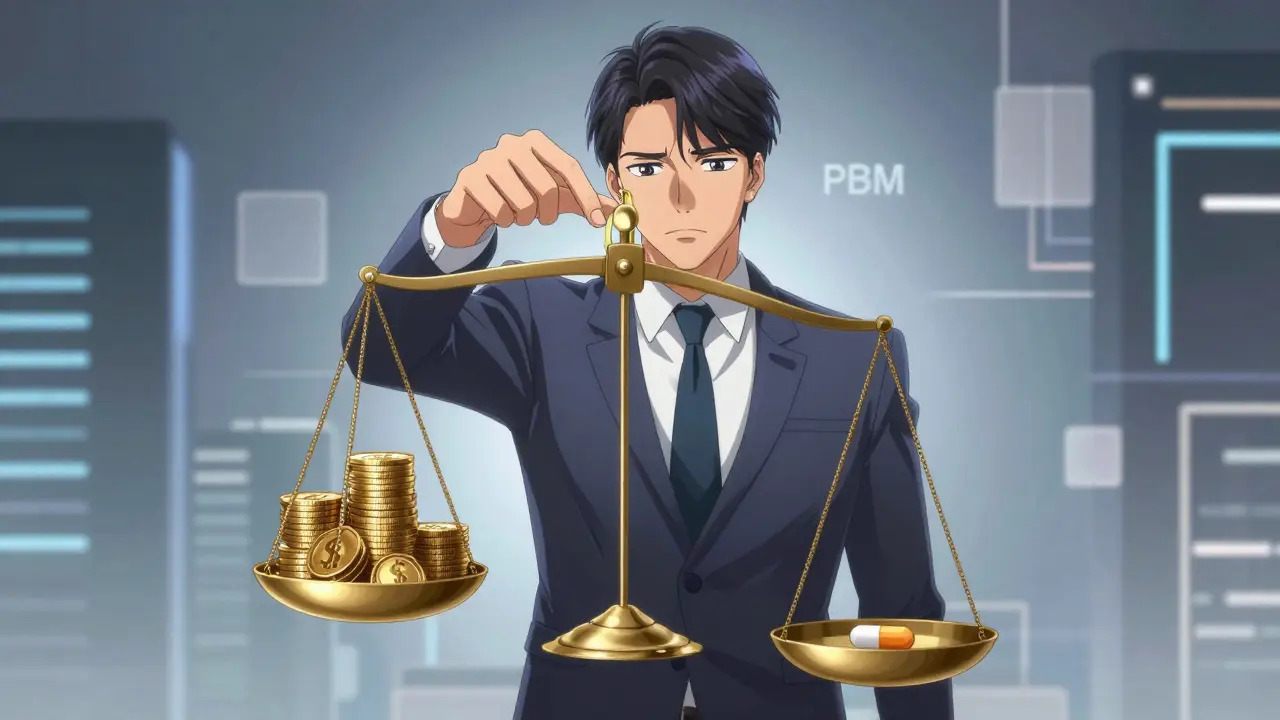
If the law sets the rules, Pharmacy Benefit Managers (or PBMs) are the ones calling the plays. PBMs act as intermediaries between insurance companies, drug manufacturers, and pharmacies. They decide which drugs go on a "formulary" (the list of covered meds) and how much the pharmacy gets paid.
One of the most controversial tactics PBMs use is "spread pricing." Here is how it works: the PBM tells the insurance company that a drug costs $100, but they only pay the pharmacist $70. The PBM keeps the $30 "spread" as profit. This creates a massive transparency gap. For a small pharmacy, this spread pricing often leads to margin compression. In fact, some data shows that generic drug reimbursement margins for independent pharmacies dropped from 3.2% in 2018 to a meager 1.4% by 2023. When your profit margin is that thin, one clerical error can put you in the red for the day.
Breaking Down Reimbursement Mechanisms: AWP vs. MAC
Pharmacies generally deal with two primary ways of getting paid for the actual ingredient cost of a drug. Understanding the difference is the key to understanding why some generics are "profitable" and others are "loss leaders."
| Model | How it Works | Who Benefits? | The Risk |
|---|---|---|---|
| AWP Minus | Reimbursement is a percentage off the Average Wholesale Price. | Predictable for brand-name drugs. | AWP is often an inflated "sticker price," not actual cost. |
| MAC Pricing | A fixed "Maximum Allowable Cost" per unit (pill/capsule). | Insurers and PBMs (keeps costs low). | Pharmacy may pay more for the drug than the MAC limit. |
Under MAC Pricing, the PBM sets a ceiling on what they will pay for a generic. If the market price for that generic suddenly spikes due to a shortage, the pharmacy is stuck eating the difference. This is where the real financial stress hits. If a pharmacist dispenses a brand-name drug when a generic was available, they often have to absorb the entire cost difference between the two.
How Public Programs Shape the Market: Medicare and Medicaid
Government programs operate on their own set of rules, and because they cover so many people, their policies shift the entire market. Medicare Part D, which serves over 50 million people, uses formularies that are reviewed by a pharmacy and therapeutics committee. These committees decide which generics are "preferred," which usually means a lower copay for the patient and a more stable payment for the pharmacy.
Then there's Medicaid. To keep costs down, many states use Preferred Drug Lists (PDLs). If a drug isn't on the PDL, the pharmacy might have to jump through hoops with "prior authorizations"-essentially asking the insurance for permission to use a specific drug. This creates a massive administrative burden. Some doctors spend over 13 hours a week just dealing with these authorizations, often just to switch a patient from a brand to a generic that the state will actually pay for.
The Medicaid Drug Rebate Program (MDRP) adds another layer. Drug manufacturers pay rebates to states to help offset the cost of prescriptions. This encourages the use of generics because the government only wants to pay the premium for a brand-name drug if there is zero generic equivalent available.
The "Gag Clause" and Patient Rights
For years, a dark corner of these contracts was the "gag clause." These were legal agreements between PBMs and pharmacies that forbade pharmacists from telling patients that a drug would be cheaper if they paid cash rather than using their insurance. Can you imagine that? A healthcare professional knowing a patient is overpaying but being legally barred from saying so.
Thankfully, these were banned in 2018, but the legacy remains. It highlighted how reimbursement models often prioritize the profit of the middle-man over the health of the patient. Today, we see a shift toward more transparency, but the complexity of the "donut hole" (the coverage gap in Medicare) still makes it hard for patients to know exactly what they'll pay until they reach the pharmacy counter.
Future Trends: The Drug List and Value-Based Care
We are seeing some exciting attempts to simplify this mess. The Medicare $2 Drug List Model is a voluntary program designed to test a simpler approach. The idea is to pick 100-150 clinically important generic drugs and set a standard, low copayment (like $2) for them. This removes the guesswork for the patient and the administrative nightmare for the pharmacy.
Looking further ahead, the industry is talking about "value-based payment." Instead of paying for every pill dispensed (fee-for-service), pharmacies might be paid based on patient outcomes-like whether a patient's A1C levels actually dropped. This would shift the focus from "how many generics did we swap?" to "did the patient get healthy?" However, this transition is slow and will likely take another 5 to 7 years to become the norm.
What is the difference between AWP and MAC pricing?
AWP (Average Wholesale Price) is a benchmark price that often acts as a "sticker price," and pharmacies are reimbursed a percentage of it. MAC (Maximum Allowable Cost) is a fixed ceiling price set by a PBM for a specific generic drug. If the pharmacy's cost to buy the drug exceeds the MAC price, the pharmacy loses money on that prescription.
How does the Hatch-Waxman Act affect generic drug prices?
The Hatch-Waxman Act allows generic manufacturers to seek FDA approval via an abbreviated process (ANDA) without repeating all the original clinical trials. By lowering the barrier to entry, it encourages competition among generic manufacturers, which naturally drives down the cost of the drugs.
What is "spread pricing" in pharmacy reimbursement?
Spread pricing occurs when a Pharmacy Benefit Manager (PBM) charges an insurance plan one price for a drug but pays the pharmacy a lower price, pocketing the difference as profit. This practice is often criticized for lacking transparency and reducing the profit margins of independent pharmacies.
Why do some generics require "prior authorization"?
Insurance companies and state Medicaid programs use prior authorizations to ensure a drug is medically necessary and that the most cost-effective version (usually a preferred generic) has been tried first. It is a cost-containment tool to prevent the use of expensive brand-name drugs when a cheaper, equivalent generic exists.
What is the Medicare $2 Drug List Model?
It is a voluntary CMS model that aims to standardize cost-sharing for a specific list of high-value, low-cost generic drugs. By keeping copays low and predictable (around $2), the program hopes to improve patient adherence to their medications and increase overall satisfaction with Medicare Part D.
Next Steps for Pharmacy Management
If you're managing a pharmacy or navigating insurance, keep these heuristics in mind:
- Audit your MAC lists: Regularly compare your actual acquisition costs against the PBM's MAC limits to identify "underwater" drugs where you're losing money.
- Analyze TPPs: Use Therapeutic Product Profiles to understand the clinical differences between generics and brands, which helps in navigating prior authorizations.
- Monitor State Laws: Since 44 states have enacted laws regarding PBM reimbursement, check your local regulations for potential appeals processes if you're being underpaid.
- Patient Education: Now that gag clauses are gone, be proactive in telling patients if a cash price is cheaper than their insurance copay to build long-term trust.