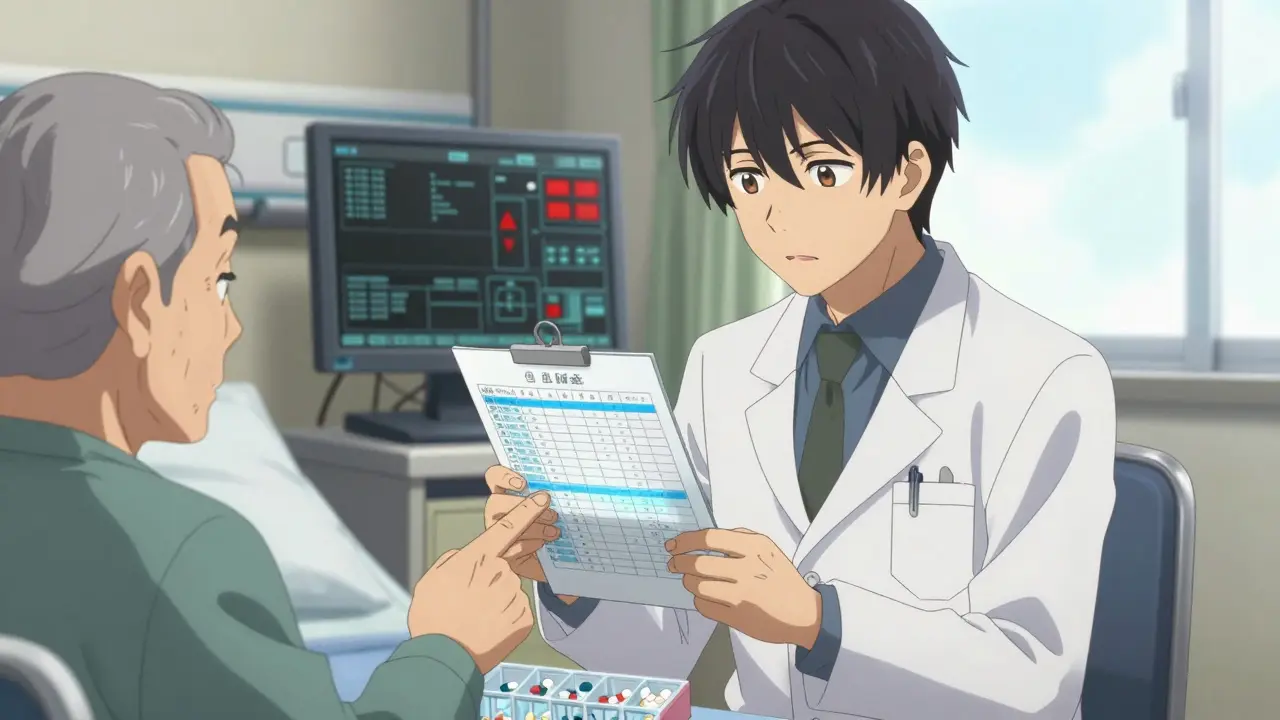
When someone leaves the hospital after a stay, their medication list often changes. Maybe they stopped a blood pressure pill because it lowered their numbers too much. Maybe they started a new anticoagulant to prevent clots. Or maybe they were told to stop taking their old herbal supplement because it interfered with their new heart meds. All of this happens fast - and if no one double-checks what’s going on, mistakes happen. And those mistakes can land someone right back in the hospital.
That’s where medication reconciliation comes in. It’s not just a paperwork task. It’s a safety net. The goal is simple: make sure the medications a patient is supposed to take at home match exactly what was decided in the hospital. No missing pills. No wrong doses. No dangerous interactions. This process is officially tracked by Medicare and Medicaid as a quality measure (NQF 0097), and hospitals are held accountable for getting it right. But even with all the rules, it still falls through the cracks far too often.
Why Medication Reconciliation Matters More Than You Think
Studies show that between 30% and 70% of patients leave the hospital with at least one error in their medication list. That doesn’t mean a typo on a printout - it means someone was told to stop a blood thinner, but never told to restart it. Or they were given a new statin, but their old cholesterol pill was still on their home list. These aren’t small things. They lead to falls, internal bleeding, heart attacks, and strokes.
According to the Agency for Healthcare Research and Quality (AHRQ), medication errors after discharge cause 18% to 50% of all avoidable drug-related problems in the first 30 days out. That’s why the Centers for Medicare & Medicaid Services (CMS) now require providers to document reconciliation within 30 days of discharge. If they don’t, it affects their reimbursement. But even more importantly, it affects whether a patient lives or ends up back in the ER.
One real example: a 72-year-old man was discharged after a heart procedure. He’d been on warfarin for years. During his hospital stay, his doctors switched him to a newer blood thinner. At discharge, the paperwork said he was to continue the new drug. But his primary care doctor didn’t see the update. The patient went home, kept taking warfarin, and two weeks later had a dangerous bleed. His reconciliation never happened.
What a Proper Medication Reconciliation Looks Like
It’s not enough to just say, “I reviewed the meds.” The standard is specific. To meet the NQF 0097 measure, a provider must document one of seven clear actions:
- Noting that the patient’s current meds match the discharge list exactly
- Writing that the discharge meds were reviewed and discussed
- Stating clearly: “I reconciled the current and discharge medications”
- Showing both lists side by side with a note that they were reviewed on the same day
- If no meds were prescribed at discharge, documenting that fact
- Proving follow-up occurred with reconciliation documented
- Confirming the discharge summary was sent to the outpatient chart and included reconciliation
These aren’t suggestions. They’re requirements for billing and quality reporting. But even more than that - they’re proof that someone took responsibility.
Who Should Do It? The Pharmacist Is the Key
Most people assume the doctor handles this. But research shows that’s not the best way. A 2023 study in the Journal of the American College of Clinical Pharmacy found that when pharmacists led the reconciliation process, medication discrepancies dropped by 32.7%. Readmissions fell by 28.3%. Why? Because pharmacists are trained to spot the hidden stuff.
They know that a patient’s over-the-counter fish oil can thin the blood just like aspirin. They know that a new heart failure drug might interact with an old diuretic. They know that a patient might have stopped taking their beta-blocker because it made them dizzy - and never told their doctor.
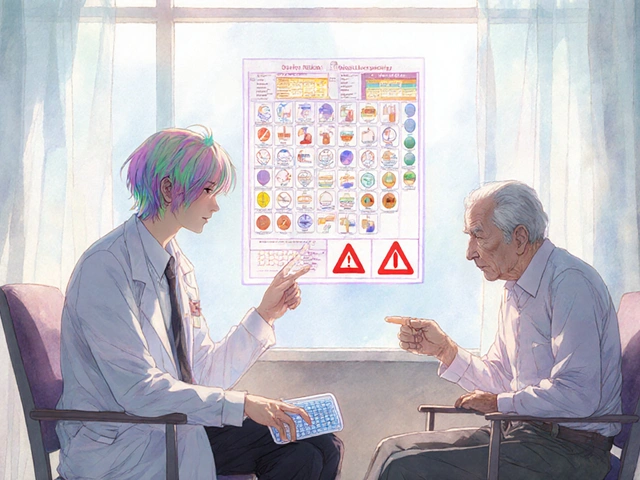
Pharmacists don’t just look at prescriptions. They ask: “Are you taking this? Are you able to afford it? Are you confused about when to take it?” They check pharmacy records. They call caregivers. They use EHR data to compare fill history. One model, PipelineRx, showed that combining these sources increased accuracy by 41% compared to relying on provider notes alone.
That’s why top-performing health systems - the ones hitting 90%+ reconciliation rates - have embedded pharmacists in discharge teams. They’re part of the huddle before the patient leaves. They flag changes. They print clear instructions. They schedule follow-up calls.
Two Ways to Get It Done - And Which One Works Best
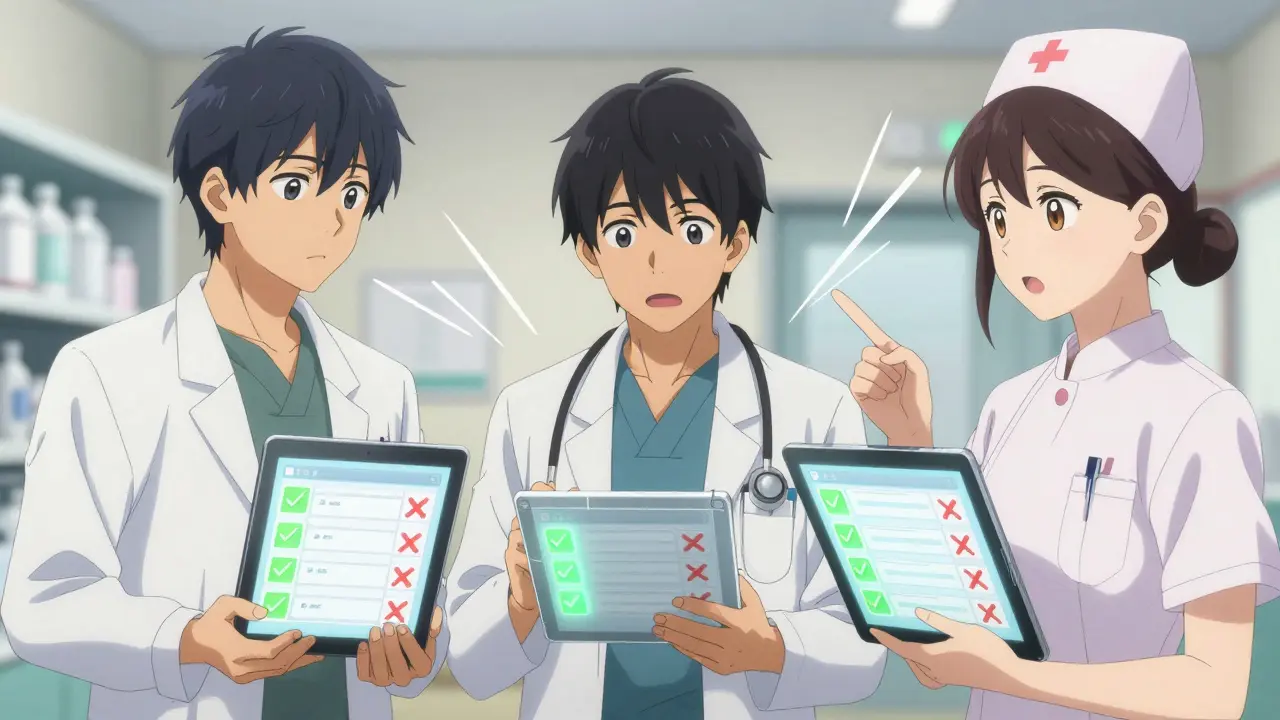
There are two main paths to meet the reconciliation requirement:
- CPT II Code 1111F - This is a documentation-only code. No office visit needed. A provider can call the patient, do a video check-in, or even review records and log the reconciliation in the chart. It’s flexible. But there’s no reimbursement. Many clinics skip it because it takes time and pays nothing.
- CPT Codes 99495 or 99496 - These are for Transitions of Care (TRC) visits. They require an in-person or virtual office visit within 30 days. They come with a payment - around $100 to $150 depending on complexity. But here’s the catch: only one provider can bill for this per discharge. If the primary care doctor does it, the cardiologist can’t. If the cardiologist does it, the PCP loses out. This creates tension, confusion, and sometimes, no reconciliation at all.
Most successful programs use the 1111F route for routine cases and reserve the TRC visit for high-risk patients - those with complex regimens, recent hospitalizations, or cognitive issues. The key? Having a system that assigns responsibility clearly.
The Hidden Barriers No One Talks About
Even when everyone wants to do it right, things get messy:
- Fragmented records: The hospital’s EHR doesn’t talk to the clinic’s EHR. The patient’s pharmacy data is stuck in a different system. That’s why 68% of hospitals report reconciliation is harder because of poor tech integration.
- Time crunch: A 2021 study in Annals of Internal Medicine found 82% of primary care doctors say they simply don’t have enough time in appointments to properly reconcile meds. They’re rushing through 15-minute slots.
- Communication gaps: A specialist might change a med for a heart condition but forget to tell the PCP managing diabetes or depression. That’s why 73% of hospitals with poor reconciliation rates cite lack of standardized handoff protocols.
Smart solutions are already working. Some clinics use automated EHR alerts that pop up when a patient’s discharge summary arrives - flagging any changes in high-risk drugs like blood thinners or insulin. Others use structured tools like I-PASS (a handoff protocol originally designed for shift changes) to ensure every detail gets passed along.
What Patients and Families Can Do
You don’t have to wait for the system to fix itself. Here’s what you can do before you leave the hospital:
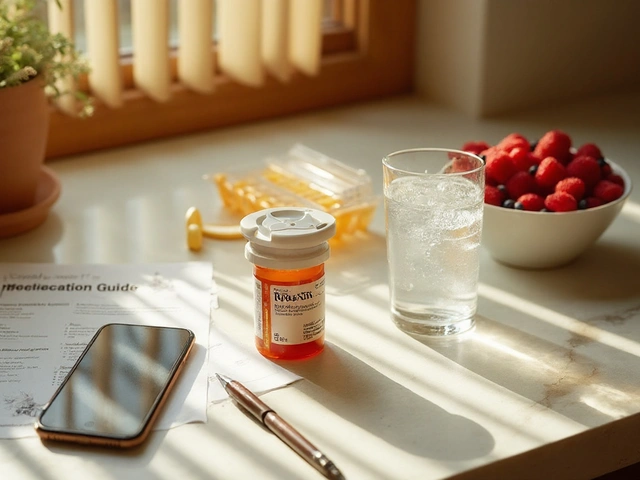
- Ask for a printed copy of your discharge medication list - with every drug, including vitamins, creams, and supplements.
- Ask: “What changed? Why? What should I watch for?”
- Take that list to your pharmacy and ask the pharmacist to compare it with your current prescriptions.
- Set up a follow-up appointment within 7 days - even if you feel fine.
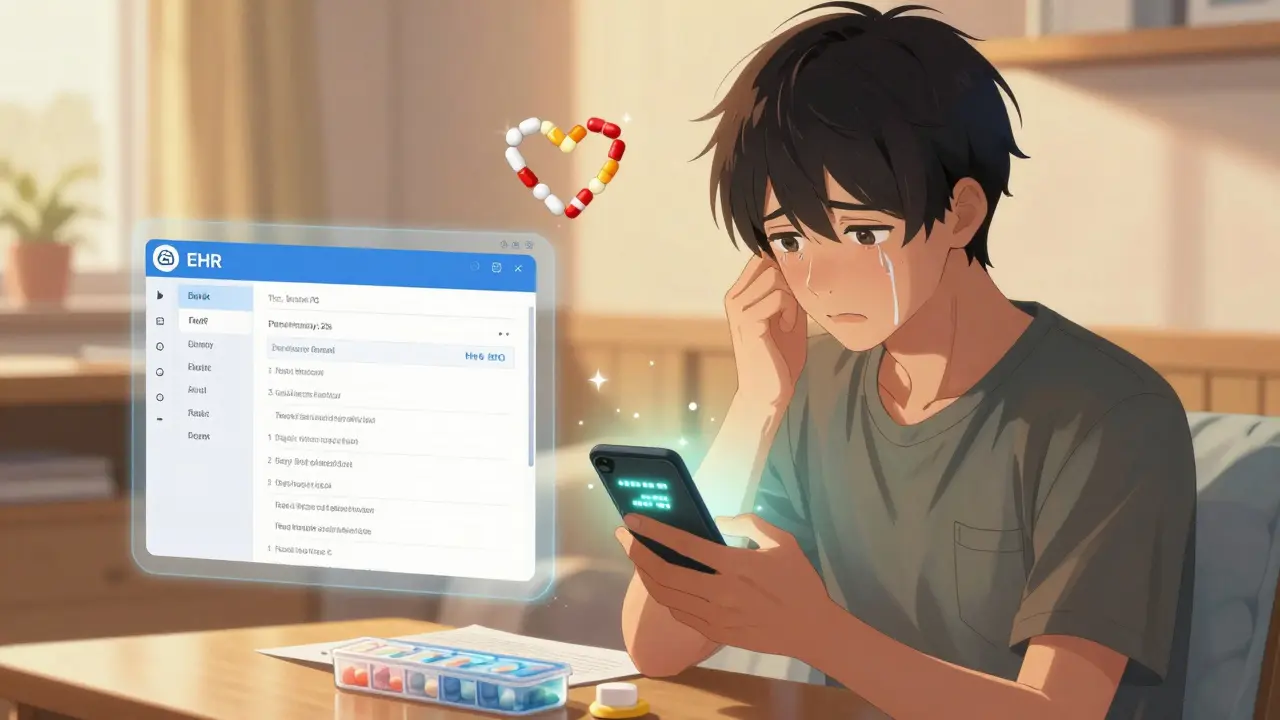
- Use a pill organizer or a phone app to track what you’re taking and when.
Don’t assume your doctor knows what’s going on. If you’re not sure whether you’re supposed to be taking something, call. Text. Ask. It’s your life.
The Bottom Line
Medication reconciliation after discharge isn’t optional. It’s life-or-death. And the best way to make sure it happens? Let pharmacists lead it. Let them talk to patients. Let them check records. Let them call families. Let them document clearly.
Hospitals that do this well see fewer readmissions. Patients who get it right stay out of the ER. And providers who build systems around it - not just paperwork - actually save money in the long run.
The tools exist. The data proves it works. The only thing missing is consistent action. If you’re a patient, advocate for yourself. If you’re a provider, push for pharmacist involvement. If you’re a caregiver, don’t let silence be your answer. Ask. Double-check. Follow up.
Because when the hospital door closes, the real work begins - and no one else is going to do it for you.
Is medication reconciliation only required for Medicare patients?
No. While Medicare and Medicaid track this as a quality measure (NQF 0097), the practice applies to all patients regardless of insurance. Many private insurers and health systems now require it as part of their own quality standards. The National Committee for Quality Assurance (NCQA) includes it in reports covering over 190 million lives across commercial, Medicare, and Medicaid plans. Even if you’re not on Medicare, your hospital or clinic may still be required to document it.
Can my primary care doctor and specialist both bill for a transition of care visit after my hospital stay?
No. Medicare and most insurers allow only one provider to bill for a Transition of Care (TRC) visit using CPT codes 99495 or 99496 per discharge event. If your cardiologist does the reconciliation, your primary care doctor can’t bill for it - and vice versa. This often leads to confusion, with both providers assuming the other handled it. The best solution is for the care team to decide in advance who will take responsibility - usually the primary care provider unless the discharge was directly related to a specialist’s condition.
What if I can’t afford my new medications after discharge?
Cost is one of the top reasons patients stop taking their meds. If a new prescription is too expensive, ask your pharmacist or care team about alternatives. Many hospitals have medication assistance programs. Pharmacists can often switch you to a generic version, help you apply for patient assistance from drug manufacturers, or suggest lower-cost options that work just as well. Don’t skip doses because of cost - speak up before you leave the hospital or during your first follow-up.
How do I know if my medication reconciliation was done properly?
Ask for a copy of your updated medication list after your follow-up visit. It should clearly show what was changed, why, and what you’re supposed to take now. If it just says “meds reviewed,” that’s not enough. Look for phrases like “reconciled,” “discharge meds compared,” or “current list matches.” If you’re unsure, call your pharmacy - they can compare your prescription history with what was prescribed at discharge. If there’s a mismatch, it’s not too late to fix it.
Do I need to see my doctor in person for medication reconciliation?
Not necessarily. While an in-person visit (using CPT 99495/99496) is one way to meet the requirement, it’s not the only one. You can also meet the standard through a phone call, video visit, or even secure messaging if your provider documents that they reviewed your current meds against your discharge list and noted the reconciliation in your chart. The key isn’t the format - it’s the documentation. Make sure the provider writes down that they checked and confirmed your list.






Jesse Lord
This is so true. I had a cousin who got discharged after heart surgery and they forgot to tell her to stop the blood thinner. She ended up in the ER with a bleed. No one checked. Just paperwork. People think hospitals are safe but honestly? It's a mess. I'm glad someone finally said it out loud.
Sarah B
Pharmacists should run the whole system. Doctors are too busy playing politics. Pharmacies have the data. They see the fills. They know who's not picking up meds. Let them lead. Stop the charade.
Amit Jain
You think this is bad? Wait till you see how it works in India. My uncle got discharged with 12 meds he didn't need. No one asked if he could afford them. No one checked if he even knew what they were for. Just sign here. Give us your insurance. Then disappear. This isn't healthcare. It's a business model disguised as medicine.
Paula Sa
I work in a clinic and we started using pharmacists for discharge reconciliation last year. Readmissions dropped by 40%. It's not magic. It's just that pharmacists actually talk to patients. They ask if they can afford the meds. If they're scared of side effects. If they're confused. Doctors just check boxes. Pharmacists check people.
Ashley Hutchins
Ive seen this happen so many times and honestly its not even about the system its about the people. Patients are scared to ask questions. Families dont know what to ask. And providers are too tired to explain. Its a perfect storm. No one wants to be the one to say wait lets double check. We just want to move on. Thats the real problem
Heather Burrows
I read this whole thing and honestly? I don't know why we're surprised. Healthcare in America is broken. We treat pills like they're candy. We don't teach people how to manage their own health. We just hand them a list and say 'good luck'. Then we act shocked when they end up back in the hospital. It's not a medical issue. It's a cultural one.
Niel Amstrong Stein
I'm a nurse in Texas and I can tell you one thing: if the pharmacist is in the room when the patient leaves? You're 3x less likely to see them back. I've watched it. They print the list. They show the patient the changes. They say 'this is what you take now'. And they give them a number to call if something feels off. It's so simple. Why don't we do this everywhere?
Patrick Jarillon
You think this is about medication? Nah. This is about control. The system doesn't want you to know what you're taking. They want you dependent. They want you confused. They want you calling them every month for refills. Reconciliation? It's a PR stunt. The real goal is to keep you in the loop. Not out of it. Look at the stats. Readmissions go down when patients are empowered. But empowerment means less revenue. So they keep you guessing. It's not a flaw. It's the design.
Savannah Edwards
I used to be a pharmacy tech before I got sick. I saw how many people just got handed a bag of pills with no explanation. One guy came in with 14 different meds from three different hospitals. He didn't know which one was for his blood pressure. Or if he was supposed to take them with food. Or if they interacted. We spent an hour sorting it out. He cried. Said no one ever asked. That's the moment I realized this isn't about paperwork. It's about dignity. Everyone deserves to know what they're putting in their body. And no one should have to fight to find out.
Tola Adedipe
I work in a hospital in Ontario and we have pharmacists embedded in every discharge team. We don't bill for it. We don't get extra money. We do it because it works. Last year we prevented 21 readmissions just by having one pharmacist talk to each patient for 15 minutes. That's 21 people who didn't end up in the ER. That's 21 families who didn't lose sleep. That's 21 times someone got to go home and actually live. Why isn't this the standard everywhere?
Marcus Jackson
The real issue? No one owns this. Is it the doctor? The nurse? The pharmacist? The discharge planner? Everyone thinks someone else is doing it. So it gets dropped. It's not a lack of knowledge. It's a lack of ownership. We need one person assigned. One name. One responsibility. No more passing the buck.
Gouris Patnaik
In India we don't have this problem. We have a different problem. People don't take meds because they don't trust Western medicine. They use ayurveda. They use home remedies. They believe in karma. So when the hospital gives them a list of pills? They throw them out. They think the doctors are poisoning them. Reconciliation means nothing if the patient doesn't believe in the medicine. You can't fix a system when the culture rejects it.
Eric Knobelspiesse
I read this and thought wow this is so well written. Then I looked at the hospital where my mom got discharged. The discharge summary had typos. Misspelled her name. Listed a med she never took. And said she was on insulin when she wasnt. I called the hospital. They said oh we'll fix it. Two weeks later it was still wrong. This isn't about pharmacists or systems. It's about competence. And we've lost that.