
Blood Pressure Medication Interaction Calculator
Medication Interaction Calculator
Enter your medication type and licorice consumption to see how it affects your blood pressure management. Based on research from the American Journal of Cardiology and European Society of Hypertension.
Results
It’s easy to think of licorice root as just a sweet herbal remedy-something harmless you sip in tea or chew as a candy. But if you’re taking medication for high blood pressure, this common supplement could be quietly sabotaging your treatment. In fact, it’s not just a mild interference-it’s a full-on battle between nature and science, and your blood pressure is the battlefield.
What’s Really in Licorice Root?
Licorice root comes from the plant Glycyrrhiza glabra, grown mostly in Greece, Turkey, and parts of Asia. For thousands of years, it’s been used for coughs, stomach issues, and even as a sweetener. But the sweetness isn’t just sugar-it’s glycyrrhizin, a compound 50 times sweeter than table sugar. And this is where the trouble starts.
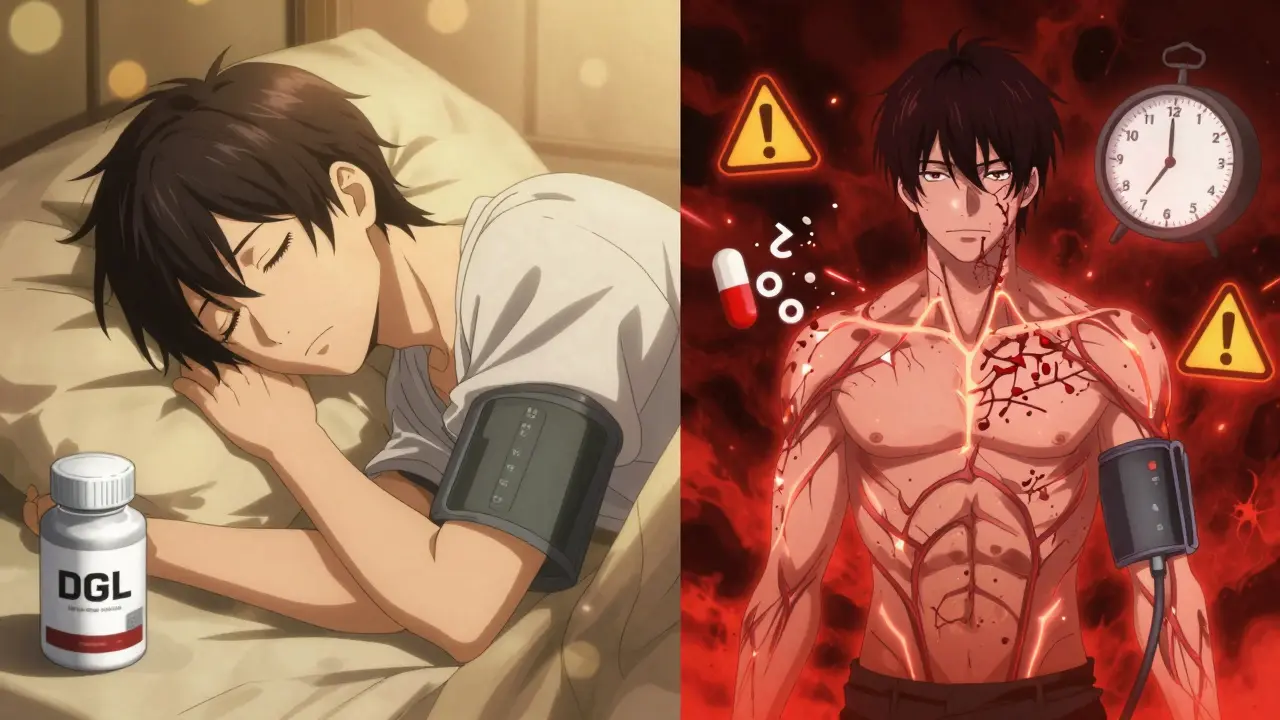
Glycyrrhizin doesn’t just taste sweet. It acts like a hormone mimic, tricking your body into thinking it’s getting more aldosterone, the hormone that tells your kidneys to hold onto salt and water. That sounds harmless, but when your body holds onto extra fluid, your blood pressure spikes. And if you’re already on medication to lower that pressure, this is like trying to drive uphill while someone hits the gas.
How It Neutralizes Your Blood Pressure Pills
The science is clear: glycyrrhizin blocks an enzyme called 11β-hydroxysteroid dehydrogenase type 2. Normally, this enzyme keeps cortisol (a stress hormone) from binding to mineralocorticoid receptors in your kidneys. When it’s blocked, cortisol acts like aldosterone. Result? Your kidneys keep sodium. You retain water. Blood volume goes up. Blood pressure rises.
This doesn’t just make your meds less effective-it can completely undo them. Studies show:
- For people on ACE inhibitors like lisinopril, licorice can reduce effectiveness by 30-50%.
- With ARBs like losartan, blood pressure control drops by about 25%.
- Even calcium channel blockers like amlodipine lose 15-20% of their power.
- The worst case? Spironolactone, a potassium-sparing diuretic. Licorice can cancel it out entirely within 7-10 days.
A 2015 study found some people saw their systolic blood pressure jump by as much as 30 mmHg after just two weeks of regular licorice use. That’s the difference between a controlled 130 and a dangerous 160.
It’s Not Just Candy
Most people think they’re safe if they avoid black licorice candy. But here’s the catch: 95% of licorice-flavored candies in the U.S. don’t even contain real licorice root. They use anise oil for flavor-no glycyrrhizin, no problem.
But if you’re buying herbal supplements, teas, or traditional remedies, you’re not so lucky. Products labeled "licorice root," "Glycyrrhiza glabra," or "licorice extract" almost always contain glycyrrhizin. And the amount? It varies wildly. One brand might have 5 mg per serving. Another might have 50 mg. No standardization. No warning labels in the U.S.
That’s why Dr. Johanna Salge Blake, a nutrition professor at Boston University, says: "People think they’re just having a sweet tea. Then they end up in the ER because their blood pressure went through the roof."

Real Cases, Real Consequences
It’s not theoretical. Real people are getting hurt:
- A 68-year-old man in the U.S. took licorice tea daily while on lisinopril. His BP climbed from 130/80 to 185/105 in 10 days.
- A Reddit user on r/HighBloodPressure noticed his systolic pressure jumped 22 points after eating "real licorice candy" while on amlodipine.
- In New Zealand, a 55-year-old man on fludrocortisone had his BP spike to 210/115, triggering panic attacks and hospitalization.
On PatientsLikeMe, 92% of 84 posts about licorice and blood pressure meds reported worsening control. Seventeen of those cases required emergency care.
And here’s the kicker: many people don’t even know they’re consuming it. A 2019 study from Australia found 6 out of 8 patients with licorice-induced hypertension had taken herbal supplements or Chinese medicine formulas that listed "licorice root"-and they had no idea it could affect their BP meds.
What About Potassium?
Another silent danger: licorice root drains potassium. It’s not just about fluid retention-it’s about electrolyte imbalance. Studies show regular use can drop serum potassium by 0.5 to 1.5 mmol/L. Normal range? 3.5-5.0. Once it dips below 3.0, you risk muscle weakness, irregular heartbeat, even cardiac arrest.
Doctors recommend checking potassium levels every two weeks if you’re on diuretics and consuming licorice. But the better advice? Don’t consume it at all.
What Can You Do?
If you’re on blood pressure medication, here’s what actually works:
- Check every label. Look for "Glycyrrhiza glabra," "licorice root," or "licorice extract." Avoid anything with it.
- Assume it’s there. If you’re unsure, skip it. Herbal teas, cough syrups, laxatives, and traditional remedies are common hidden sources.
- Ask your pharmacist. Many don’t realize licorice is in 30% of herbal laxatives and 25% of Chinese medicine formulas.
- Choose DGL. Deglycyrrhizinated licorice (DGL) has less than 1% glycyrrhizin. It’s safe for digestion and won’t interfere with your meds.
- Stop all licorice for 2 weeks. Glycyrrhizin’s effects can linger for up to 14 days after you stop. Don’t assume quitting today fixes your BP tomorrow.
What’s Changing?
Regulation is slow, but moving. The European Union requires warning labels on products with more than 10 mg of glycyrrhizin per serving. The U.S. FDA has issued warnings but still doesn’t require labeling.
That’s why the proposed Dietary Supplement Listing Act of 2023 matters. If passed, it would force manufacturers to list exact glycyrrhizin amounts on labels. That’s a game-changer. Until then, you’re on your own.
And here’s the truth: the supplement industry makes $187 million a year selling licorice root. But your blood pressure isn’t a profit margin. It’s your life.
Bottom Line
You don’t need licorice root to feel better. There are safer herbs for digestion, coughs, and inflammation. And if you’re managing high blood pressure, every milligram of glycyrrhizin is a threat.
Don’t rely on labels alone. Don’t assume "natural" means safe. Don’t think "a little won’t hurt." The science says otherwise. One cup of licorice tea a day, for two weeks, can undo months of medication.
If you’re on blood pressure meds, the only safe choice is zero licorice root. Not "less." Not "occasional." Zero.






Sarah Barrett
Licorice root is one of those sneaky little villains disguised as a soothing tea. I never realized how many supplements quietly contain glycyrrhizin until I started reading labels like a forensic accountant. Turns out, my "herbal digestive aid" had more power than my blood pressure med. Scary stuff.
And the fact that the U.S. doesn't require labeling? That’s not negligence-it’s a business model. The supplement industry thrives on ignorance. I’m done trusting "natural" without a molecular breakdown.
Kapil Verma
You Americans act like this is some new discovery. We in India have known this for centuries. Ayurveda warns against licorice in hypertensive patients-yet you still buy it like it’s candy. Your healthcare system is broken because you treat herbs like toys. Glycyrrhizin isn’t a glitch-it’s a warning sign you refuse to read.
And don’t get me started on DGL. It’s a corporate hack. They strip out the good stuff to sell you a placebo with a fancy acronym. Real medicine doesn’t need rebranding.
Daniel Dover
Confirmed. My BP spiked 20 points after a week of licorice tea. Stopped it. Back to normal in 10 days. Simple. No drama. Just science.
Chiruvella Pardha Krishna
The real tragedy isn't the glycyrrhizin-it's the epistemological collapse of modern self-care. We have replaced wisdom with convenience, and reverence with retail. The body is not a machine to be optimized with supplements, but a sacred equilibrium, disturbed by the arrogance of dosage. Licorice root is not the enemy. Our faith in quantification is.
Perhaps the true hypertension is the belief that we can control nature through labels and loopholes.
Mandeep Singh
Oh please, this is why your meds don’t work. Everyone’s popping herbal nonsense like it’s candy. I’ve seen this in my clinic a hundred times. Patient comes in with BP 180/110, swears they only had "a little licorice tea"-and then you check the bottle and it’s 47 mg glycyrrhizin per teaspoon. Four teaspoons a day. That’s not a tea. That’s a pharmacological assault.
And guess what? They blame their meds. Not the "natural" supplement they bought off Amazon because it had a picture of a smiling monk. You don’t get to be spiritual and stupid. This isn’t yoga. This is physiology. And physiology doesn’t care about your vibes.
Kaye Alcaraz
One small change can save your life. If you’re on BP meds, skip licorice. Full stop.
There are so many safe, effective herbs for digestion and calm-chamomile, ginger, peppermint. No need to gamble with your heart.
You’ve got this.
Virginia Kimball
I used to love licorice tea before I got diagnosed. Now I drink ginger-lemon-honey like it’s a ritual. It’s not as sweet, but it doesn’t try to kill me. And honestly? I feel better. Less bloated. Less anxious. Turns out, your body knows what it needs when you stop feeding it hidden toxins.
Also-DGL is legit. I’ve been using it for IBS. No BP spikes. No drama. Just relief.
Josiah Demara
This whole post is fearmongering dressed in PubMed. You act like glycyrrhizin is a poison. It’s a hormone modulator. Your body handles it fine unless you’re already on spironolactone or have renal issues. Most people? They’re fine.
And why are we assuming all herbal supplements are dangerous? The real problem is that Big Pharma hates competition. They don’t want you to know you can manage BP with a root from the earth instead of a patentable molecule.
Also-DGL? That’s just a corporate marketing ploy. They removed the active compound so they could sell you a version with no effect and a higher price tag. Classic.
Erica Banatao Darilag
thank you for this. i had no idea. i’ve been drinking licorice root tea for years for my digestion. i just thought it was "gentle". i’m going to check all my supplements tonight. i feel like i’ve been blind.
also-i just looked at my tea box. it says "licorice root extract". i didn’t even know that meant anything. i’m so glad i saw this.
Charlotte Dacre
So let me get this straight: we live in a country where you can buy a supplement that’s literally a blood pressure bomb… but you can’t buy a bottle of water that says "this contains 47mg of glycyrrhizin per serving"?
Oh wait. I forgot. The FDA is too busy regulating kale smoothies to protect people from silent killer herbs. Classic.
Esha Pathak
Everything in nature has a shadow side. Even sunlight can burn. Licorice root? Sweetness with teeth. We forget that the earth doesn’t care if we call something "natural." It only responds to chemistry.
I now avoid all licorice, even DGL. Why risk it? There are so many other herbs. Let the root rest. Let the body heal. Not with more substances, but with stillness.
Mike Hammer
As someone who’s lived in both the U.S. and India, I’ve seen this play out differently. In India, grandma knows licorice raises BP-so she gives it to you only if you’re weak and underweight. In the U.S.? It’s a wellness trend. People drink it to "balance their chakras" while on lisinopril.
Same root. Different cultures. One respects context. The other turns it into a meme.
Joe Grushkin
Everyone’s acting like this is groundbreaking. Newsflash: this is basic pharmacology. Glycyrrhizin inhibits 11β-HSD2. It’s in every med school textbook. The fact that you’re surprised means you’ve been gulping influencer advice instead of reading actual science.
Also, DGL is not safer. It’s just less potent. Still not recommended. And stop calling it "natural." Everything’s natural. Even arsenic.
Michael Page
I wonder how many people die from this and never get counted. No one checks for glycyrrhizin in postmortems. It’s not on the standard toxicology panel. So if a 70-year-old drops dead with BP 220/120, they blame "undiagnosed hypertension." No one asks: "Did he drink licorice tea?"
We treat these deaths as accidents. They’re not. They’re preventable. And that’s the real tragedy.