Opioid Overdose Recognition Tool
Identify Opioid Overdose Signs
This tool helps you quickly recognize the signs of opioid overdose. If you suspect an overdose, act immediately.
Every minute counts. Remember: Call 9-1-1 first, then administer naloxone if available.
Naloxone reverses opioid overdose. It has no effect on people who haven't taken opioids.
When someone overdoses on opioids, their breathing slows down - or stops. In just a few minutes, their brain starts to die from lack of oxygen. This isn’t a slow decline. It’s a race against time. And in too many cases, people die because no one knew what to do. But here’s the truth: opioid overdose is preventable. You don’t need to be a doctor to save a life. You just need to know the signs, act fast, and use naloxone if it’s available.
What Happens During an Opioid Overdose?
Opioids - including prescription painkillers like oxycodone, heroin, and synthetic drugs like fentanyl - work by binding to receptors in your brain. These receptors control pain, but they also control breathing. When too much opioid floods the system, it shuts down the signal that tells your body to keep breathing. You don’t choke. You don’t gasp. You just stop. Slowly. Quietly. Often while you’re still sitting or lying down.That’s why overdoses are so deadly. People think someone is just passed out. They assume they’ll wake up. But if breathing stops for more than four minutes, brain damage begins. After ten minutes, death is likely. And here’s the worst part: many overdoses happen alone. Someone takes a pill they think is Xanax, but it’s laced with fentanyl. Or they use after a period of abstinence, not realizing their tolerance has dropped. They don’t call for help. They don’t wake up. And no one knows until it’s too late.
Key Signs of an Opioid Overdose
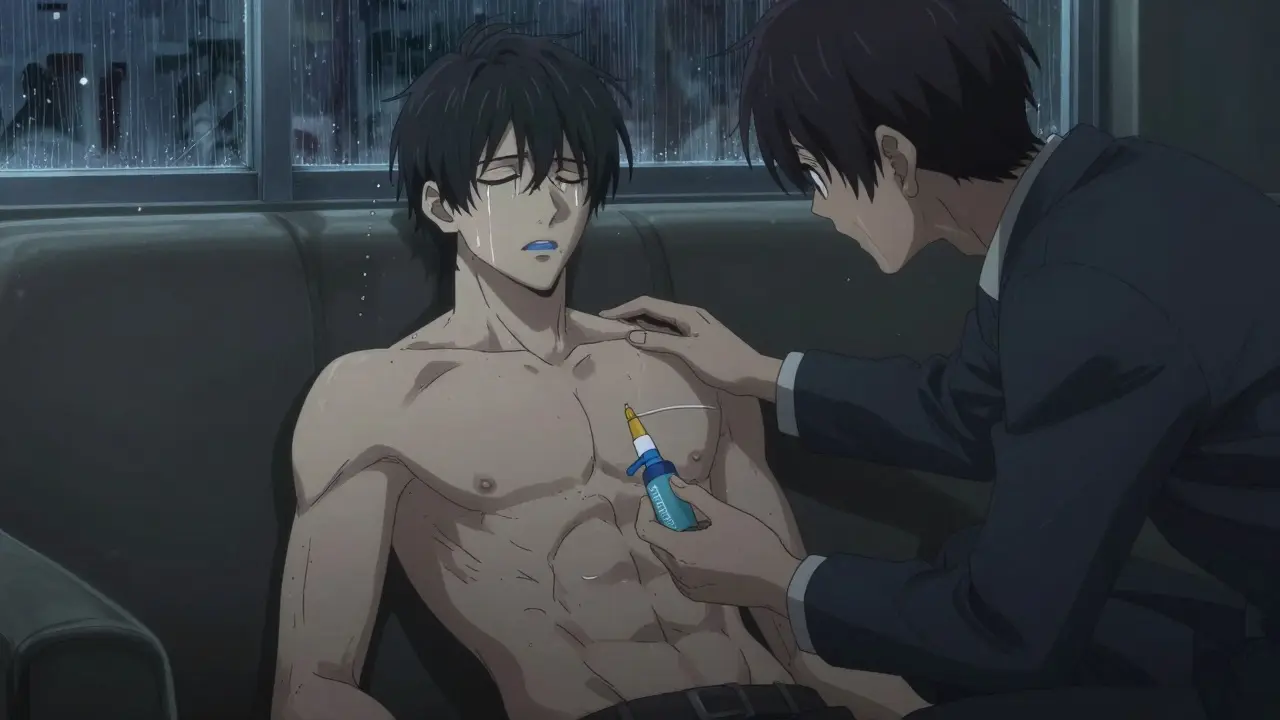
You don’t need medical training to spot an overdose. Look for these three core signs - often called the “opioid overdose triad”:- Unresponsive to shaking or shouting - Try shaking their shoulders and yelling their name. If they don’t move, don’t respond, or slump over like a ragdoll, that’s a red flag.
- Slow, shallow, or stopped breathing - Watch their chest. Is it moving? Listen closely. Is there a gurgling, snoring, or choking sound? That’s not sleep. That’s drowning on your own spit.
- Pinpoint pupils - Shine a light on their eyes. If their pupils are tiny, like the head of a pin, it’s a classic sign. But don’t wait for this. Not everyone has it.
Other signs include:
- Blue, purple, or grey lips and fingernails (cyanosis)
- Cold, clammy skin
- Limp body - no muscle tone
- Choking or gurgling noises
- Extreme drowsiness or inability to stay awake
Don’t wait for all of these. Even one or two - especially unresponsiveness and slow breathing - means you’re looking at an overdose. And time is everything.
What to Do Immediately: The Three-Step Emergency Response
If you suspect an opioid overdose, follow this simple protocol. It’s used by emergency services, community programs, and public health agencies across the U.S. and Canada:- Call 9-1-1 right away. Say: “I think someone overdosed on opioids.” Don’t wait. Don’t call a friend first. Don’t try to drive them yourself. Paramedics can give oxygen, IV fluids, and more naloxone if needed.
- Give naloxone if you have it. Naloxone (brand name Narcan) is a safe, FDA-approved drug that reverses opioid overdose. It comes as a nasal spray. No needle. No training needed. Just spray one dose into one nostril. Even if you’re not sure - if they’re not breathing, give it. Naloxone has no effect on people who haven’t taken opioids. It won’t hurt them.
- Stay with them until help arrives. Keep them on their side - the recovery position. If they’re not breathing, start rescue breathing: tilt their head back, pinch their nose, give one breath every five seconds. Don’t stop. Even if they wake up, don’t leave them. Naloxone wears off in 30 to 90 minutes. Opioids last longer. They can stop breathing again. You must stay.
That’s it. No complicated steps. No waiting for permission. No fear of legal trouble. In every U.S. state and many countries, you’re protected by Good Samaritan laws if you call for help during an overdose.
How Naloxone Works - And Why It’s Not a Cure
Naloxone works like a key that fits into the same lock as opioids. It pushes the opioids out and blocks them from coming back in. That’s why breathing restarts. It’s fast. Usually within 2 to 5 minutes after a nasal spray.But here’s the catch: naloxone doesn’t last long. Opioids like fentanyl stick around much longer. So even if the person wakes up, they’re not safe. They need medical care. And they might need a second dose of naloxone.
Some people think naloxone is a “miracle drug.” It’s not. It’s a bridge. It buys time. It doesn’t treat addiction. It doesn’t fix the problem. But it gives someone a second chance.
Today, naloxone is cheaper than ever. In 2016, a two-dose nasal spray cost over $130. Now, generic versions are $25 to $50. Many pharmacies give it out for free. In 49 states, you can walk into a pharmacy and ask for naloxone without a prescription. Keep one in your bag. Keep one in your car. Keep one at home. You never know when you’ll need it.
Fentanyl Is Changing the Game
The biggest threat today isn’t heroin. It’s fentanyl. It’s 50 to 100 times stronger than morphine. And it’s everywhere. Illicit pills sold as oxycodone or Xanax often contain fentanyl. Cocaine and meth are laced with it. Even small amounts can kill.That’s why overdose signs can be sudden. Someone takes one pill. One minute they’re fine. The next, they’re unconscious. No warning. No time to react.
That’s also why fentanyl test strips matter. You can buy them online or at harm reduction centers. They cost less than a dollar. You mix a tiny bit of the drug with water, dip the strip, and wait a few minutes. If it shows fentanyl, don’t use it. Or if you do, use with someone else present - and have naloxone ready.
After the Overdose: What Happens Next?
If someone is revived with naloxone, they need medical care. Even if they seem fine. Opioid overdose can cause:- Lung injury from inhaling vomit
- Brain damage from lack of oxygen
- Heart rhythm problems
- Seizures
They also need mental health support. Most people who overdose have underlying trauma, depression, or untreated pain. A single overdose doesn’t mean they’re “a junkie.” It means they’re in crisis. Recovery isn’t about willpower. It’s about access to treatment - medication like methadone or buprenorphine, counseling, housing, and community.
Many programs now offer “peer support” after an overdose. Someone who’s been there helps them connect to services. That’s proven to reduce repeat overdoses.
Who Should Have Naloxone?
Everyone. Seriously.- People who use opioids - even if prescribed
- Family members, friends, or roommates of people who use opioids
- First responders, police, and community workers
- People working in shelters, clinics, or pharmacies
- Anyone who might be around someone at risk - which is more people than you think
You don’t need to be a caregiver. You don’t need to be a parent. You just need to be human. And if you’re reading this, you’re already the kind of person who might save a life.
Where to Get Naloxone
In Australia, naloxone is available over-the-counter at pharmacies without a prescription. You can ask for it at any pharmacy - no questions asked. In the U.S., it’s available in all 50 states without a prescription. Many community health centers, needle exchange programs, and even some grocery stores give it out for free.Don’t wait until you need it. Get it now. Keep it where you can reach it. And teach someone else how to use it.
Can naloxone hurt someone who didn’t take opioids?
No. Naloxone only works on opioid receptors. If someone hasn’t taken opioids, naloxone has no effect. It won’t cause harm, trigger withdrawal, or make them sick. If you’re unsure whether someone overdosed on opioids, give naloxone anyway. It’s safe. It’s simple. And it could save a life.
What if I give naloxone and they don’t wake up?
Call 9-1-1 immediately if you haven’t already. Then, start rescue breathing: tilt their head back, pinch their nose, and give one breath every five seconds. Keep going until help arrives. Naloxone might not work if the overdose involves non-opioid drugs like cocaine or meth, or if the person took a massive dose of fentanyl. But rescue breathing keeps oxygen flowing to the brain. That’s what keeps them alive.
Do I need training to use naloxone?
No. Naloxone nasal spray is designed for anyone to use. Just remove the cap, insert the nozzle into one nostril, and press the plunger. That’s it. Most packages come with clear instructions. Online videos from the CDC or local health departments show exactly how to do it in under a minute. You don’t need to be a medic. You just need to act.
Can I get in trouble for helping someone overdose?
In nearly every country and U.S. state, you’re protected by Good Samaritan laws. These laws shield you from arrest or prosecution if you call 9-1-1 during an overdose. The goal is to remove fear. If you’re worried about legal trouble, remember: a dead person can’t be charged. A living person can get help. Calling for help is the right thing to do - and the law backs you up.
Why do some people need more than one dose of naloxone?
Fentanyl and other strong synthetic opioids last longer than naloxone. Naloxone wears off in 30 to 90 minutes. Fentanyl can stay in the system for hours. That means someone might wake up after the first dose - then slip back into overdose. That’s why you need to stay with them and be ready to give a second dose. Always have at least two doses on hand.
Every day, 187 Americans die from drug overdoses. Most of them - 81% - involve opioids. That’s not statistics. That’s someone’s child. Someone’s friend. Someone’s neighbor. You can’t fix the whole system. But you can learn the signs. You can carry naloxone. You can speak up. And if you do, you might be the reason someone wakes up tomorrow.



Donna Zurick
This is the kind of info everyone needs to have saved in their phone. I keep a Narcan in my purse, my car, and my kid’s backpack. Just in case. You never know when someone’s gonna need it. Seriously, if you’re not carrying it, you’re one bad decision away from being the reason someone dies.
Do it. Now.
Deborah Dennis
I’m sorry, but… this feels like a public service announcement written by a nonprofit intern. 'Everyone should have naloxone?' Really? What about the people who actually *use* opioids? Are we just pretending they’re innocent victims?
Let’s be real: most overdoses happen because people are irresponsible. You don’t hand out fire extinguishers to people who keep lighting their kitchen on fire. You stop enabling them.
Tobias Mösl
You think this is about saving lives? Nah. This is about the pharmaceutical industry and the government pushing a narrative to make people think opioids are 'just a mistake'-when they’re actually a gateway to state-controlled dependency.
Fentanyl’s not 'everywhere'-it’s *engineered* to be everywhere. Who benefits? The same people who profit from rehab centers, prison systems, and insurance-funded 'treatment.'
Naloxone? It’s a Band-Aid on a hemorrhage. And they want you to believe you’re a hero for handing out Band-Aids while the system bleeds people dry.
tatiana verdesoto
I’ve been in recovery for 7 years. I lost three friends to overdoses before I got help.
This post? It’s accurate. It’s urgent. It’s real.
I carry two doses. I taught my roommate how to use them. I’ve used one on a stranger on the bus. He woke up crying. We sat there for 20 minutes until EMS came. He didn’t say thank you. But he’s alive.
You don’t have to be a saint. You just have to not look away.
Ethan Zeeb
I respect the intent here. But let’s not pretend this is just about education. The real issue is that we’ve normalized opioid use as a lifestyle, not a medical intervention.
Prescriptions were overissued. Doctors were incentivized. Patients were told, 'It’s fine.' Now we’re trying to fix it with nasal sprays and goodwill.
It’s not enough. We need systemic reform. Not just emergency kits.
Darren Torpey
Naloxone isn’t magic. But it’s the closest thing we’ve got to a second chance. Think of it like a defibrillator for your soul. You don’t need to be a doctor. You just need to be brave enough to act.
I keep two in my glovebox. One in my jacket. One in my bike bag. I’ve used one on a buddy who thought he was just 'sleeping.' He woke up confused, then broke down crying.
He’s clean now. Not because of me. But because I didn’t let him die alone.
Lebogang kekana
In South Africa, we don’t have easy access to this. But I’ve seen people die from overdoses in townships because no one knew what to do.
This info? It’s gold. I’m printing it out. I’m sharing it with my community center. I’m teaching the youth: 'If you see someone like this, don’t run. Don’t panic. Act.'
We don’t need permission to be human. We just need to remember we’re all connected.
Jessica Chaloux
I’m crying rn 😭 I lost my brother to this. I didn’t know what to do. I just screamed. I didn’t have naloxone. I didn’t know how to breathe for him. I didn’t know… I didn’t know…
Thank you for writing this. I’m getting two doses today. I’m telling everyone. I’m not letting this happen again. 💙
Siri Elena
Oh wow. A 10/10 public health pamphlet. So touching. So noble. So… incredibly naive.
Of course we should have naloxone. But let’s not pretend this solves anything. The real crisis isn’t the overdose-it’s the fact that we’ve turned addiction into a spectator sport.
And now we’re handing out life-saving sprays like free samples at Costco. Cute.
Meanwhile, the real problem? No one’s talking about why people are using in the first place. But hey-at least we can feel good about our little Band-Aid.