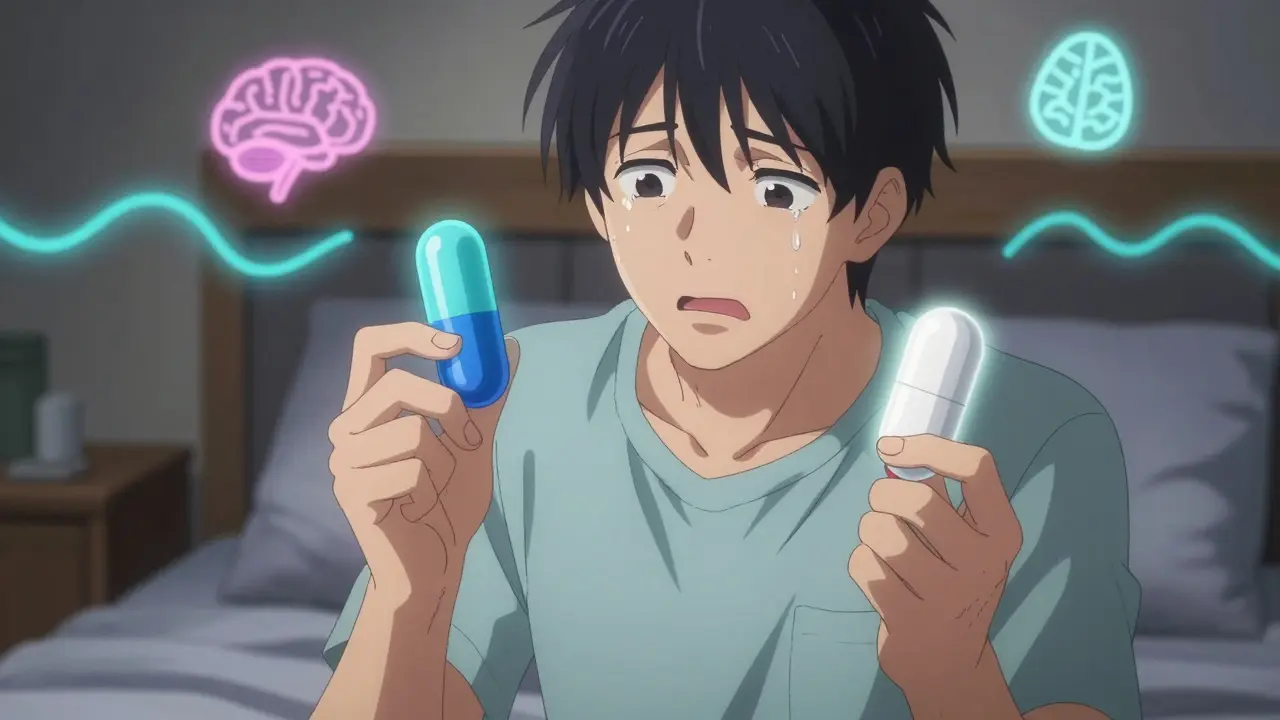
Imagine taking a pill that does nothing-no active ingredient, just sugar and starch. Now imagine that same pill makes your headache vanish. Not because of chemistry, but because you believe it should work. That’s the placebo effect. And when it comes to generic medications, your perception of what you’re taking can make the difference between relief and disappointment-even when the science says they’re identical.
Generics Are Just as Strong. So Why Don’t They Feel Like It?
Generic drugs are required by the FDA to contain the exact same active ingredient, in the same strength, and work the same way as their brand-name counterparts. They go through the same rigorous testing. In blood tests, they’re indistinguishable. Yet, patients often report that generics don’t work as well. Why? Because the brain doesn’t care about chemical formulas. It cares about signals: packaging, price, branding, even the color of the pill. A 2016 study from Health Psychology showed this clearly. Researchers gave students placebo pills labeled as either "Nurofen" or "Generic Ibuprofen." Both were identical sugar tablets. But those who thought they were taking Nurofen reported pain relief equal to real ibuprofen. Those who thought they were taking the generic? Only half the relief. The active ingredient was zero. The belief? Everything. This isn’t just about pain. In depression, up to 40% of the benefit from antidepressants comes from expectation, not chemistry. In chronic back pain, arthritis, and migraines, the placebo effect can be just as powerful as the drug itself. And if you think you’re taking a cheap, unfamiliar generic, your brain lowers its expectations-and your body follows.The Nocebo Effect: When Belief Makes You Sicker
It’s not just that generics feel weaker. Sometimes, they feel worse. In one famous study, patients on statins were given a placebo pill-no cholesterol-lowering medicine at all. Yet, 4 to 26% of them stopped taking it because they felt muscle pain, fatigue, or stomach issues. They weren’t reacting to a drug. They were reacting to the idea that statins cause side effects. That’s the nocebo effect: negative expectations creating real physical symptoms. And generics? They’re especially vulnerable. A 2022 Consumer Reports survey found that 63% of Americans believe brand-name drugs are superior. When you hand someone a plain white pill labeled "Ibuprofen Generic" instead of the familiar blue capsule with the brand logo, their brain reads it as "less effective." They start watching for side effects. They notice every minor ache. They assume the medication isn’t working. And their body responds accordingly. One study even found that when people thought they were using an expensive cream, they reported twice as much pain-even though the cream was identical to the "cheap" version. Their nervous systems actually sent stronger pain signals to the brain. The brain didn’t just imagine it. The body changed.Branding Isn’t Just Marketing. It’s Medicine.
Think about this: if you give someone a placebo labeled as "Nurofen," their pain drops just as much as if you gave them real Nurofen. That’s not magic. That’s neurobiology. fMRI scans show that when people believe they’re taking a brand-name drug, areas of the brain tied to expectation-like the dorsolateral prefrontal cortex-light up more intensely. These areas are connected to pain control, dopamine release, and emotional regulation. The stronger the belief, the more your brain releases natural painkillers and calming chemicals. Brand-name packaging, colors, logos, even the shape of the pill-all of these become cues your brain uses to predict outcomes. A blue pill with a familiar logo? Your brain says, "This works." A plain white tablet with a small label? Your brain says, "I’m not sure." And that difference changes your physiology. This is why some pharmaceutical companies now sell "premium generics"-identical drugs, but with better packaging, brighter colors, and even branded names like "Advil Migraine" (which is just ibuprofen, but sold under a brand-like name). They’re not adding medicine. They’re adding trust.
Price Tells Your Brain What to Expect
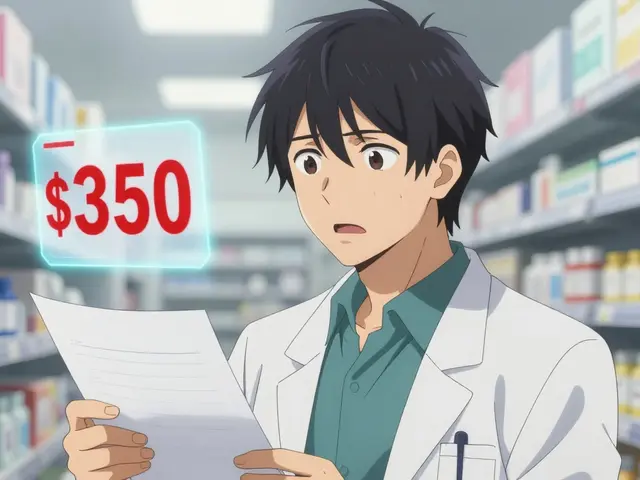
Here’s one of the strangest findings: the more expensive a placebo is, the more side effects people report. In a 2017 Science study, researchers gave participants identical pain-relief creams. One group was told it cost $150. The other, $2. Both creams were fake. But the group that thought they were using the expensive cream reported more pain-and their spinal cord activity confirmed it. Their bodies were reacting to the price tag. Why? Because we associate high cost with high quality. And if something is expensive, we assume it’s powerful. So when side effects happen, we assume they’re a sign the drug is working hard. But here’s the twist: when doctors say, "This generic is cheaper," they’re accidentally triggering the nocebo effect. Even if they mean well, the word "cheap" signals "less effective" to the patient’s brain. Studies show that simply mentioning cost increases reported side effects by 25-40%. Instead of saying, "This is a generic version," try: "This is the exact same medicine as [Brand Name], approved by the FDA, and used by millions. The only difference is the price." That shifts the focus from cost to equivalence.What Works: Changing the Message, Not the Pill
You can’t change the chemistry of a generic pill. But you can change how it’s presented. A 2021 BMJ study found that adding a simple line to generic packaging-"This medication is FDA-approved equivalent to [Brand Name]"-boosted patient confidence by 34% and adherence by 19%. No new ingredients. Just clearer communication. Doctors who spend just two extra minutes explaining generic equivalence see an 18-22% increase in patients sticking with their prescriptions. That’s more than any new drug can claim. Some clinics are now using short educational videos before prescribing generics. One study from Oxford found that showing patients a 90-second video explaining how expectations affect medicine increased treatment effectiveness by 28%-even with the same generic pill. And it’s not just about trust. It’s about reducing fear. When patients understand that side effects from generics are often in their heads-not their bodies-they’re less likely to stop taking them.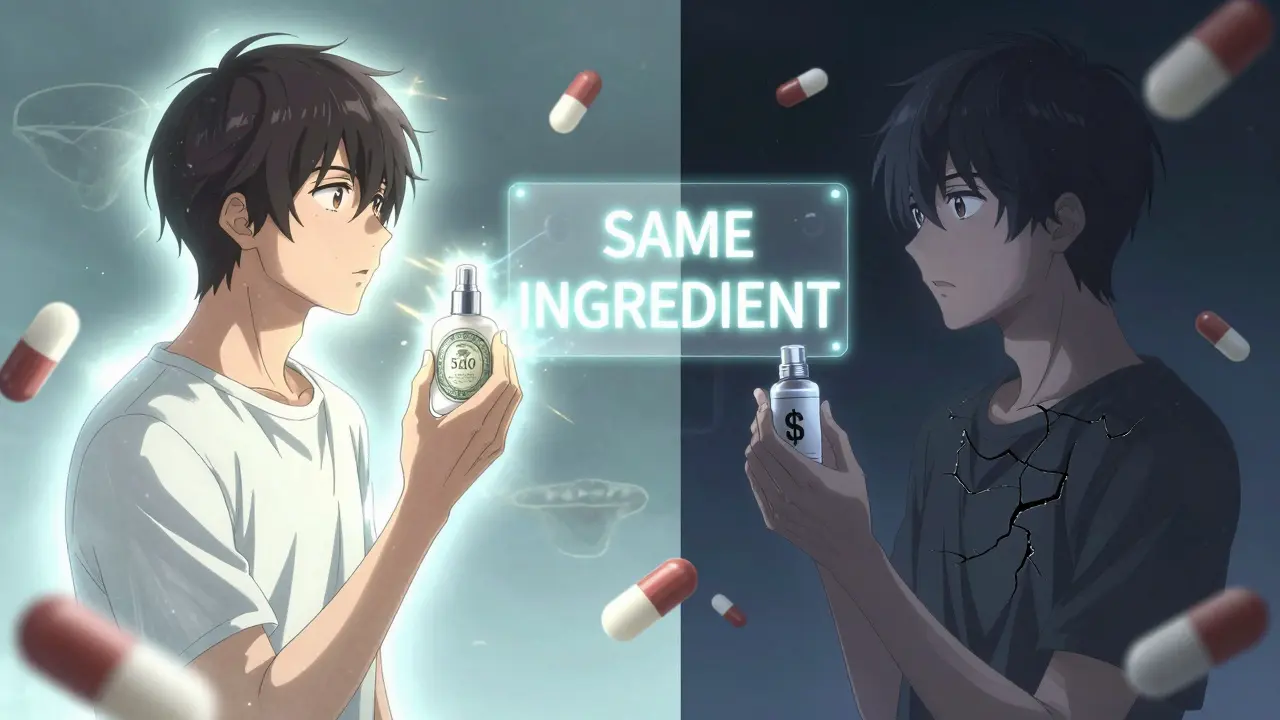
Why This Matters More Than You Think
The gap between perception and reality isn’t just psychological. It’s economic. In the U.S., 90% of prescriptions are filled with generics. But because of negative perceptions, 27% more people quit generic antidepressants within 30 days than brand-name ones-even though the drugs are chemically identical. That leads to more doctor visits, more relapses, more hospitalizations. Researchers estimate that perception-driven non-adherence to generics costs the U.S. healthcare system $1.2-1.8 billion a year. That’s not just wasted money. It’s lost health. And it’s not just in America. Similar patterns show up in Europe, Australia, and Asia. Wherever generics are used, perception shapes outcomes. The solution isn’t to ban generics. It’s to fix the story we tell about them.What You Can Do
If you’re prescribed a generic:- Ask your doctor: "Is this the same as [Brand Name]?" Most are.
- Don’t assume cheaper means weaker. The FDA requires generics to be within 8-13% of the brand’s absorption rate-well within safe, effective limits.
- If you feel worse after switching, ask yourself: "Am I feeling this because of the pill… or because I think it won’t work?"
- Give it time. The body needs a few days to adjust to new packaging, even if the medicine is the same.
- Avoid saying "just a generic." Say "FDA-approved equivalent."
- Don’t mention price unless asked. If you do, pair it with evidence: "It’s cheaper because we don’t spend millions on ads, not because it’s less effective."
- Use simple visuals: show side-by-side images of the brand and generic with the same active ingredient highlighted.
- Consider sharing a short video or handout that explains the placebo effect in plain language.
The Bottom Line
Generics aren’t second-rate. They’re scientifically identical. But medicine isn’t just chemistry. It’s psychology. It’s expectation. It’s trust. The placebo effect proves that your mind has real power over your body. And when you believe a pill won’t work, it often doesn’t. That’s not weakness. It’s biology. The challenge isn’t making better generics. It’s making people believe in them.Do generic drugs have the same active ingredients as brand-name drugs?
Yes. By law, the FDA requires generic drugs to contain the same active ingredient, in the same strength and dosage form, as the brand-name version. They must also be absorbed into the bloodstream at the same rate and to the same extent-within 8-13% of the brand. The only differences are in inactive ingredients like fillers, colors, or packaging, which don’t affect how the medicine works.
Why do some people say generics don’t work as well?
It’s often not about the drug-it’s about perception. Studies show that people who believe they’re taking a brand-name medication report better results-even when given a placebo. If a generic looks different, is cheaper, or comes in plain packaging, the brain may expect less benefit. This can reduce the placebo effect and even trigger nocebo effects, where people notice or amplify side effects because they expect them.
Can the placebo effect make a real difference in pain or depression?
Absolutely. In conditions like chronic pain, migraines, and depression, up to 30-40% of the treatment benefit comes from expectation and belief, not the drug itself. Brain scans show that when people expect relief, their brain releases natural painkillers and mood-regulating chemicals. That’s why a placebo labeled as a brand-name drug can work as well as the real thing in some cases.
Does price affect how well a medicine works?
Yes. Studies have shown that people who believe they’re using an expensive medication report stronger effects-and more side effects-even when the drug is fake. The brain associates high cost with high quality, so it expects more. This can lead to real physiological changes, like increased pain signals in the spinal cord, simply because of price labeling.
Should I avoid generics because of the placebo effect?
No. Generics are safe, effective, and save money. The placebo effect isn’t a flaw-it’s a natural part of how medicine works for everyone. The goal isn’t to eliminate it, but to use it wisely. If you’re concerned, talk to your doctor. Ask for clear information about the drug’s equivalence. Many people who understand the science report better outcomes with generics once their expectations are aligned with the facts.





Lydia H.
So much of medicine is just the mind playing tricks on the body-and it’s not even a bad thing. I used to think placebos were ‘fake,’ but now I see they’re just the brain doing its job. If your brain believes it’s getting a powerful drug, it literally releases its own painkillers. That’s not delusion-that’s evolution.
Josh Kenna
my doctor switched me to generic adderall last year and i swear i felt like a zombie for a week… then i realized i was just convinced it wouldn’t work. i started telling myself ‘this is the same damn thing’ and boom-back to normal. brain is wild
Valerie DeLoach
As someone who grew up in a household where ‘brand name’ meant ‘better,’ I used to refuse generics-until I read a study that showed identical absorption rates. Now I buy them without a second thought. The real tragedy? People pay more for branding while others can’t afford medicine at all. This isn’t just psychology-it’s equity.
Jackson Doughart
It’s fascinating how deeply our conditioning shapes physiological responses. The color of a pill, the weight of the bottle, even the font on the label-these are not trivial details. They are sensory anchors that trigger neurochemical cascades. Medicine has always been as much about ritual as it is about chemistry. The placebo effect is simply the ritual made visible.
sujit paul
Let me tell you something. Big Pharma doesn't want you to know this. They profit from fear. They design generics to look weak-plain white pills, tiny labels-so you'll keep buying the expensive ones. This isn't science. It's psychological warfare. And they're using your own brain against you.
Jake Rudin
Interesting… but perhaps we’re conflating correlation with causation? The placebo effect is real, yes-but is it really that the *branding* causes the effect, or is it that people who *care* about branding are also more likely to be hypervigilant about symptoms, more likely to report side effects, more likely to stop taking meds? The mechanism isn’t necessarily belief-it’s attentional bias. And if that’s true, then the solution isn’t better packaging-it’s better education.
Phil Hillson
So basically we’re paying doctors to be therapists now? I just want a pill that works not a pep talk and a PowerPoint on my brain’s delusions
Aman Kumar
Let me be blunt: if your body responds to branding, then your physiology is fundamentally flawed. You're not sick-you're weak-minded. Modern medicine should be based on biochemistry, not behavioral psychology. If you need a blue pill to feel better, you're not a patient-you're a marketing target.
Malikah Rajap
Wait wait wait-I just realized something. If I tell myself ‘this generic is just as good,’ but I still feel worse… does that mean my brain is *still* tricking me? Or am I just… broken? 😅 I think I need to watch that 90-second video again.