
Naloxone Readiness Assessment
What should you look for in an opioid overdose?
Select all signs of an opioid overdose:
What should you do immediately after recognizing an overdose?
Select the correct action:
How should you administer nasal spray naloxone?
Select the correct technique:
How should you perform rescue breathing?
Select the correct technique:
What should you do after administering naloxone?
Select the correct action:
Every year, over 70,000 people in the U.S. die from opioid overdoses. Many of these deaths happen because someone doesn’t have naloxone nearby when it’s needed. Naloxone isn’t a cure for addiction-it’s a life-saving tool that can reverse an overdose in minutes. But having it isn’t enough. You need a clear, practiced plan. A naloxone readiness plan isn’t just about keeping a bottle in the medicine cabinet. It’s about knowing when to use it, how to use it, and what to do after.
What Naloxone Actually Does
Naloxone is a medication that blocks opioids from binding to brain receptors. When someone overdoses, their breathing slows or stops because opioids overwhelm those receptors. Naloxone kicks them off-fast. Within 2 to 5 minutes, breathing often returns to normal. It doesn’t work on alcohol, benzodiazepines, or stimulants. And if someone hasn’t taken opioids, naloxone does nothing. It’s not addictive. It won’t get you high. It won’t hurt them.
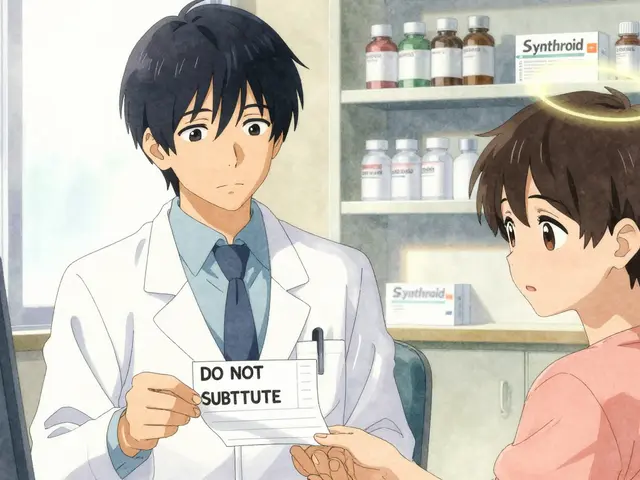
That’s why it’s safe to hand out widely. The FDA approved the first over-the-counter naloxone nasal spray, NARCAN®, in March 2023. Now, you can walk into a pharmacy and buy it without a prescription. That’s a big shift. But many people still don’t know where to find it, or how to use it.
Who Needs a Naloxone Readiness Plan?
You don’t have to be someone with a diagnosed addiction to need naloxone. In fact, 86.7% of opioid overdose deaths happen in people who weren’t even prescribed opioids at the time. But if someone is taking prescription opioids-even for back pain or a post-surgery recovery-there’s risk.
Doctors now recommend naloxone co-prescribing for anyone getting more than 50 morphine milligram equivalents (MME) per day. That’s about 10 tablets of 5mg oxycodone daily. But even lower doses can be dangerous if mixed with alcohol, sleep aids, or anxiety meds. And if someone has a history of substance use, mental health struggles, or has been through detox before, their risk goes up.
It’s not just patients. Family members, caregivers, and even coworkers should be prepared. Workplace overdose deaths have increased by 619% since 2011. OSHA now recommends naloxone in any workplace with more than 15 employees.
The 5-Step Naloxone Readiness Plan
Having naloxone on hand is step one. The rest is about action.
- Recognize the signs-within 30 seconds. Look for unresponsiveness, slow or shallow breathing, blue lips or fingernails, and pinpoint pupils. Snoring or gurgling sounds can mean airway blockage. Don’t wait for someone to stop breathing completely.
- Call 911 immediately. Even if you give naloxone, they still need emergency care. Overdose can come back. Naloxone wears off in 30 to 90 minutes. Opioids like fentanyl can last much longer. If you don’t call, they might stop breathing again.
- Administer naloxone. For nasal spray: Tilt the head back, insert the nozzle fully into one nostril, press the plunger hard. That’s it. No need to check if it went in. Just press. For injection: Use a 0.4mg vial and inject into the outer thigh, even through clothing. One dose is usually enough-but be ready for more.
- Give rescue breathing. If they’re not breathing or breathing poorly, start now. Tilt the head back, lift the chin, pinch the nose, give one breath every 5 seconds. Don’t stop until help arrives or they start breathing on their own. Studies show oxygen levels drop below 90% in under 3 minutes. Brain damage can start in 4.
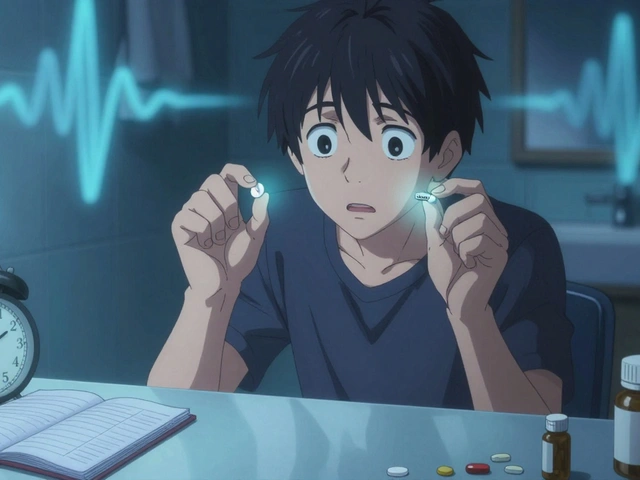
- Stay with them. Monitor for at least 2 to 3 hours. Naloxone wears off before some opioids. If they wake up, they might feel sick, jittery, or angry. That’s normal. But if they stop breathing again, give another dose of naloxone. Keep giving breaths. Don’t leave them alone.
What Kind of Naloxone Should You Keep?
Not all naloxone is the same. The most common options are:
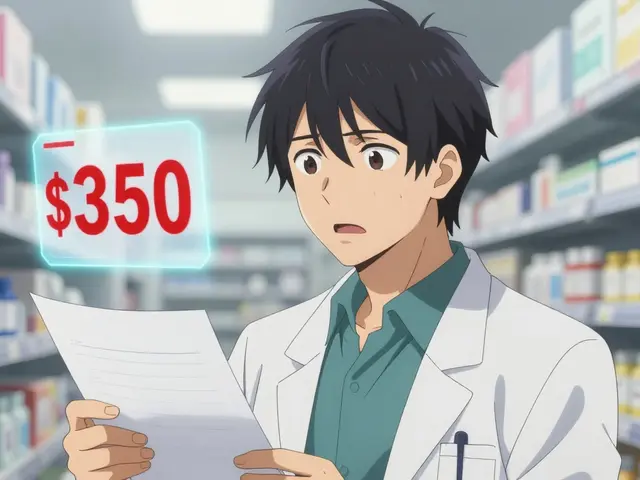
- Nasal spray (NARCAN® 4mg)-Easiest to use. One spray per dose. Retail price: $130-$150 without insurance. Shelf life: 18-24 months. Replace after expiration.
- Intramuscular injection (0.4mg vials)-Cheaper, around $25-$40 per dose. Requires a syringe and needle. Need two vials per kit. Best for trained users or clinical settings.
- Auto-injectors (Evzio®)-Voice-guided. Expensive ($3,200 after price cuts), but helpful for people who are nervous about using needles.
For home use, nasal spray is best. No training needed. For clinics, workplaces, or first responders, keep at least two doses. Rural areas with longer EMS response times (over 20 minutes) should have three or more.

Why People Don’t Use It-Even When They Have It
Stigma is the biggest barrier. Many people think naloxone enables drug use. That’s false. It saves lives. And it’s not just patients who avoid it. Only 32.4% of primary care doctors routinely offer it to high-risk patients, according to national survey data.
Cost still blocks access. Even with laws in 47 states allowing free distribution, 41.7% of uninsured people say they can’t afford it. Some pharmacies don’t stock it. Others don’t know how to dispense it. In Pennsylvania, nearly 70% of pharmacy staff needed training before they felt confident handing it out.
And then there’s fear. People don’t know what to do. They think they’ll get in trouble. They don’t know how to use the spray. They worry about injecting someone. But training is simple. Just 20 minutes of hands-on practice boosts correct use to 92%. Annual refreshers keep skills sharp.
Real Stories, Real Results
In Washington State, over 28,000 overdoses were reversed using naloxone kits distributed through community programs. On Reddit, users in r/OpiatesRecovery shared 87 stories: 62% of reversals happened at home, thanks to family members who had a kit. But 29% said they struggled to get the spray in during the panic. One user wrote: “I was shaking so bad I dropped the spray twice. I didn’t know if I was doing it right.”
Another common theme: rescue breathing made the difference. In 78% of successful cases, someone was giving breaths while waiting for the naloxone to work. That’s why the plan isn’t just about the drug-it’s about the person holding the spray.
What’s Missing From the Plan
Naloxone only fixes breathing. It doesn’t fix what caused the overdose. Fentanyl is now in 87% of fatal overdoses-and it’s so strong that sometimes one dose of naloxone isn’t enough. You might need two, three, or even ten doses. That’s why having extra kits matters.
Also, naloxone doesn’t prevent complications like vomiting, aspiration, or muscle breakdown. About 17% of people who survive an overdose with naloxone still end up in the hospital for other issues. That’s why calling 911 isn’t optional.
And while naloxone saves lives, it doesn’t solve addiction. Only 18.5% of people with opioid use disorder get medication-assisted treatment like methadone or buprenorphine. Without that, the cycle continues. Naloxone is a bridge-not a destination.

How to Build a Personal or Family Readiness Plan
Start small. Pick one person who’s on opioids. Ask: Do they have a plan? Do you have a kit? Can you use it?
- Buy two naloxone nasal sprays. Keep one at home. Keep one in your car or bag.
- Watch a 5-minute training video from the CDC or SAMHSA. Practice on a dummy spray (many come with training devices).
- Teach one other person-your partner, a friend, a neighbor. Don’t assume they’ll know what to do.
- Put the kit where you can reach it in under 30 seconds. Not in the medicine cabinet. Not in the glovebox. On the nightstand. In your purse.
- Write down the steps. Tape them to the fridge. Or save them on your phone.
If you’re a caregiver or healthcare provider, keep at least two doses in your emergency kit. Train everyone who might be around the patient. Include instructions in discharge papers. Don’t wait for someone to overdose before you talk about it.
Where to Get Naloxone
You can get it:
- At any pharmacy-no prescription needed (since September 2023)
- Through community health centers, needle exchanges, or overdose prevention programs
- From your doctor-if you’re prescribed opioids, ask for it
- For free in many states-check your local health department website
Some states, like South Carolina and Oklahoma, give out free kits with no questions asked. Others have standing orders that let pharmacies dispense it without a prescription. If you’re unsure, call your local health department. They’ll tell you where to go.
Final Thought: It’s Not About Judgment. It’s About Survival.
Naloxone isn’t a reward for being clean. It’s not a punishment for using. It’s a medical tool-like an EpiPen for allergies, or a defibrillator for cardiac arrest. You don’t wait until someone’s in crisis to hand it out. You prepare. You train. You keep it close.
Every opioid prescription carries risk. Every person on opioids deserves a chance to survive. And every person who loves them deserves to know how to save their life. You don’t need to be a doctor. You don’t need to be brave. You just need to be ready.
Can naloxone hurt someone who didn’t take opioids?
No. Naloxone only works on opioid receptors. If someone hasn’t taken opioids, it has no effect. It won’t cause harm, withdrawal, or side effects. It’s safe to give even if you’re unsure.
How many doses of naloxone should I keep on hand?
At least two doses. Fentanyl and other strong opioids often require more than one. For home use, keep two nasal sprays. For clinics or high-risk environments, keep three or more. Rural areas with longer EMS response times should have extra.
Do I need training to use naloxone nasal spray?
No formal training is required. The nasal spray is designed to be simple: tilt the head back, insert the nozzle, press the plunger. But practicing with a training device increases confidence and speed. Twenty minutes of hands-on practice improves success rates to over 90%.
What if the person wakes up after naloxone but seems angry or aggressive?
That’s common. Naloxone can cause sudden opioid withdrawal, which feels like intense flu symptoms-nausea, shaking, anxiety, and sometimes aggression. Stay calm. Keep them safe. Don’t leave them alone. Call 911. They need medical monitoring for at least 2-3 hours.
Can I reuse a naloxone nasal spray?
No. Each nasal spray is single-use. Once the plunger is pressed, the device is empty. Even if you think you didn’t give the full dose, don’t try to reuse it. Always use a new spray if a second dose is needed.
Is naloxone covered by insurance?
Most insurance plans cover naloxone, especially if prescribed. Even without insurance, many pharmacies offer discounts or free programs. Some states distribute free kits through public health offices. Always ask your pharmacist about cost-reduction options.



Monica Evan
I keep two NARCAN sprays in my purse and one in my car. My brother OD’d last year and I didn’t know how to use it until I watched a 5-minute video on my phone during the ambulance ride. Don’t wait until it’s too late. Just get it. Practice with the dummy one. It’s not scary once you do it once.
Also-don’t put it in the medicine cabinet. I found mine under a pile of expired coupons and it was expired. Learn from my dumb ass.
Jim Irish
Naloxone is a critical public health tool. Its availability without prescription represents a significant advancement in harm reduction policy. The data supporting its efficacy is robust and widely documented by the CDC and WHO.
Eddie Bennett
I used to think people who carried naloxone were enabling junkies. Then my cousin OD’d at a BBQ and my aunt saved him with the spray she kept in her glovebox. He’s been clean 18 months now. Turns out saving a life doesn’t care about your judgment. Just do the thing. Keep two. Teach your kids.
Sylvia Frenzel
This is why America is falling apart. You hand out free narcan like candy and people think they can do drugs without consequences. We should be punishing addicts, not giving them safety nets. This isn’t compassion-it’s enabling.
Doris Lee
I teach this to my yoga students. Seriously. One of them is on pain meds after a car accident. I showed her how to use the spray. We practiced on a banana. She laughed. Then she cried. Then she got two for her mom. That’s the kind of ripple effect we need. No shame. Just readiness.
Michaux Hyatt
The biggest thing people miss is rescue breathing. I’ve seen too many cases where naloxone was given but the person still died because no one was breathing for them while waiting. Even 30 seconds without oxygen can cause brain damage. Don’t just spray and wait. Breathe for them. Every 5 seconds. Until help arrives. It’s that simple. And it saves lives.
Raj Rsvpraj
In India, we have no such luxury. We do not hand out naloxone like party favors. We have a different philosophy: prevention through discipline, not pharmacological crutches. Your Western obsession with harm reduction is a symptom of moral decay. Why not focus on sobriety instead of stocking up on antidotes?
Jack Appleby
Actually, the FDA approved OTC NARCAN® in March 2023-not September. And the shelf life is 18 to 24 months, not 24 to 30. Also, Evzio® isn’t $3,200 anymore; it’s $4,500 after the latest price hike. And you’re wrong about fentanyl requiring up to ten doses-most cases require two or three. The literature is clear. Please fact-check before spreading misinformation.
Frank Nouwens
I am a retired paramedic. I administered naloxone over 200 times in my career. The most important thing I learned: never assume the person is just sleeping. The gurgling sound is the death rattle. It is not snoring. If you hear it, act immediately. Also, always call 911-even if they wake up. They will crash again. Always.