
Psoriasis isn’t just a rash. It’s a full-body condition that starts on the skin but doesn’t stop there. If you’ve ever looked in the mirror and seen thick, red, scaly patches on your elbows, scalp, or knees, you know how frustrating it can be. But what most people don’t realize is that psoriasis is a sign of something deeper - an overactive immune system attacking healthy skin cells. This isn’t a simple case of dry skin or bad hygiene. It’s a chronic, lifelong condition that affects millions around the world, and managing it takes more than just creams.
What Really Causes Psoriasis?
The skin normally renews itself every 28 to 30 days. In psoriasis, that process speeds up to just 3 to 4 days. Skin cells pile up before they have time to shed, forming those raised, scaly plaques. Why does this happen? It’s not because of dirt or stress alone. The real culprit is your immune system. T-cells, which are supposed to fight infection, mistakenly target healthy skin cells. This triggers inflammation and rapid cell growth. Genetics play a huge role - if a close family member has psoriasis, your risk jumps by 60 to 90%. It’s not contagious. You didn’t catch it. You were born with a predisposition.
There are different types, and not everyone experiences the same thing. About 8 out of 10 people have plaque psoriasis - the classic thick, silvery scales on elbows and knees. Others might have guttate psoriasis, which looks like small, drop-like spots after a sore throat. Inverse psoriasis hides in skin folds - under the arms, in the groin, or under the breasts. It’s smooth, red, and gets worse with sweat and friction. Then there’s pustular psoriasis, where sterile pus-filled bumps appear, sometimes with fever. And the rarest form, erythrodermic psoriasis, turns large areas of skin bright red and can be life-threatening. If you’ve ever felt like your whole body is burning, this could be it.
Why Skin Care Alone Isn’t Enough
Most people start with topical treatments. Creams, ointments, foams - they’re the first line of defense. Products like calcipotriol (a vitamin D analog) and betamethasone (a steroid) are common. Some doctors combine them to speed up results. But here’s the catch: these work best on mild cases. If your plaques cover more than 5% of your body, or if they’re on your face, scalp, or nails, topicals alone often fall short.
And let’s talk about the reality of using them. One survey of 247 people with psoriasis found that 67% struggled to stick to their routine. Why? The mess. The time. The fear of long-term steroid use. Applying cream to your scalp every night? Trying to get it on your lower back without help? It’s not easy. Even if it works, consistency is hard. That’s why many people need more than just creams.
When Topicals Fail: Systemic Therapy Steps In
When psoriasis spreads or doesn’t respond to creams, it’s time to think beyond the skin. Systemic therapy means treating the whole body. There are three main paths: traditional pills, phototherapy, and biologics.
Methotrexate, cyclosporine, and acitretin are oral or injectable drugs that calm the immune system. Methotrexate is often used for moderate to severe cases. It’s cheap, but it can affect the liver and cause nausea. Cyclosporine works fast - great for sudden flare-ups - but it can hurt the kidneys if used too long. Acitretin helps with pustular or erythrodermic psoriasis, but it’s not safe for women who could get pregnant.
Phototherapy uses UV light. Narrowband UVB is the most common. You go to a clinic 2 to 3 times a week for 8 to 12 weeks. It’s effective - about 75% of people see major improvement. But it’s time-consuming. And if you live far from a clinic, it’s not practical. Home units cost $2,500 to $5,000 upfront. Not everyone can afford that.

The Game-Changers: Biologics
Biologics are the biggest leap forward in psoriasis treatment in the last 20 years. These are injectable or infused drugs that target specific parts of the immune system. Instead of broadly suppressing immunity, they zero in on the exact molecules causing the problem.
There are several types:
- TNF-alpha inhibitors like adalimumab (Humira) and etanercept - among the first biologics approved.
- IL-17 inhibitors like secukinumab and ixekizumab - fast-acting, often clear skin by 75% or more in 12 weeks.
- IL-23 inhibitors like guselkumab and tildrakizumab - newer, with longer-lasting results. Many patients stay clear for months between doses.
- IL-12/23 inhibitors like ustekinumab - still used, but newer options are often preferred.
Studies show that biologics can achieve PASI 90 - meaning 90% of skin clears. That’s not just improvement. That’s near-complete clearance. On Healthgrades, 82% of users report high satisfaction. Secukinumab has a 4.3/5 rating for effectiveness. But here’s the downside: cost. Out-of-pocket, biologics can run $1,200 to $5,500 a month. Even with insurance, copays can be $300 or more. That’s why 41% of patients delay or skip treatment because of price.
Psoriasis Is More Than Skin Deep
Here’s what most doctors don’t tell you: psoriasis isn’t just a skin disease. It’s a systemic condition with serious hidden risks. People with psoriasis are 58% more likely to have a heart attack before age 50. They’re also 40-50% more likely to have metabolic syndrome - high blood pressure, high sugar, belly fat, and bad cholesterol. Up to 30% develop psoriatic arthritis - joint pain, stiffness, swollen fingers - often before the skin symptoms even appear.
And then there’s mental health. One in three people with psoriasis deals with depression or anxiety. The stigma, the constant itching, the feeling that you’re always on display - it wears you down. Studies show the emotional toll is as heavy as that of diabetes or heart disease. That’s why every person with moderate to severe psoriasis should be screened for depression, blood pressure, and cholesterol. It’s not optional. It’s part of care.
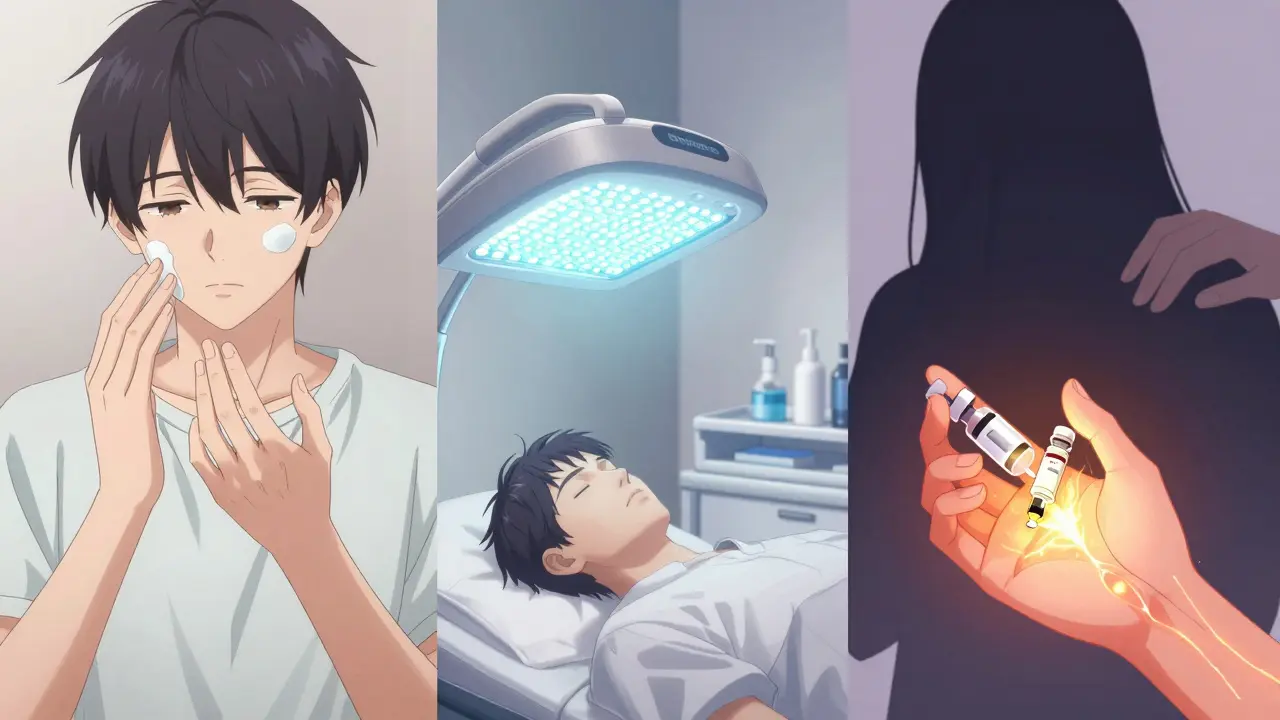
What Treatment Should You Choose?
There’s no one-size-fits-all. Your treatment depends on how much skin is affected, what other health problems you have, your lifestyle, and your budget. The old approach was step-by-step: try creams, then pills, then light therapy, then biologics. But experts now say: match the treatment to the severity from the start. If your psoriasis is severe, don’t waste months on creams that won’t work. Go straight to a biologic or oral systemic drug. This is called the “right-care-first” approach.
But access matters. In rural areas, there are 40% fewer dermatologists per square mile than in cities. If you can’t get to a specialist, your options shrink. Some people wait years for the right care. That’s why tools like the National Psoriasis Foundation’s virtual support groups and apps like MyPsoriasisTeam are so valuable. They help you track symptoms, find resources, and connect with others who get it.
Managing Daily Life
Even with the best treatment, daily habits make a difference. Use thick, petrolatum-based moisturizers every day. Lukewarm showers, not hot. Gentle, fragrance-free cleansers. Avoid scratching - it can trigger new plaques. Keep a journal. Note what triggers flares: stress, alcohol, cold weather, certain foods. For many, weight loss helps. Losing even 10% of body weight can cut psoriasis severity in half.
Topical treatment adherence improves by 40% when you simplify your routine. One application a day instead of two. A foam for the scalp instead of a messy lotion. These small changes add up. And don’t ignore the emotional side. Join a support group. Talk to someone who understands. You’re not alone.
The Future Is Personalized
New drugs are coming. Deucravacitinib, a once-daily pill approved in 2022, targets a specific enzyme inside immune cells. In trials, 58% of patients hit PASI 90. Oral RORγt inhibitors are in Phase 2 and promise similar results without injections. These are exciting because they could replace biologics for many people - cheaper, easier, and just as effective.
But the real future is personalization. Doctors are starting to look at your genes, your immune markers, your comorbidities - and match you to the best treatment. One person might respond brilliantly to an IL-17 inhibitor. Another might need an IL-23 blocker. We’re moving away from trial-and-error and toward precision medicine. It’s not here for everyone yet, but it’s coming.
Psoriasis is chronic. It doesn’t go away. But with the right mix of skin care, systemic therapy, and lifestyle support, it can be controlled. Not just managed - controlled. Clear skin is possible. Better health is possible. And you don’t have to accept the old idea that psoriasis is just something you live with. You deserve more.
Is psoriasis contagious?
No, psoriasis is not contagious. It cannot be passed through touch, bodily fluids, or close contact. It’s an autoimmune condition caused by genetic and immune system factors, not an infection. You cannot catch it from someone else, nor can you give it to them.
Can psoriasis be cured?
There is no cure for psoriasis yet. Current treatments can control symptoms, reduce plaques, and even lead to near-complete skin clearance in many cases. But the underlying immune dysfunction remains. Flares can return if treatment stops or triggers like stress, infection, or cold weather occur. The goal is long-term management, not permanent elimination.
What’s the difference between topical and systemic treatment?
Topical treatments - like creams, ointments, and foams - are applied directly to the skin. They work locally and are best for mild cases. Systemic treatments - including pills, injections, and infusions - affect the whole body. They target the immune system and are used for moderate to severe psoriasis. Systemic therapies are more powerful but come with more potential side effects.
Do biologics have serious side effects?
Biologics suppress specific parts of the immune system, so they can increase the risk of infections like tuberculosis or hepatitis. Before starting, doctors require screening for these conditions. Other possible side effects include injection site reactions, headaches, or mild nausea. Serious infections are rare, but regular monitoring is required. The benefits usually outweigh the risks for people with moderate to severe psoriasis.
Why is psoriasis linked to heart disease?
The same chronic inflammation that drives psoriasis also damages blood vessels and increases plaque buildup in arteries. People with psoriasis have higher levels of inflammatory markers like C-reactive protein. This raises the risk of heart attack, stroke, and high blood pressure - especially if the condition is severe or untreated. Managing psoriasis isn’t just about skin - it’s about protecting your heart.
How can I tell if I have psoriatic arthritis?
Psoriatic arthritis often shows up as joint pain, stiffness (especially in the morning), swollen fingers or toes (dactylitis), or pain in the lower back or heels. Nail changes like pitting or separation from the nail bed are common. If you have psoriasis and notice joint symptoms, see a rheumatologist. Early diagnosis prevents permanent joint damage. Up to 30% of psoriasis patients develop it, often before skin symptoms worsen.









Noluthando Devour Mamabolo
psoriasis is wild 🌿 i used to think it was just "dry skin" until my cousin got it bad-like, full-body erythrodermic type. the way her skin felt like it was on fire? heartbreaking. now i just send her memes and emollients. also, biologics are kinda magical? my cousin’s PASI 90 in 3 months. 🤯
Leah Dobbin
It’s fascinating how mainstream dermatology still clings to the "topicals first" paradigm when the data clearly supports early systemic intervention. The NPF guidelines have been updated since 2021, yet primary care physicians remain woefully undereducated on the systemic implications of psoriasis. It’s not merely a dermatological issue-it’s a cytokine-driven systemic inflammatory disorder. One must ask: why are we still treating symptoms instead of pathophysiology?
Alex MC
Thanks for laying this out so clearly. I’ve been dealing with plaque psoriasis for 12 years, and honestly? The biggest game-changer was realizing it wasn’t just "my skin being weird." It’s immune dysregulation. I started on ustekinumab last year. Skin’s 95% clear. Still need moisturizer daily, but I sleep better now. Also-yes, mental health matters. Therapy helped more than any cream.
rakesh sabharwal
Biologics? Please. This is just Big Pharma’s latest money grab. Methotrexate has been around since the 1950s. Why are we paying $5000/month for a monoclonal antibody when a $5 generic tablet works? Also, your "systemic inflammation" narrative is overblown. I’ve seen patients on biologics get shingles, pneumonia, even lymphoma. Don’t be fooled by marketing.
Kathy Leslie
my mom has psoriatic arthritis and her hands look like twisted wire now. she didn’t get diagnosed until her wrists were permanently damaged. if you have psoriasis and joint pain? go to a rheum. no excuses. also, weight loss helped her more than anything. lost 25 lbs, no more NSAIDs. 🙏
Buddy Nataatmadja
As someone who grew up in rural Indonesia, I’ve seen psoriasis treated with turmeric paste, neem oil, and prayers. No access to dermatologists. But here’s the thing: even without biologics, community support and consistent moisturizing changed lives. It’s not about the most expensive treatment-it’s about consistency. And dignity.
Stephanie Paluch
psoriasis + depression = real. i cried in the shower every morning for 6 months. nobody gets it until they’ve had someone say "is that a rash?" and then laugh. i started journaling. i stopped shaving my legs. i stopped apologizing. now i wear shorts. 🌞
Lorna Brown
There’s an ethical imperative here. We’re treating a chronic autoimmune condition with a stepwise model rooted in 1990s economics. That’s not medicine-it’s rationing disguised as protocol. If we acknowledge psoriasis as a systemic disease with cardiovascular and psychiatric comorbidities, then we must treat it as such from day one. The cost of inaction isn’t measured in dollars-it’s measured in lost years of life, lost mobility, lost selfhood.
Rex Regum
LOL "biologics are the biggest leap forward"? More like the biggest scam. My cousin got on Humira and ended up with TB. Now she’s on disability. Meanwhile, the dermatologist made $12k in kickbacks. Wake up. This isn’t science-it’s a Ponzi scheme with IV drips.
Kelsey Vonk
i’ve been on secukinumab for 2 years. skin’s clear. but honestly? the best part isn’t the skin. it’s not having to explain to strangers why i don’t shake hands. or why i don’t wear swimsuits. i didn’t know i was carrying that shame until it was gone. thank you for saying this.
Emma Nicolls
psoriasis sucks but i found a foam that works and now i just put it on once a day before bed. no more mess. also lost 15 lbs and my flares cut in half. i dont care what the docs say-lifestyle changes matter more than you think. psoriasis is stressful but it dont have to control you. 💪
Richard Harris
Great summary. I’m from the UK and we’ve got NHS access to biologics, but the wait times are brutal. 18 months sometimes. I wish more people knew about the NPF’s virtual support groups-they’re lifesavers. Also, moisturiser is non-negotiable. I use Vaseline. Simple. Cheap. Works.
Kandace Bennett
Of course biologics work-they’re engineered by American scientists. Why would you trust some Indian herbal paste or African mud treatment? We have the best science here. And yes, I’m proud of that. If you’re not using IL-23 inhibitors, you’re not serious about your health. 🇺🇸✨
Tim Schulz
"Clear skin is possible" - said the guy who hasn’t had a flare in 10 years and probably doesn’t have kids, a job, or a mortgage. Try living with this while working a 9-5 and paying $400 copays. This isn’t a TED Talk. It’s a daily war. And the system is rigged.
Jinesh Jain
My uncle in Delhi has psoriasis for 30 years. He uses coconut oil, avoids spicy food, and walks 5km daily. No drugs. No biologics. Skin is 80% clear. Maybe the answer isn’t always the most expensive one. Sometimes it’s just movement, diet, and peace.