
Medication Retention Risk Calculator
Select all medications you take regularly to calculate your cumulative Anticholinergic Cognitive Burden (ACB) score.
Personal Health Factors
Your Risk Assessment
Score: 0Recommendations:
* This tool is for educational purposes only and does not constitute medical advice. Consult your healthcare provider before making changes to your medication regimen.
Imagine sitting on the toilet, straining with all your might, yet nothing comes out. The pressure builds in your lower abdomen until it becomes painful. This isn’t just an uncomfortable moment; it is a medical emergency known as acute urinary retention, defined as the sudden inability to pass urine despite having a full bladder. While many people assume this is strictly a prostate issue for older men, a silent culprit often hides in your medicine cabinet. For millions of patients, particularly those treating overactive bladder or gastrointestinal issues, the very drugs prescribed to help them are causing their bladders to shut down.
This article breaks down how common medications trigger this dangerous condition, who is at highest risk, and what you can do to protect yourself. We will look at the science behind why these drugs stop your bladder from working, compare the risks of different medications, and provide a clear checklist for spotting the warning signs before they become an emergency.
The Silent Culprit: How Anticholinergics Stop Your Bladder
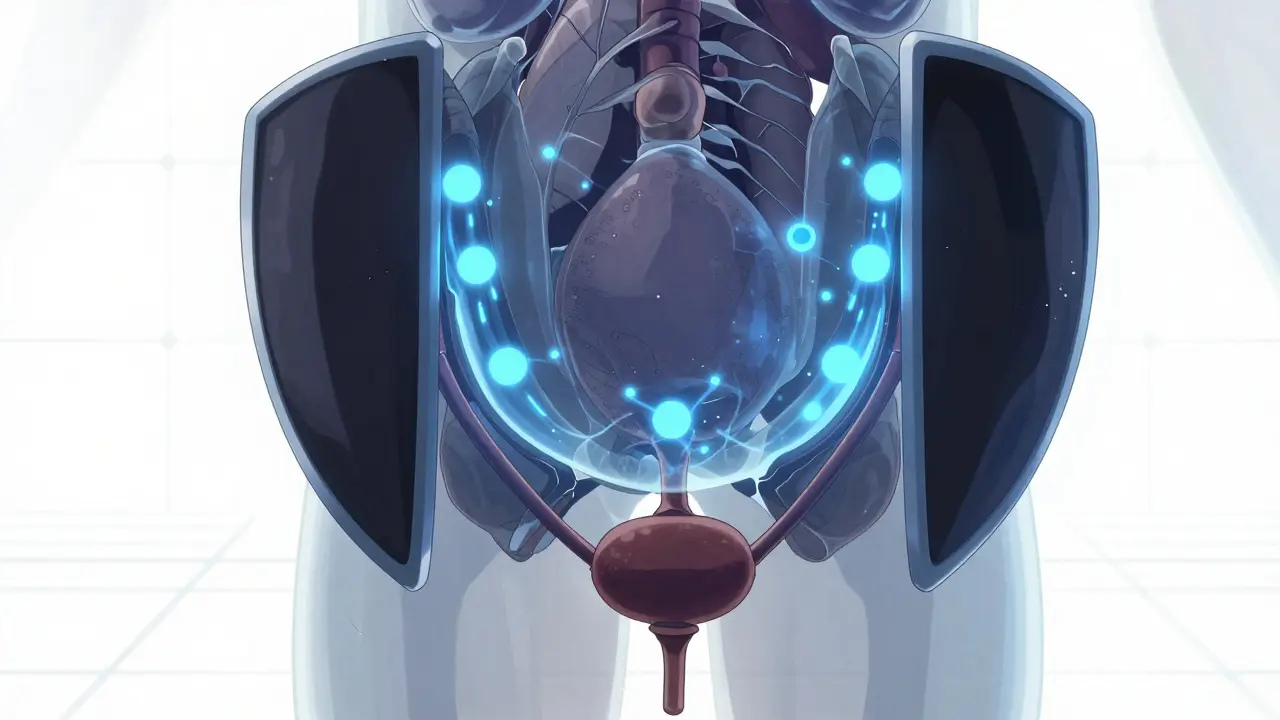
To understand why certain drugs cause urinary retention, we first need to look at how your bladder normally works. Think of your bladder like a balloon made of muscle. When it’s time to urinate, your brain sends a signal via a chemical messenger called acetylcholine, which binds to muscarinic receptors on the detrusor muscle to trigger contraction. Specifically, the M3 subtype of these receptors acts as the "on switch" for squeezing urine out.
Anticholinergic medications are designed to block acetylcholine. Originally developed in the 1940s for stomach issues, they were later adapted for urological conditions because blocking these signals calms an overactive bladder. However, this mechanism is a double-edged sword. By blocking the M3 receptors, these drugs prevent the detrusor muscle from contracting effectively. If the muscle cannot squeeze, urine stays trapped in the bladder. According to research by van Kerrebroeck et al. (2008), up to 10% of all urinary retention episodes are directly caused by medication use, with anticholinergics being one of the biggest offenders.
It is not just about taking one pill. The risk compounds when you take multiple medications that have anticholinergic properties. Doctors use the Anticholinergic Cognitive Burden (ACB) scale to measure this load. Medications are scored from 1 to 3 based on how strongly they block these receptors. A study in the *Journal of the American Geriatrics Society* (2017) found that patients with an ACB score of 3 or higher face a 68% increased risk of urinary retention. This means if you are taking a sleep aid, an allergy medication, and a bladder drug simultaneously, you are stacking the deck against your own body’s ability to empty its bladder.
Who Is Most at Risk?
Not everyone who takes these medications will experience retention, but certain groups are significantly more vulnerable. The anatomy and physiology of your body play a huge role in how likely you are to suffer from drug-induced retention.
- Men Over 65 with BPH: Benign Prostatic Hyperplasia (BPH) is the enlargement of the prostate gland, which squeezes the urethra. If you already have a narrowed exit pipe, adding a drug that stops the pump (your bladder) from working is a recipe for disaster. The incidence of drug-induced retention jumps from 0.5% in the general population to approximately 4.3% in men with BPH, according to a 2019 University of Calgary clinical review.
- Elderly Patients with Dementia: Older adults metabolize drugs slower and often take multiple prescriptions. The Beers Criteria (2019 update) lists anticholinergics as potentially inappropriate for older adults due to high risks. A 2016 *JAMA Internal Medicine* study showed anticholinergic use increased retention risk by 49% in elderly populations compared to non-users.
- Polypharmacy Users: If you take opioids, sedatives, or antidepressants alongside bladder medications, the risk skyrockets. Data from the Canadian Medical Association Journal (2018) indicates that combining anticholinergics with opioids increases retention rates to 12.7%.
Women are not immune either. While men have the added obstacle of the prostate, women can suffer from pelvic floor dysfunction or prior surgeries that weaken bladder support. In a 2022 survey by the National Association for Continence, 5.1% of women reported severe retention requiring catheterization, proving that gender alone does not guarantee safety.
Comparing the Risks: Not All Drugs Are Equal
If you must take medication for overactive bladder, knowing which specific drug carries the highest risk can help you make informed decisions with your doctor. Not all anticholinergics hit the bladder receptors with the same force. Some are selective, targeting only the bladder, while others are non-selective, affecting the whole body.
| Medication Name | Drug Class | Retention Risk Level | Key Characteristic |
|---|---|---|---|
| Oxybutynin | Non-selective Anticholinergic | High (1.8-2.5%) | Blocks M1, M2, and M3 receptors equally; crosses blood-brain barrier easily. |
| Solifenacin | Selective M3 Antagonist | Moderate (1.2-1.8%) | 31-fold greater selectivity for M3 receptors; fewer systemic side effects. |
| Trospium Chloride | Quaternary Ammonium Compound | Moderate-High (1.5-2.2%) | Limited blood-brain barrier penetration; less cognitive impact but still affects bladder. |
| Mirabegron | Beta-3 Adrenergic Agonist | Low (0.3%) | Relaxes bladder via beta-3 receptors; does not block acetylcholine. |
| OnabotulinumtoxinA | Botulinum Toxin Injection | Very Low (0.5%) | Paralyzes muscle temporarily; requires injection every 6 months. |
As the table shows, Oxybutynin carries the highest burden because it is non-selective. It blocks receptors throughout the body, leading to dry mouth, constipation, and urinary retention. In contrast, Mirabegron works through a completely different pathway-stimulating beta-3 receptors to relax the bladder rather than blocking contraction signals. The ROSE trial published in *European Urology* (2012) highlighted this difference, showing mirabegron had a retention incidence of just 0.3% compared to 1.7% for anticholinergics. This is why market share has shifted dramatically; in 2022, mirabegron captured 31% of the overactive bladder market, while oxybutynin dropped to 18%, according to Symphony Health data.
Warning Signs: What to Watch For
Urinary retention rarely happens without warning. Your body usually sends subtle signals that something is wrong before you reach the point of total blockage. Recognizing these early signs can save you a trip to the emergency room.
- Hesitancy: You stand at the toilet, but it takes several seconds or even minutes for the stream to start.
- Weak Stream: The flow is thin, dribbling, or stops and starts intermittently.
- Incomplete Emptying: You feel like you still need to go immediately after standing up.
- Straining: You find yourself pushing or bearing down to get urine out.
- Frequency with Low Volume: You visit the bathroom often, but only small amounts come out each time.
If you experience any of these symptoms within the first 30 days of starting a new medication, contact your doctor immediately. Real-world data supports this urgency: in the 2022 National Association for Continence survey, 63% of users who experienced severe retention reported it happened within the first month of treatment. One user, 'JohnM72' on Drugs.com, shared his story: "After 2 weeks of oxybutynin 5mg... I completely stopped urinating and required catheterization." He was 68 with mild prostate issues, a classic profile for this adverse event.

Safer Alternatives and Management Strategies
If you are worried about retention, do not stop your medication abruptly without consulting your healthcare provider, as this can cause other health issues. Instead, discuss these evidence-based strategies:
Switch to Beta-3 Agonists: As mentioned, mirabegron offers a safer profile for men and those with history of retention. It relaxes the bladder muscle without inhibiting the contraction mechanism needed to void.
Dose Titration: Start low and go slow. The 2022 AUA/SUFU Guideline suggests starting at 25% of the standard dose and increasing gradually over two-week increments. This allows your body to adjust and gives doctors time to monitor for side effects.
Concomitant Alpha-Blockers: For men with BPH, taking an alpha-blocker (like tamsulosin) alongside an anticholinergic can reduce retention risk by 37%, according to a 2017 *Journal of Urology* meta-analysis. The alpha-blocker relaxes the prostate and bladder neck, keeping the "exit door" open while the anticholinergic calms the bladder spasms.
Regular PVR Monitoring: Post-Void Residual (PVR) measurement is the gold standard for monitoring. This simple ultrasound test measures how much urine is left in your bladder after you pee. The guidelines mandate baseline PVR testing before starting anticholinergics in men. If your residual volume exceeds 150mL, discontinuation is recommended. Home bladder scanners are now available, and telehealth programs report 92% adherence to monitoring when using these devices, reducing retention episodes by 61%.
When to Seek Emergency Care
Acute urinary retention is a medical emergency. If you are unable to urinate for 12 hours or more, or if you have severe pain in your lower abdomen accompanied by nausea or vomiting, go to the nearest emergency department. Delaying care can lead to permanent bladder damage, kidney injury, or infection. Hospitals are equipped to insert a catheter to drain the bladder immediately, relieving the pressure and preventing long-term harm.
The cost of ignoring these risks is high-not just physically, but financially. Anticholinergic-induced retention costs the U.S. healthcare system $417 million annually in emergency visits and catheterizations. By understanding the risks, choosing the right medication, and monitoring your symptoms, you can avoid becoming part of that statistic.
Can urinary retention from medication be reversed?
Yes, in most cases, urinary retention caused by medications is reversible once the offending drug is discontinued or the dose is reduced. However, immediate medical attention is required to drain the bladder safely. If retention persists after stopping the medication, further urological evaluation is needed to rule out structural issues like severe BPH or nerve damage.
Which common non-bladder medications have anticholinergic effects?
Many common drugs carry anticholinergic properties. These include certain antidepressants (like amitriptyline), antihistamines (like diphenhydramine/Benadryl), anti-nausea meds (like promethazine), and muscle relaxants (like cyclobenzaprine). Even some migraine medications contain anticholinergic components. Always check the side effect list for "dry mouth" or "constipation," which often indicate anticholinergic activity.
Is Mirabegron safe for everyone?
Mirabegron is generally safer regarding urinary retention, but it is not risk-free. It can increase blood pressure, so it requires caution in patients with uncontrolled hypertension. It is also contraindicated in severe liver impairment. Always consult your doctor to ensure it fits your overall health profile.
How often should I check my post-void residual (PVR)?
If you are on anticholinergic therapy, especially if you are male or have BPH, baseline PVR should be checked before starting. During the first month, weekly checks are recommended. After that, quarterly checks are sufficient unless symptoms change. If you have a home bladder scanner, you can monitor more frequently as directed by your urologist.
Does age affect how quickly retention develops?
Yes, older adults are at higher risk due to slower drug metabolism, decreased bladder elasticity, and higher likelihood of prostate enlargement in men. The 2017 JAGS study noted a 68% increased risk for those with high anticholinergic burden scores, which is more common in the elderly due to polypharmacy.