You trust your medicine. You take it every day to manage pain, lower blood pressure, or treat an infection. But what if that pill isn't what the label says? Counterfeit medications are not just a distant problem in developing nations; they are a growing crisis right here at home. According to the World Health Organization (WHO), substandard and falsified medical products contribute to an estimated one million deaths annually worldwide. In the United States, the threat is escalating rapidly, with criminal networks flooding the market with deadly fakes that look identical to legitimate prescriptions.
The stakes have never been higher. Recent alerts from the FDA and WHO highlight dangerous batches of popular injectable medications like Mounjaro and Zepbound circulating across North America and Europe. These aren't just ineffective placebos; they often contain toxic substances, incorrect dosages, or no active ingredient at all. Understanding how to spot these threats and where to safely source your medication is no longer optional-it's essential for your survival.
The Anatomy of a Fake Pill
To protect yourself, you first need to understand what you're up against. The U.S. Food and Drug Administration (FDA) defines counterfeit drugs as products that are fake, pirated, or illegally copied. Unlike "substandard" medicines, which fail quality tests due to manufacturing errors, falsified medicines are deliberately mislabeled regarding their identity or source. They are often produced in clandestine laboratories with zero quality control.
Criminal organizations are sophisticated. The Drug Enforcement Administration (DEA) reported in August 2023 that these networks are using social media and encrypted messaging apps to sell fake pills directly to consumers. They target high-demand medications such as OxyContin, Percocet, Xanax, and Adderall. However, the scope has expanded. In May 2024, the FDA issued warnings about counterfeit Ozempic pens found in the U.S. market. This shift shows that counterfeiters are moving beyond traditional painkillers and sedatives into newer, high-value biologic therapies.
| Drug Category | Examples | Risk Factor |
|---|---|---|
| Opioids & Sedatives | OxyContin, Xanax, Adderall | High demand, potential for lacing with fentanyl |
| GLP-1 Agonists | Mounjaro, Zepbound, Ozempic | New market, supply shortages, high cost |
| Antibiotics | Amoxicillin, Ciprofloxacin | Self-treatment culture, online sales |
| Erectile Dysfunction Drugs | V Viagra, Cialis | Embarrassment factor drives unregulated purchases |
Physical Warning Signs: What to Look For
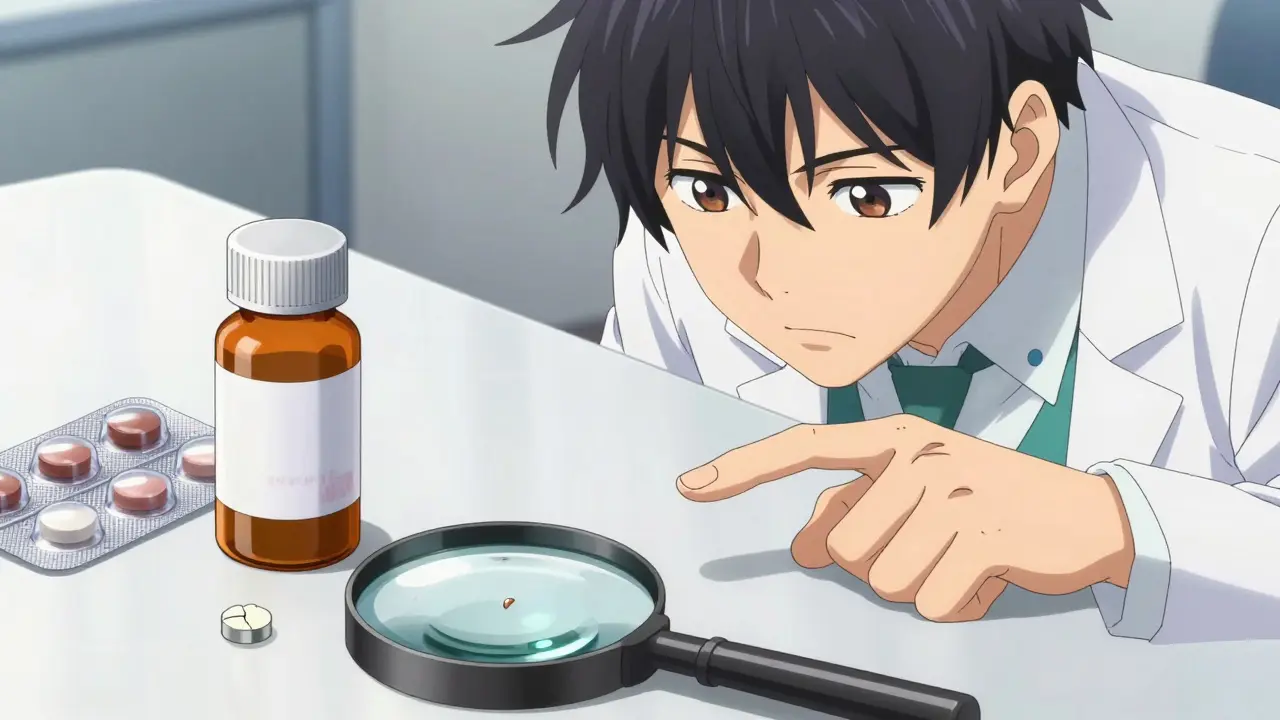
While some fakes are nearly indistinguishable from real ones, many leave telltale clues. Amy Callanan, Global Security Lead at Pfizer, notes that legitimate pills always have a factory-made appearance. If your medication looks off, pay attention to these specific details:
- Texture and Integrity: Real tablets are smooth and uniform. Be suspicious of pills that are cracked, crumbly, or have a bubbled-up coating. Moldy pills or jars containing excess powder or crystals are major red flags.
- Sensory Changes: Does the pill taste different? Smell unusual? A change in texture or flavor can indicate a different chemical composition.
- Visual Discrepancies: Compare the size, shape, color, and markings on the tablet or capsule to what you normally receive. Even slight variations in shade or imprint depth can signal a counterfeit product.
- Packaging Flaws: Counterfeiters often cut costs by using low-quality packaging. Look for spelling mistakes, faded labels, mismatched fonts, or improper seals. The UK’s International Pharmaceutical Federation advises checking the paper texture, thickness, and print color of labels. Raised print should feel consistent, not sloppy.
- Missing Identifiers: Legitimate packaging will always include a lot number and an expiration date. If these are missing, altered, or look handwritten, do not use the medication.
A recent case involved counterfeit versions of Bausch + Lomb's Muro 128 ophthalmic ointment and solution found in the U.S. market. Patients reported unusual side effects because the active ingredients were either absent or contaminated. Always examine your medication closely when you pick it up.
Digital Red Flags: The Online Pharmacy Trap
The internet has made it easier than ever to buy medication, but it has also opened the door to massive fraud. The National Association of Boards of Pharmacy (NABP) identified thousands of websites promoting the illegal sale of GLP-1 agonists in 2024. From 2022 to 2023, the NABP reported a 35% increase in illegal online pharmacy websites.
How can you tell if an online pharmacy is safe? Here are the critical checks:
- Prescription Requirement: Legitimate pharmacies require a valid prescription from a licensed healthcare provider. If a site sells prescription drugs without asking for one, it is illegal and unsafe.
- Licensing: In the U.S., legitimate online pharmacies must be licensed in the state where they operate. Check for this information on their website.
- VIPPS Certification: Look for the Verified Internet Pharmacy Practice Sites (VIPPS) seal. This program, run by the NABP, verifies that a pharmacy meets strict standards for safety and legitimacy.
- Pricing Too Good to Be True: Unusually low prices are one of the most obvious warning signs. Counterfeiters attract buyers with significant discounts. If the price is drastically lower than your local pharmacy, ask why.
- Contact Information: A legitimate pharmacy will provide a physical address and a phone number. Avoid sites that only offer email contact or generic forms.
TrueMed Inc. experts note that counterfeiters frequently use low-quality packaging to cut costs. When buying online, you lose the ability to inspect the product before payment. This makes verifying the seller's credibility even more important.
Verification Steps: Confirming Authenticity
If you suspect your medication might be fake, don't panic, but act quickly. Visual inspection is helpful, but as Pfizer’s Amy Callanan states, "it really takes laboratory testing to confirm 100% if a medication is authentic or counterfeit." However, there are immediate steps you can take to gather evidence and verify status.
Check the Lot Number
Pharmaceutical companies track complaints and accumulate data on counterfeits. Sometimes, a counterfeit product will have a lot number that does not exist in the manufacturer's system. Call your doctor or the pharmacy where you purchased the medication. Provide them with the lot number and batch code. They can contact the manufacturer to verify if that specific batch was distributed through legitimate channels.
Consult Your Pharmacist
Talk to your pharmacist if you notice any changes in your medication's appearance or packaging. Pharmacists are trained to spot anomalies and can compare your current supply with previous fills. They can also check the Drug Supply Chain Security Act (DSCSA) tracking data, which requires full electronic tracing of prescription drugs.
Report Suspicions
Reporting helps authorities shut down counterfeit operations. You can report suspected counterfeit drugs to the FDA MedWatch program. Additionally, manufacturers like Eli Lilly encourage patients to call their safety lines directly if counterfeits are suspected. The UK’s Counterfeit Medicines Advice suggests making a detailed record, including patient contact details, reason for suspicion, product name, dosage, batch number, and expiry date.
Protecting Yourself: Best Practices
Prevention is your strongest defense. By adopting a few simple habits, you can significantly reduce your risk of encountering counterfeit medications.
- Stick to Licensed Sources: Only purchase medications from state-licensed pharmacies. Whether it's a local brick-and-mortar store or a reputable online retailer, ensure they are regulated by federal or state authorities.
- Avoid Peer-to-Peer Sharing: Never take pills from friends, family members, or street sources. Even if they look real, you cannot verify their storage conditions, authenticity, or dosage accuracy.
- Monitor Your Health: Pay attention to how your body reacts. If you experience new or unusual side effects after using a drug, stop taking it and consult your doctor immediately. Treatment failure or unexpected toxicity can be signs of a substandard product.
- Use Track-and-Trace Tools: Some pharmaceutical companies offer digital tracking tools. Check if your medication brand has a serialization system that allows you to scan a QR code or enter a unique ID to verify its journey from factory to pharmacy.
- Stay Informed: Keep up with alerts from the FDA, WHO, and DEA. They regularly publish lists of known counterfeit products and unsafe websites. Subscribing to these updates can save you from purchasing a dangerous fake.
Understanding the Supply Chain Risks
The complexity of the global pharmaceutical supply chain creates vulnerabilities that counterfeiters exploit. The Drug Supply Chain Security Act (DSCSA) was implemented to combat this, requiring interoperable electronic tracing of prescription drugs by November 2023. While this improves transparency, gaps remain, especially in international markets and direct-to-consumer online sales.
Counterfeiters often intercept legitimate short-dated products, alter the expiry dates, and resell them. Others manufacture entirely fake products in hidden labs. The convergence of e-commerce, social media marketing, and sophisticated printing techniques means that fakes are becoming harder to detect visually. This is why relying solely on appearance is risky. Combining visual checks with verified sourcing and professional consultation offers the best protection.
The fight against counterfeit medications is ongoing. As criminals adapt, so must we. By staying vigilant, verifying sources, and reporting suspicions, you play a crucial role in protecting yourself and your community from this silent public health threat.
What are the most common signs of a counterfeit pill?
Common signs include unusual packaging, spelling errors on labels, pills that differ in size, shape, color, or texture from previous doses, and missing lot numbers or expiration dates. Cracked, crumbly, or moldy tablets are also major red flags.
Is it safe to buy prescription medication online?
It can be safe if you use a licensed, verified pharmacy. Look for the VIPPS seal from the National Association of Boards of Pharmacy. Avoid sites that do not require a prescription, offer unusually low prices, or lack a physical address and phone number.
How can I verify if my medication is authentic?
You can verify authenticity by checking the lot number with your pharmacist or the manufacturer. Compare the physical appearance of the pill and packaging to previous doses. Use track-and-trace systems if available. If in doubt, consult your healthcare provider.
What should I do if I suspect I have taken a counterfeit drug?
Stop taking the medication immediately. Contact your doctor or pharmacist for advice. Report the incident to the FDA MedWatch program and the manufacturer. Keep the packaging and any remaining pills for testing if requested by authorities.
Are counterfeit drugs only a problem in other countries?
No, counterfeit drugs are a significant issue in the United States and globally. The DEA and FDA have issued numerous alerts about fake opioids, sedatives, and recently, injectable diabetes and weight-loss medications circulating in the U.S. market.
Why are GLP-1 agonists like Ozempic and Mounjaro targeted by counterfeiters?
These medications are in high demand, often face supply shortages, and are expensive. This creates a lucrative black market. Counterfeiters exploit the urgency and difficulty patients face in accessing legitimate supplies, selling fake versions online.
What is the difference between substandard and falsified medicines?
Substandard medicines are genuine products that fail quality tests due to manufacturing or storage errors. Falsified (or counterfeit) medicines are deliberately and fraudulently mislabeled regarding their identity, composition, or source. Both are dangerous, but falsified drugs involve intentional deception.
Can I visually identify a counterfeit injection pen?
Visual identification is difficult. Counterfeit pens may have subtle differences in labeling, font, or seal integrity. However, the contents are impossible to verify without lab testing. Always purchase from licensed pharmacies and check for tamper-evident seals.
Where can I report a suspicious online pharmacy?
You can report suspicious online pharmacies to the National Association of Boards of Pharmacy (NABP) via their Safe Pharma Reporting Center. You can also report to the FDA MedWatch program and the Federal Trade Commission (FTC).
Does the Drug Supply Chain Security Act (DSCSA) prevent counterfeiting?
The DSCSA aims to improve traceability by requiring electronic tracking of prescription drugs through the supply chain. While it enhances detection and removal of illegitimate products, it does not eliminate the threat, especially from illicit online sellers outside the regulated supply chain.