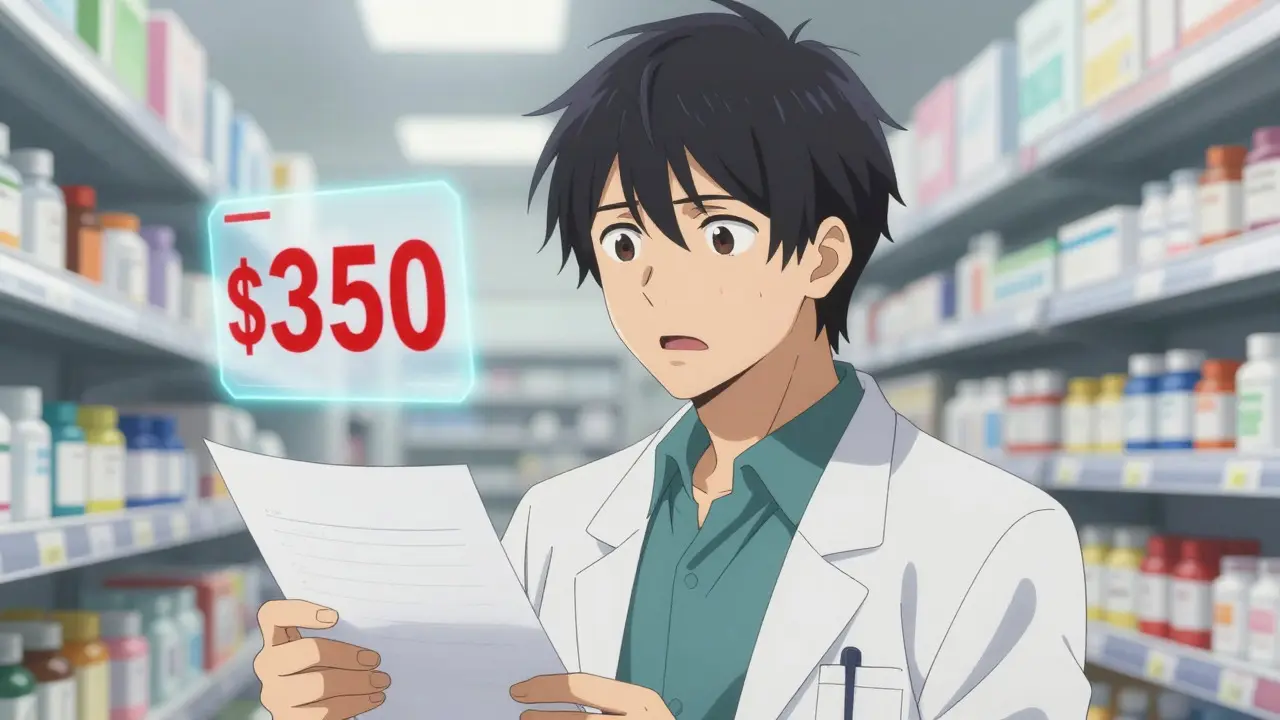
Imagine walking into a pharmacy with a prescription for a common antibiotic. You expect it to be cheap, maybe $10 or $20. Instead, the bill comes to $350. You ask your doctor why they didn't prescribe a cheaper alternative. The doctor shrugs and says, "I had no idea."
This isn't just a hypothetical nightmare scenario; it is a daily reality for millions of patients. For decades, the medical profession operated under the assumption that doctors would naturally prescribe the most effective medication, leaving the financial details to insurance companies and pharmacists. But as pharmaceutical costs have skyrocketed, this hands-off approach has cracked under pressure. The core question facing healthcare today is simple yet profound: do clinicians actually know what their prescriptions cost?
The short answer is mostly no. Despite being experts in physiology and pathology, many physicians are surprisingly clueless about the economics of the drugs they write. This gap in provider cost awareness-defined as a clinician's understanding of both absolute drug prices and relative value-is creating a crisis of affordability and adherence. When patients can't afford their meds, they skip doses or stop taking them entirely, leading to worse health outcomes and higher emergency room visits. Understanding where this knowledge gap exists, why it persists, and how technology is trying to fix it is crucial for anyone navigating the modern healthcare system.
The Shocking Reality of Physician Price Estimates
You might assume that if you asked a cardiologist the price of a popular statin, they'd give you a ballpark figure within 10%. The data suggests otherwise. Research has consistently shown that clinicians are terrible at guessing drug prices. A landmark systematic review published in 2007 by Chren et al. analyzed nearly 1,700 physicians across multiple countries. The results were stark: doctors overestimated the cost of inexpensive medications by 31% while underestimating expensive drugs by a massive 74%.
Why does this happen? It seems counterintuitive that doctors would underestimate high-cost drugs. One theory is that physicians focus on clinical efficacy rather than economic impact. If a drug works well, the price tag feels secondary. However, when the out-of-pocket cost hits the patient, that secondary concern becomes primary. More recent studies confirm these trends haven't shifted dramatically. A 2016 study published in Basic & Clinical Pharmacology & Toxicology found that only 5.4% of generic drug costs and 13.7% of proprietary brand-name drug costs were estimated within an acceptable 25% margin of error by medical students and doctors alike.
This lack of precision isn't just a trivia failure; it affects prescribing habits. When a doctor thinks a brand-name drug costs $50 but it actually costs $500, they may inadvertently burden a low-income patient with catastrophic spending. Conversely, if they think a generic is expensive when it's actually free, they might withhold a beneficial treatment due to unfounded financial concerns.
Education Gaps: Why Medical School Doesn't Cover Costs
If doctors don't know prices, who taught them? The answer, unfortunately, is often no one. Traditional medical education focuses heavily on pharmacokinetics, mechanisms of action, and side effects. Economics is rarely part of the curriculum. A study from August 2021 revealed that fewer than half (44%) of medical students understood that drug prices are largely uncorrelated with research and development (R&D) costs. Most people, including many future doctors, believe high prices reflect high R&D investment. In reality, pricing strategies are driven by market exclusivity, patent laws, and negotiation power, not just scientific effort.
This educational void creates a persistent bias. Experienced doctors show slightly more cost consciousness than students, scoring higher on awareness scales (17.81 vs. 15.56 on a 0-24 scale), but even seasoned practitioners struggle with actual price estimation. Dr. Daniel Morgan of the University of Maryland noted that cost awareness should be better addressed in undergraduate pharmacotherapy education. Without formal training, clinicians rely on anecdotal evidence or outdated information, which is dangerously unreliable in a market where prices change annually.
The consequence is a generation of providers who feel frustrated by the financial aspect of care but lack the tools to address it. Many report feeling helpless when patients complain about costs because they don't know where to look for alternatives. This helplessness contributes to burnout, as doctors spend extra time manually researching prices during already packed clinic days.
The Role of Electronic Health Records (EHRs)
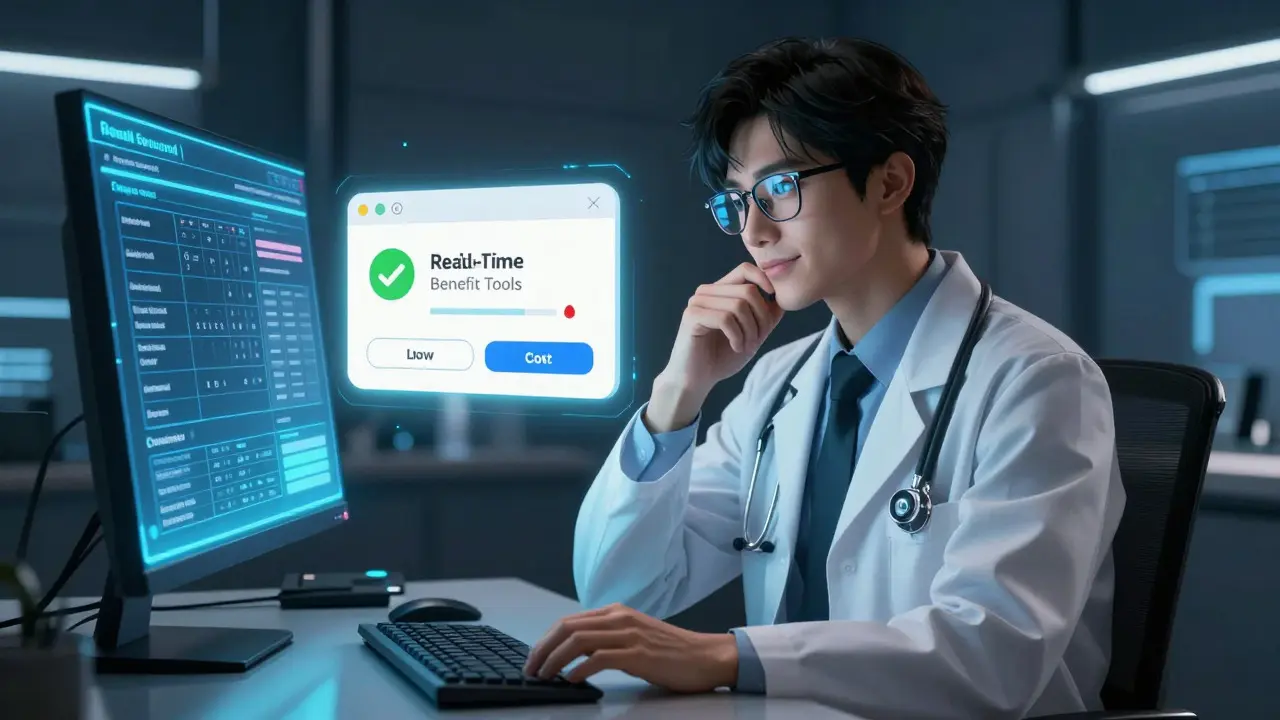
So, how do we fix a problem that education hasn't solved? Technology offers the most promising path forward. The integration of Real-Time Benefit Tools (RTBTs) into Electronic Health Records (EHRs) is transforming provider cost awareness. These tools pop up on a doctor's screen as they type a prescription, showing the patient's specific copay or out-of-pocket cost based on their insurance plan.
The impact is measurable. A study published in JAMA Network Open in October 2021 found that physicians with access to out-of-pocket cost information in their EHRs performed significantly better on cost estimation tasks than those without such information. Even more impressive, a follow-up study in JAMA Internal Medicine showed that one in eight primary care physicians revised their prescriptions after seeing an electronic cost alert. When potential savings exceeded $20, that number rose to one in six.
However, implementation is not seamless. Systems like Epic or Cerner require significant customization. UCHealth, for example, spent an estimated $2.3 million and 18 months developing their cost-alert system. Furthermore, these tools aren't perfect. Residents have reported that alerts sometimes show insurer-specific pricing that doesn't account for patient-specific nuances like deductible status or prior authorizations, leading to occasional inaccuracies. Despite these hiccups, the trend is clear: embedding cost data directly into the workflow is the most effective way to bridge the knowledge gap.
| Strategy | Effectiveness | Implementation Difficulty | Key Limitation |
|---|---|---|---|
| Medical School Curriculum | Low | High (Systemic Change) | Lack of standardized content; 56% of schools lack formal pricing modules |
| Manual Pharmacy Lookup | Moderate | Medium (Time-Consuming) | Takes 3-5 minutes per script; adds 30+ mins to clinic day |
| EHR Integrated Alerts (RTBTs) | High | High (Technical/Cost) | Initial setup cost ($2M+); requires ongoing maintenance |
| Patient-Led Negotiation | Variable | Low (Patient Burden) | Patients often unaware of options; awkward dynamic with provider |
Barriers to Adoption: Time, Trust, and Complexity
Even with tools available, adoption rates remain sluggish. As of Q3 2024, only 37% of U.S. health systems had implemented RTBTs, according to an American Hospital Association survey. Why? The biggest barrier is time. Primary care physicians are notoriously overbooked. Checking drug costs manually takes 3-5 minutes per prescription. For a doctor seeing 20 patients a day, that's an hour of unpaid labor added to an already stressful shift.
There's also a cultural resistance. Some economists, like former FDA advisor Dr. Tomas Philipson, argue that clinicians should focus solely on medical value, leaving cost decisions to insurers. While this perspective has diminished following the 2022 Inflation Reduction Act, which allows Medicare to negotiate prices, the sentiment lingers among some providers who fear that focusing on cost will compromise patient care. They worry about "rationing" medicine based on price rather than need.
Additionally, the complexity of U.S. drug pricing is daunting. The same drug can cost $15 at one pharmacy and $320 at another, depending on the formulary tier, manufacturer coupons, and insurance network. This fragmentation makes it hard for doctors to trust any single price estimate. If an alert says a drug is $50, but the patient gets charged $150 at the counter, the doctor loses trust in the system. This unpredictability discourages reliance on automated tools.

The Human Impact: Adherence and Equity
Beyond the abstract numbers, the lack of provider cost awareness has real human consequences. According to the Kaiser Family Foundation (KFF), 28% of adults report non-adherence to medication due to cost. This means nearly one in three patients skips doses or stops treatment entirely because it's too expensive. For chronic conditions like diabetes or hypertension, this leads to preventable complications, hospitalizations, and even death.
The issue is particularly acute for marginalized communities. Preliminary data presented at AcademyHealth 2024 showed that safety-net clinics saw 22% greater prescription modification rates after implementing cost alerts compared to private practices. This suggests that cost-awareness tools can help reduce racial and ethnic disparities in healthcare access. When doctors in underserved areas know the true cost, they can proactively switch to affordable generics or assist patients in applying for assistance programs.
Furthermore, the psychological toll on patients is significant. Being prescribed a life-saving drug only to discover it's financially ruinous causes anxiety and distrust in the healthcare system. Patients begin to view their doctors as out of touch, damaging the therapeutic relationship. Improving provider cost awareness is not just an economic imperative; it's a matter of empathy and trust.
Future Outlook: Policy and Technology Convergence
The landscape is shifting. The 2022 Inflation Reduction Act has put political pressure on drug pricing, with 80% of adults supporting Medicare drug price negotiations. This bipartisan support signals that transparency is becoming a regulatory priority. The Centers for Medicare & Medicaid Services (CMS) rule requiring manufacturers to report out-of-pocket cost estimates is a step toward standardizing data.
Looking ahead, the Institute for Clinical Excellence projects that 75% of U.S. health systems will implement advanced RTBTs by 2027. As these tools become more sophisticated, they will likely integrate with patient portals, allowing individuals to see estimated costs before even visiting the doctor. This proactive approach could empower patients to participate in shared decision-making regarding their finances and health.
However, challenges remain. Fragmented pricing systems and frequent formulary changes mean that static databases quickly become obsolete. Continuous updates and robust IT infrastructure are essential. Moreover, as long as drug prices continue to rise without clinical justification-as seen with Humira's 4.7% increase in 2023 despite no new indications-clinicians will face an uphill battle. Education and technology must work in tandem to keep pace with market volatility.
Do doctors really not know how much drugs cost?
Surprisingly, yes. Studies show that physicians consistently misestimate drug prices, often overestimating cheap generics by 31% and underestimating expensive brand-name drugs by 74%. This gap exists because medical training focuses on clinical efficacy rather than economics, and pricing information is rarely integrated into daily workflows.
How can I find out the cost of my prescription before filling it?
You can use online tools like GoodRx or RxSaver to compare prices at local pharmacies. Additionally, ask your pharmacist for cash prices or manufacturer coupons. If your doctor uses an EHR with Real-Time Benefit Tools (RTBTs), they may be able to provide an estimate based on your insurance plan during your visit.
What are Real-Time Benefit Tools (RTBTs)?
RTBTs are software integrations within Electronic Health Records (EHRs) that display a patient's specific out-of-pocket cost for a prescribed medication at the point of care. They allow doctors to see if a drug is affordable for a specific patient and suggest cheaper alternatives if needed.
Why is provider cost awareness important for public health?
When patients can't afford their medications, they often skip doses or stop taking them, leading to worse health outcomes, increased hospitalizations, and higher overall healthcare costs. Improving provider cost awareness helps ensure patients receive treatments they can actually afford and adhere to, reducing long-term health disparities.
Will medical schools start teaching drug pricing?
There is growing pressure to include pharmacoeconomics in medical curricula. Currently, 56% of U.S. medical schools lack formal drug pricing components. However, organizations like the American Medical Association (AMA) are advocating for better cost-transparency training to prepare future doctors for the financial realities of modern practice.