
Bisphosphonate & Calcium Timing Checker
Ensure your bisphosphonate and calcium intake won't interfere with bone medication absorption. Follow the science-backed timing rules for maximum effectiveness.
Bisphosphonate Timing
Calcium Supplement Timing
Take your bisphosphonate with breakfast. You’re not alone if you’ve done this. Millions of people with osteoporosis do it every day - thinking they’re doing the right thing by pairing their bone medication with calcium. But here’s the hard truth: calcium supplements can make your bisphosphonate useless.
If you take alendronate or risedronate with milk, a calcium pill, or even a multivitamin, you might as well have thrown the tablet in the trash. Studies show that calcium can cut bisphosphonate absorption by up to 94%. That’s not a small drop. That’s treatment failure. And it’s happening more often than you think.
Why Calcium and Bisphosphonates Don’t Mix
Bisphosphonates - drugs like Fosamax, Actonel, and Boniva - are designed to slow bone loss. They work by sticking to bone surfaces and blocking cells that break down bone. But here’s the catch: these drugs are terrible at getting into your bloodstream. Only about 1% of what you swallow actually gets absorbed. The rest just passes through.
Calcium is the main reason why. When calcium and bisphosphonates meet in your stomach or intestines, they bind together like magnets. The result? A solid, insoluble lump that your body can’t absorb. No absorption means no benefit. Your bones don’t get the protection they need. And over time, that means more fractures - not fewer.
It doesn’t matter if you’re taking calcium carbonate or calcium citrate. Both cause the same problem. Even a single 500 mg calcium pill taken within two hours of your bisphosphonate can drop absorption by over 80%. Coffee, tea, orange juice, and even mineral water can interfere too. Only plain water is safe.
The Exact Rules You Need to Follow
This isn’t guesswork. There are clear, science-backed rules - and they’re not optional.
Here’s what you must do every single time you take an oral bisphosphonate:
- Take it first thing in the morning, on an empty stomach. No food. No drink. Not even a sip of coffee or juice.
- Swallow the pill with a full glass (8 oz) of plain water. Don’t use anything else.
- Stay upright - sitting or standing - for at least 30 minutes after taking alendronate, or 60 minutes for risedronate. Lying down increases your risk of serious esophageal irritation.
- Wait at least 30 to 60 minutes before eating, drinking, or taking any other medication - including calcium, iron, or antacids.
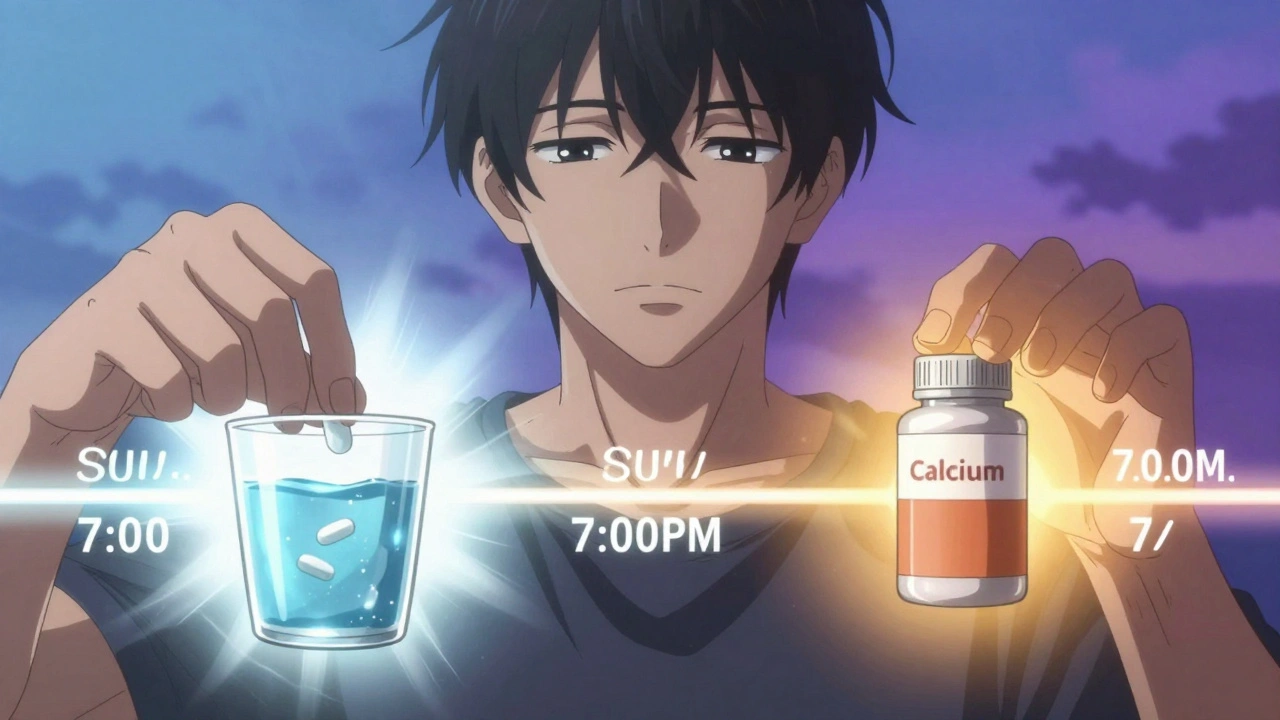
- Take your calcium supplement later in the day, preferably with dinner.
These rules aren’t suggestions. They’re based on clinical trials. The Fracture Intervention Trial showed that patients who followed this routine had a 44% lower risk of spinal fractures than those who didn’t. Miss one step, and you’re losing the benefit.
What About Intravenous Bisphosphonates?
If the daily routine feels overwhelming, there’s another option: IV bisphosphonates like Reclast (zoledronic acid). These are given once a year in a doctor’s office. No fasting. No waiting. No worrying about what you ate.
Since the drug goes straight into your bloodstream, calcium doesn’t interfere. That’s a huge relief for many people - especially older adults juggling multiple pills. But it’s not perfect. About 15-30% of people get flu-like symptoms after the infusion: fever, muscle aches, fatigue. These usually last a day or two. Your doctor might give you acetaminophen beforehand to help.
There’s one catch: your calcium and vitamin D levels must be normal before the infusion. If you’re low, you could develop temporary low calcium in your blood - which can cause tingling, cramps, or even irregular heartbeat. That’s why your doctor will check your blood before you get the shot.
When Calcium Is Still Necessary
Even though calcium messes with bisphosphonates, you still need it. Your bones are 99% calcium. If you don’t get enough, your body will start pulling it from your bones - making osteoporosis worse.
The recommended daily amount is 1,200 mg for women over 50. That includes calcium from food and supplements. Dairy, leafy greens, fortified foods, and canned fish with bones (like sardines) all count. Most people need a supplement to hit that target.
So when should you take it? After dinner. Or at bedtime. This timing works best for two reasons:
- Your body absorbs calcium better when taken with food.
- It keeps your calcium levels steady overnight, when bone loss naturally increases.
Also, don’t forget vitamin D. You need at least 800-1,000 IU daily to help your body use calcium. Take it with your evening meal - it’s fat-soluble, so food helps absorption.
Why People Fail - And How to Succeed
Here’s the ugly truth: only about 42% of people stick to the rules after six months. Why? Because it’s hard.
Many people take their bisphosphonate with their morning coffee - because that’s what they’ve always done. Others forget to wait. Some take their calcium with their multivitamin at breakfast. Elderly patients with memory issues or multiple medications often mix them up.
One study found that 68% of patients struggled to remember the timing. And 52% said their morning coffee routine was the biggest obstacle.
But success is possible. Here’s how:
- Use a pill organizer with clear labels: “Bisphosphonate - AM” and “Calcium - PM.”
- Set phone alarms: one for your bisphosphonate time, another for when you can eat.
- Keep your bisphosphonate next to your water glass - not with your other pills.
- Ask your pharmacist to print a simple one-page schedule for your fridge.
One 68-year-old woman in Adelaide used this system for 18 months. She tracked her bone density scans - and saw a 6.2% increase in her hip bone density. That’s not luck. That’s consistency.
What If You Messed Up?
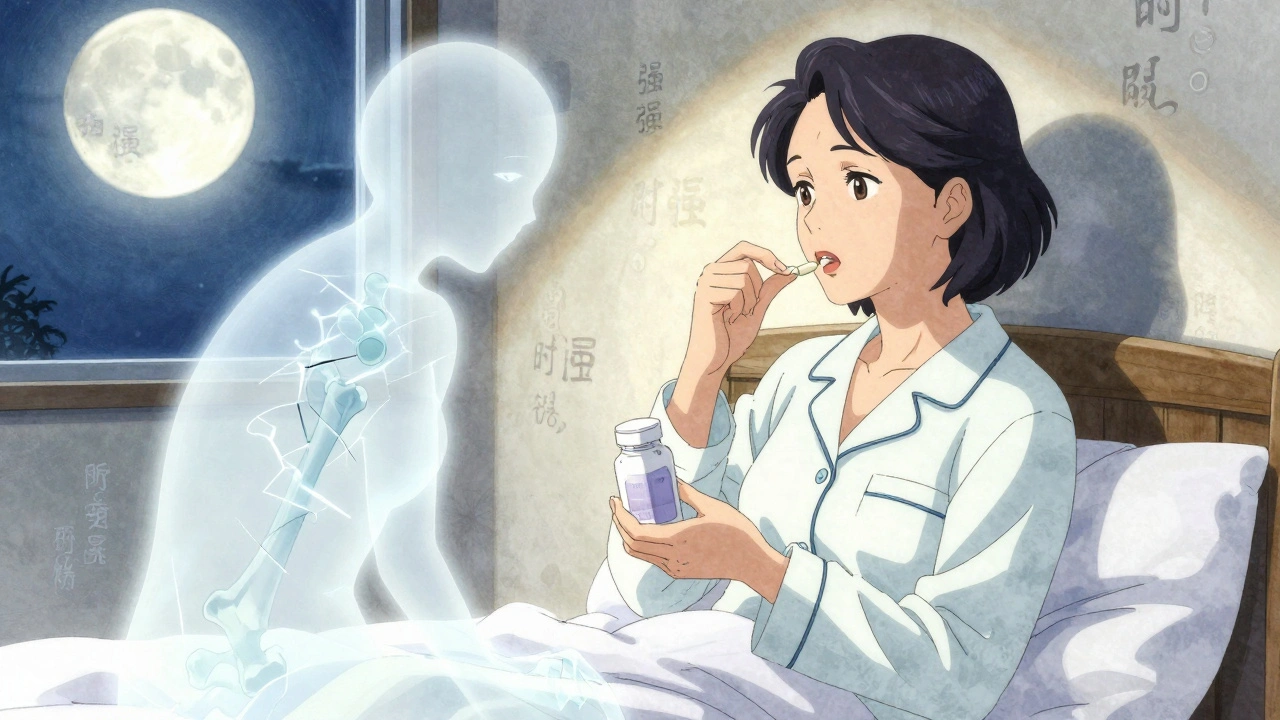
Accidentally took your calcium with your bisphosphonate? Don’t panic. Don’t double up tomorrow.
Just skip your dose that day. Wait until tomorrow. Take it correctly. Missing one dose won’t hurt you. But continuing the wrong way will.
And if you’ve been taking them together for months? Talk to your doctor. Ask for a bone density scan. Your fracture risk might be higher than you think.
Alternatives If This Is Too Hard
If you’ve tried and failed to follow the timing rules, you’re not alone. And you’re not out of options.
Denosumab (Prolia) is a once-every-six-months injection. No fasting. No waiting. No calcium interference. It’s more expensive, but for many, it’s worth it.
Oral drugs like abaloparatide (Tymlos) are newer and less affected by food. But they cost $2,980 a month - far more than generic bisphosphonates.
Your doctor can help you weigh the pros and cons. But here’s the bottom line: if the timing is too hard, switching treatments is better than quitting altogether.
Final Check: Your Action Plan
Here’s your simple, no-fluff checklist:
- Take bisphosphonate first thing in the morning - before anything else.
- Only drink plain water with it.
- Stay upright for 30-60 minutes.
- Wait 30-60 minutes before eating, drinking, or taking any other pill.
- Take calcium and vitamin D with dinner or at bedtime.
- Get your blood tested once a year for calcium, vitamin D, and kidney function.
- If you forget or mess up - skip the dose. Don’t double up.
Bone health isn’t about one magic pill. It’s about doing the small things right, every day. Calcium supplements and bisphosphonates can work together - but only if you keep them apart.
Can I take calcium and bisphosphonates on the same day?
Yes - but not at the same time. Take your bisphosphonate first thing in the morning on an empty stomach. Wait at least 30 to 60 minutes before eating or taking anything else. Then take your calcium supplement with dinner or at bedtime. This keeps them separated by 12+ hours, which is safe and effective.
What happens if I take calcium with my bisphosphonate by accident?
Don’t panic. Don’t take another dose. Just skip your bisphosphonate for that day. The calcium will have blocked most of the drug’s absorption, so taking another pill won’t fix it - and could irritate your stomach. Resume your normal schedule the next day. If this happens often, talk to your doctor about switching to an IV option.
Do I need to stop taking calcium supplements entirely?
No. You still need calcium for your bones. Most women over 50 need 1,200 mg daily. If you’re not getting enough from food, a supplement is necessary. Just make sure you take it at least 2 hours after your bisphosphonate - ideally with dinner or at bedtime.
Can I take vitamin D with my bisphosphonate?
No - vitamin D is a fat-soluble vitamin and needs food to be absorbed properly. Take it with your evening meal. Taking it with your morning bisphosphonate won’t help, and could interfere if it’s in a multivitamin. Stick to plain water with your bisphosphonate.
Is it safe to take bisphosphonates if I have acid reflux?
It can be risky. Staying upright for 30-60 minutes after taking the pill can be painful if you have GERD. Some people end up stopping treatment because of this. Talk to your doctor. An IV bisphosphonate like Reclast may be a better option. Or your doctor might consider denosumab (Prolia), which doesn’t require fasting or upright positioning.
If you’re taking bisphosphonates, your bone health depends on timing - not just the pill. Get the details right, and you’re protecting your future. Get them wrong, and you’re risking fractures you could have avoided.






Deborah Andrich
Just took my Fosamax with coffee this morning and now I’m panicking. Thanks for the wake-up call. I’m switching to water and taking calcium at dinner. No more excuses.
Rawlson King
This post is correct but overly simplistic. The 94% absorption drop is from a single study with small sample size. Real-world adherence is messy. People aren’t lab rats. The real issue is that doctors don’t educate patients properly, not that patients are dumb.
Alvin Montanez
Let me tell you something. I’ve been on alendronate for eight years. I used to take it with my orange juice and multivitamin because I thought it was ‘convenient.’ I broke my wrist last year. Turns out, my bone density had dropped 12% in two years. I didn’t know. My doctor never explained the timing. Now I’ve got a sticky note on my bathroom mirror: ‘WATER ONLY. STAND UP. WAIT.’ I’ve been doing it for six months. My last scan? Up 4.7%. It’s not magic. It’s discipline. And if you’re too lazy to follow this, don’t blame the medicine. Blame yourself.
Tommy Watson
OMG I JUST TOOK MY CALCIUM WITH MY FOSAMAX AND NOW I’M GOING TO BREAK EVERY BONE IN MY BODY??
Karen Mccullouch
Why do Americans make everything so complicated? In my country, we just take the pill and move on. You people overthink everything. I bet you’re also the ones who worry about gluten in toothpaste. Just take the damn pill and stop crying. This is why healthcare costs are insane.
Cole Newman
lol i just realized i’ve been taking my calcium with my bisphosphonate since 2020. i thought they were both ‘bone pills’ so they’d work together. dumb. i’m gonna start taking mine at night with my protein shake. also, why is vitamin d mentioned like it’s a secret? everyone knows you need it with calcium.
Casey Mellish
As an Aussie who’s been on Reclast for three years, I can confirm: IV is a game-changer. No fasting. No 30-minute standing rituals. Just one annual visit, and I’m done. The flu-like symptoms? Yeah, I got them the first time - felt like I’d been hit by a truck. But after that? Zero issues. My bone density’s stable. If you’re struggling with the daily routine, talk to your doc about switching. It’s not giving up - it’s upgrading.
Tyrone Marshall
There’s a deeper truth here that doesn’t get talked about enough: bone health isn’t just about pills. It’s about rhythm. It’s about creating a life where medicine fits into your daily habits, not the other way around. The person who succeeded didn’t just follow rules - they built a system. Pill organizer. Alarms. Fridge checklist. That’s not compliance. That’s self-respect. And if you can’t build that system yet? That’s okay. Start with one thing. Maybe just switch your calcium to dinner. Do that for a week. Then add the water. Then the standing. Progress isn’t about perfection. It’s about persistence. And you’re already ahead of the 58% who still take it with coffee.