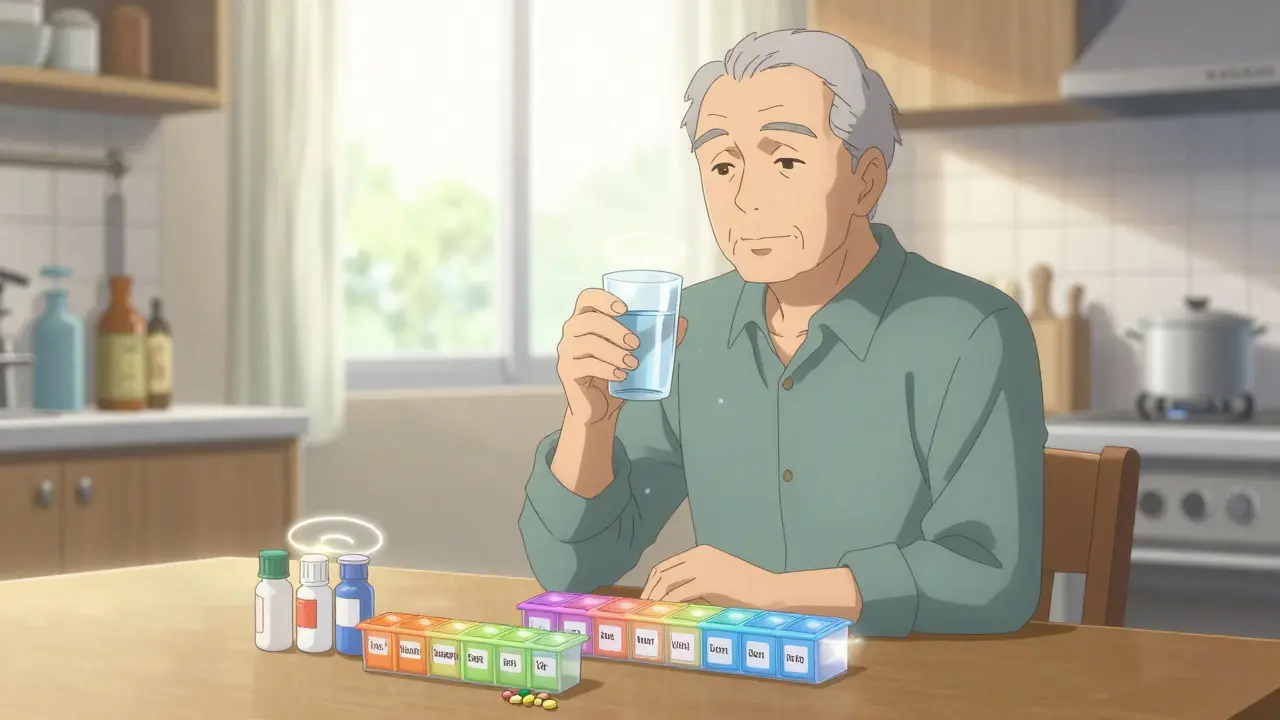
More than 90% of prescriptions for older adults are filled with generic drugs. That’s not because they’re cheaper-though they are-but because they’re widely available and considered just as effective as brand-name versions. The FDA says they are. Doctors trust them. Pharmacies stock them. But for someone over 65, especially if they’re taking five, seven, or even ten medications a day, the question isn’t just whether generics work. It’s: are they safe?
Why Age Changes How Drugs Work
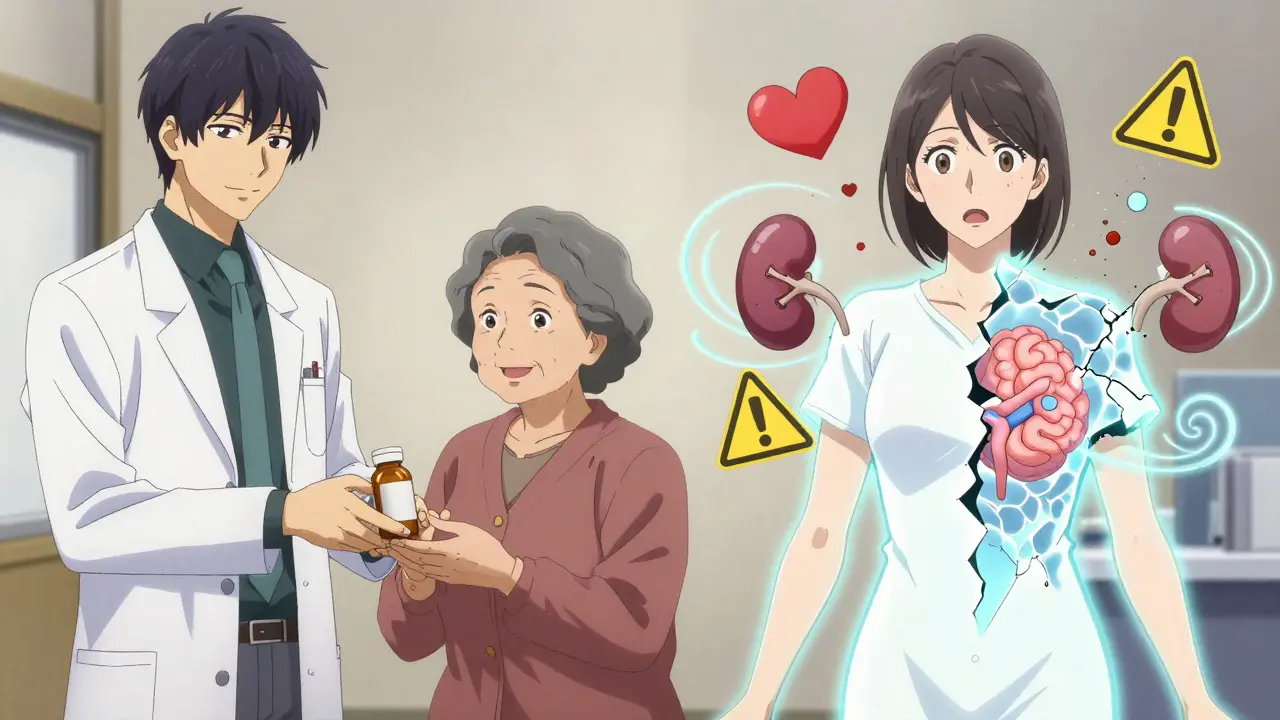
Your body doesn’t process medicine the same way at 75 as it did at 45. By the time you hit your late 70s, your liver may be processing drugs up to 30% slower. Your kidneys filter waste less efficiently. Body fat increases while water content drops. That means a pill that once fit perfectly into your system now lingers longer, building up in your bloodstream like a slow leak in a tank.This isn’t theoretical. A 78-year-old taking the same dose of a blood pressure pill as a 50-year-old isn’t getting the same effect-they’re getting too much. That’s why a "normal" dose can become an overdose in older adults. It’s not about the drug being weak or strong. It’s about the body’s ability to handle it.
Some drugs are especially risky. Beta blockers can slow the heart too much. Digoxin, used for heart rhythm, can trigger dangerous arrhythmias. Insulin and sulfonylureas for diabetes can cause low blood sugar, leading to falls, confusion, or even brain injury. And when you add more than five medications? The risk of a bad reaction jumps from 13% to 58%. With seven or more, it’s 82%.
Generic vs. Brand: Is There a Real Difference?
Legally, a generic drug must have the same active ingredient, strength, and route of administration as the brand-name version. The FDA requires it to be bioequivalent-meaning it enters the bloodstream within 80-125% of the brand’s rate. That sounds precise. But here’s the catch: it doesn’t have to match the inactive ingredients.Inactive ingredients-fillers, dyes, preservatives-don’t treat your condition. But they can affect how the drug is absorbed. For most people, that doesn’t matter. For older adults on narrow therapeutic index (NTI) drugs like warfarin, levothyroxine, or phenytoin, even tiny differences can throw off the balance.
Take warfarin. A 2021 study in the Journal of Thrombosis and Haemostasis showed generic warfarin is 98.7% equivalent to Coumadin. But in a 2023 survey of seniors, 42% still believed the brand-name version was safer. And in real life, stories like Grandma L’s-whose TSH levels went haywire after switching from brand to generic levothyroxine-aren’t rare. It’s not always the drug. It’s the switch.
When you change from one generic to another-say, from Teva to Mylan-you might not even notice. But your body might. That’s why consistency matters. If you’re stable on one generic, don’t switch unless your doctor or pharmacist says it’s safe.
The Beers Criteria: What Medications to Avoid
The American Geriatrics Society doesn’t just warn about drugs. They publish a list of medications that should generally be avoided in older adults-no matter if they’re generic or brand. The 2023 update is clear: some drugs are simply too risky.Here are a few they flagged:
- Anticholinergics like diphenhydramine (Benadryl) and oxybutynin: linked to confusion, memory loss, and increased dementia risk.
- Cyclobenzaprine (Flexeril): a muscle relaxant that increases fall risk by 30% in seniors.
- NSAIDs like ibuprofen and naproxen: raise the risk of stomach bleeding and kidney damage, especially with long-term use.
- SNRIs like venlafaxine: increase fall risk by 37% due to dizziness and low blood pressure.
- Opioid-benzodiazepine combos: increase overdose risk by 154%.
These aren’t "bad" drugs. They’re dangerous for older bodies. And yes-this applies to generics too. A generic version of diphenhydramine is just as likely to cause delirium as the brand. The issue isn’t the label. It’s the pharmacology.
Medication Errors Are More Common Than You Think
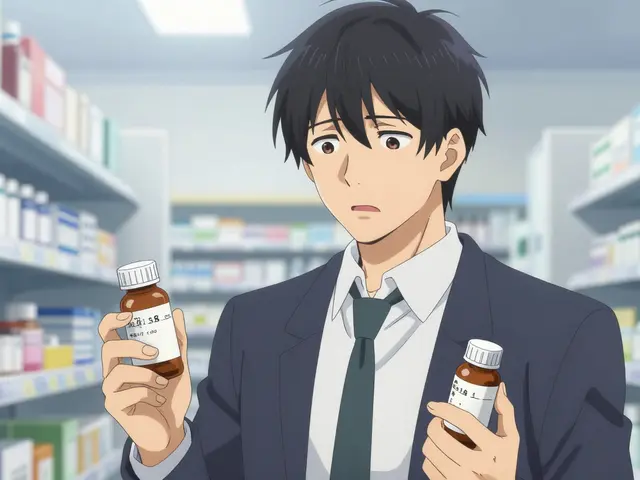
A 2023 MedShadow.org analysis of 500 medication errors in older adults found that 28% involved confusion between similar-looking generic pills. Why? Because generics often look different from each other-and from the brand. A blue oval from one company, a white capsule from another, a tablet with a different imprint. If you’re not reading the label closely, it’s easy to mix them up.And it’s not just visual. Packaging changes. Labels shrink. Dosing instructions get confusing. That’s why 22% of medication errors in seniors involve expired or improperly stored drugs. A bottle left in a hot bathroom? A pill past its expiration date? They lose potency-or worse, become harmful.
One 88-year-old woman in a National Council on Aging case study was taking Flexeril for back pain. She didn’t realize it was a muscle relaxant that made her dizzy. She fell, broke her hip, and ended up in rehab. The drug was generic. The risk wasn’t. The problem? No one explained it to her.
How to Stay Safe with Generic Drugs
You don’t have to avoid generics. You just need to manage them wisely.- Keep a current list of every medication you take-name, dose, reason, and who prescribed it. Include vitamins and supplements. Update it after every doctor visit.
- Ask your pharmacist to review your meds every 3-6 months. Pharmacists catch duplicates, interactions, and outdated prescriptions better than most doctors. A 2022 study showed this cuts adverse events by 27%.
- Stick with one generic unless your provider advises otherwise. Don’t let the pharmacy switch you without telling you.
- Use pill organizers with clear labels. Color-coded containers or automated dispensers reduce errors by 34%.
- Request large-print labels. Nearly two-thirds of adults over 65 have trouble reading small text. Ask your pharmacy to print the name and instructions in bigger font.
- Know your NTI drugs. If you’re on warfarin, levothyroxine, or seizure meds, be extra careful. Don’t switch brands or generics without monitoring blood levels.
- Watch for new symptoms. Dizziness, confusion, fatigue, nausea, or unusual bruising could be a reaction-not just "getting older."

When to Question a Prescription
Not every pill you’re given is necessary. In fact, many aren’t. A 2022 review in JAMA Internal Medicine found that nearly half of medications prescribed to seniors over 75 had no strong evidence of benefit-and some had clear risks.Ask your doctor these three questions:
- Why am I taking this?
- Is there a safer alternative?
- Can we try stopping it for a while to see if I still need it?
As Dr. Michael Steinman from UCSF says: "The problem isn’t generic versus brand. It’s whether the drug is right for someone with multiple chronic conditions."
Aspirin used to be recommended for heart protection in seniors. Now, the guidelines say: avoid it for primary prevention after age 70. The bleeding risk outweighs the benefit. That’s a change you need to know about.
What’s Changing in 2026
The FDA is launching a pilot program in early 2026 requiring enhanced labeling on high-risk generic drugs used by older adults. That means clearer warnings, bigger fonts, and plain-language instructions on bottles for drugs like anticoagulants, sedatives, and diabetes meds.The National Institute on Aging is funding $27 million in research to better understand how aging affects drug absorption. And by 2027, AI tools may help doctors predict which medications are most likely to cause harm based on your age, kidney function, and other meds you take.
But you don’t have to wait for technology. You have power right now: ask questions. Speak up. Keep track. Get help.
Generic drugs saved millions of seniors money. But safety isn’t about cost. It’s about control. And with the right steps, you can use generics safely-even as your body changes.





Mandy Kowitz
So let me get this straight-we’re supposed to trust a pill that looks like a M&M but costs 12 cents because the FDA says so? My grandma took a generic thyroid pill and ended up in the ER with her heart doing the cha-cha. Don’t tell me it’s ‘bioequivalent’-my body knows the difference.
Michael Rudge
Of course the FDA says generics are fine. They’re funded by the same pharma lobby that profits off brand-name drugs. The real scandal? The FDA doesn’t even test every batch of generics. They trust the manufacturers. And you think your 82-year-old aunt with six meds is safe? Please. It’s a lottery with side effects.
Justin Lowans
There’s a profound truth here that deserves more attention: safety isn’t about the label on the bottle, but the clarity of communication around it. Many seniors aren’t given the context to understand why a switch matters, or how to monitor for subtle changes. The real failure isn’t in the chemistry-it’s in the care system. A pharmacist’s review every six months isn’t a luxury-it’s a lifeline. We need to institutionalize that, not treat it as an afterthought.
Ethan Purser
They say generics are cheaper. But what’s the cost of a fall? Of a stroke? Of your mother forgetting your name because Benadryl turned her brain to mush? We’re not saving money-we’re outsourcing our elders’ suffering to a system that doesn’t care. The FDA’s 80-125% bioequivalence window? That’s not science. That’s corporate math. And we’re all paying for it-in blood, in tears, in dignity.
Doreen Pachificus
I’ve been on levothyroxine for 12 years. Switched from brand to generic once. My TSH went from 2.1 to 6.8 in two weeks. No symptoms at first-just fatigue. Then brain fog. Then panic attacks. Got switched back. Back to normal. I don’t care what the study says. My body told me the truth.
Cassie Tynan
Let’s be real-no one reads the tiny print on a pill bottle unless they’re legally blind. And if you are? Good luck. The system is designed for people who have time, energy, and a PhD in pharmacology. My 79-year-old uncle just takes what’s handed to him. He doesn’t know the difference between a generic and a placebo. And honestly? Neither does the pharmacist half the time.
Rory Corrigan
It’s not about generics vs. brand. It’s about whether we still treat elderly people as humans. Or just as data points in a cost-cutting algorithm. 🤔
Stephen Craig
Consistency matters more than cost. Stick with one. Monitor. Ask. That’s all.
Connor Hale
The real issue isn’t the pills. It’s that we’ve normalized polypharmacy in older adults like it’s just part of aging. But it’s not. It’s a symptom of a broken system that treats symptoms instead of people. We need less prescribing, not more labels.
Roshan Aryal
Why are Americans so obsessed with pills? In India, we use turmeric, ginger, and yoga for inflammation. We don’t need 10 pills to live to 80. Your system is broken because you outsource health to corporations. Generics? More like generics of wisdom.
Jack Wernet
As a caregiver for my father, I can attest that the most powerful tool is not technology or regulation-it’s presence. Sitting with someone while they sort their pills. Asking them to repeat back why they’re taking something. Making sure the label is large enough to read. These are acts of love, not medical interventions. And they save lives.
Charlotte N
I just switched my mom from one generic to another because the pharmacy said it was cheaper... now she’s dizzy all the time... I didn’t even know it was an NTI drug... what do I even do now???
Jason Stafford
Here’s the real conspiracy: the FDA doesn’t test generics for long-term effects in elderly populations. They test on healthy 25-year-olds. Then they say it’s safe for 80-year-olds on ten meds. That’s not science. That’s fraud. And the pharmaceutical companies? They’re laughing all the way to the bank while grandma’s kidneys fail. Wake up. This is engineered. It’s not an accident. It’s a business model.
Catherine HARDY
I’ve been on warfarin for 15 years. Brand. Then generic. Then another generic. Every time, my INR went wild. I stopped trusting the pharmacy. Now I buy the brand from Canada. It’s more expensive, but I’m alive. And I know exactly what’s in my body. The FDA doesn’t care. But I do.