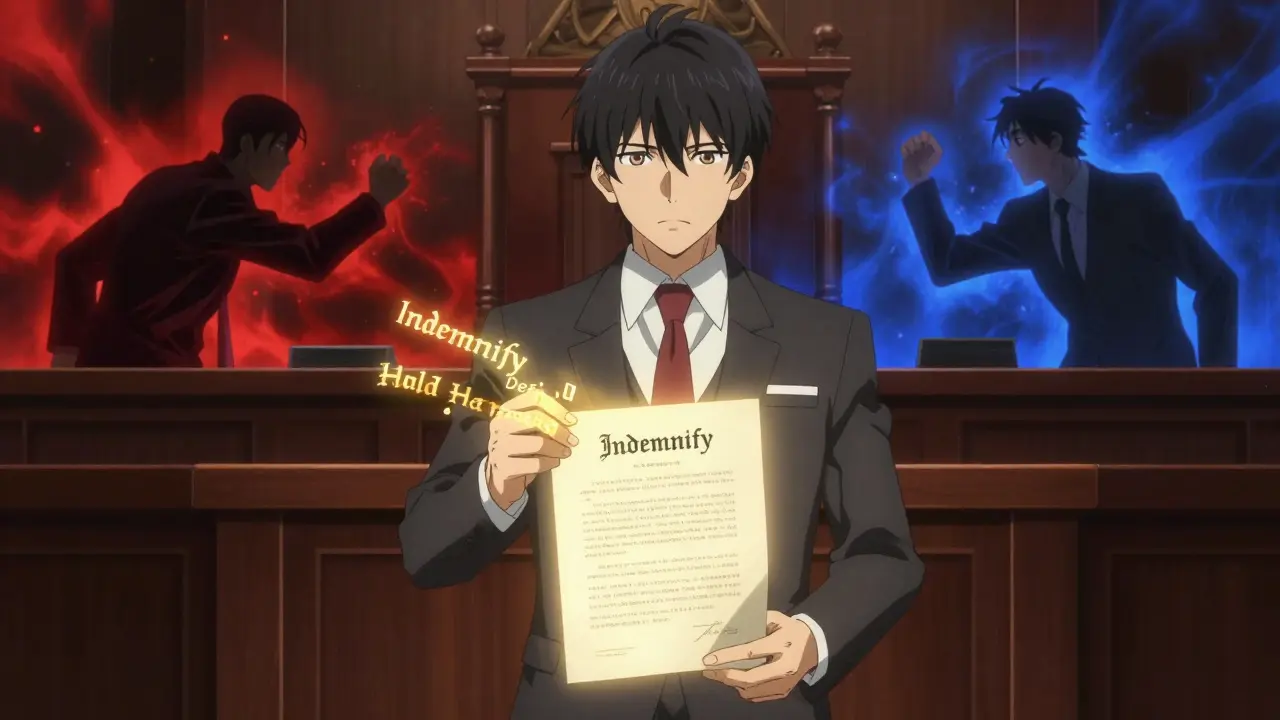
When you sign a contract-whether you’re buying software, selling a business, or hiring a vendor-you’re not just agreeing to deliver a product or service. You’re also agreeing to take on risk. And that’s where liability and indemnification come in. These aren’t just legal buzzwords. They’re the backbone of how businesses protect themselves when things go wrong.
What Liability Actually Means in a Contract
Liability is simple: it’s who pays when something breaks. If your vendor’s software gets hacked and customer data leaks, who covers the cost? The customer? The vendor? Or someone else? Without a clear answer written into the contract, you’re left guessing-and possibly stuck with a huge bill. In most commercial deals, liability isn’t automatic. It’s negotiated. Sellers often try to limit their exposure. Buyers push for broader protection. The middle ground? That’s where indemnification steps in.Indemnification: The Safety Net You Didn’t Know You Needed
Indemnification is a contractual promise: “If something bad happens because of you, I won’t pay for it-you will.” It’s not about blame. It’s about control. If your supplier fails to follow data security rules and gets sued, the indemnification clause says they cover your legal fees, settlements, and even fines. Think of it like car insurance. You don’t hope for an accident. But if one happens, you want to know who’s paying. Indemnification does that for business risks. The three core parts of an indemnification clause are:- Indemnify: Pay for losses or damages the other party suffers.
- Defend: Cover legal costs to fight a claim-even if it’s baseless.
- Hold harmless: Prevent the other party from suing you for actions you didn’t cause.
What Triggers Indemnification?
Not every problem triggers a payout. The contract must say exactly what does. Common triggers include:- Breach of contract (like missing a deadline or delivering the wrong product)
- Violation of laws (e.g., GDPR fines for mishandling EU customer data)
- Intellectual property infringement (someone sues because your software copied their code)
- Negligence (a contractor’s faulty wiring causes a fire)
- Failure to disclose known risks (like hidden environmental contamination in a property sale)

Who Pays? Mutual vs. One-Sided Indemnity
Not all indemnity clauses are the same. There are two main types:- Unilateral: Only one party protects the other. Common in vendor-customer deals. A software company indemnifies the buyer for IP infringement, but the buyer doesn’t do the same for the vendor.
- Mutual: Both sides protect each other. Often seen in joint ventures or construction contracts. If a worker gets hurt on site, both parties cover each other’s liability.
The 7 Must-Have Elements in Every Indemnity Clause
A weak indemnity clause is worse than none at all. It gives false confidence. Here’s what a solid one includes:- Scope of Coverage: What losses are covered? Legal fees? Regulatory fines? Third-party claims? Be specific. Vague language like “any damages” invites disputes.
- Triggering Events: Exactly what action or failure starts the obligation? “Negligence” is too broad. “Failure to patch known security vulnerabilities within 14 days” is precise.
- Duration: How long does the protection last? Some clauses expire with the contract. Others survive for years-especially for tax, IP, or environmental issues.
- Exclusions: What’s NOT covered? Indirect damages? Lost profits? Punitive damages? Most contracts exclude these. Know what’s off the table.
- Claim Procedures: How do you file a claim? Notice deadlines? Required documentation? Failure to follow the steps can void your right to indemnity.
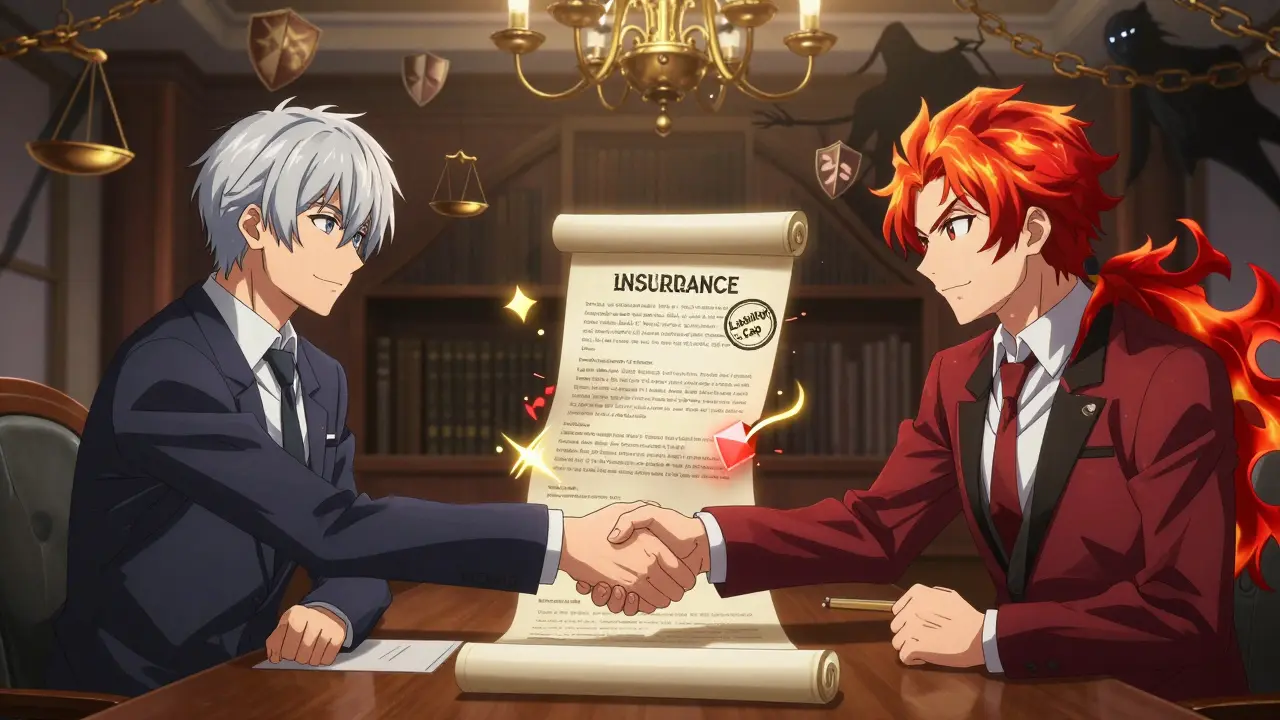
- Insurance Requirements: Does the indemnifying party need insurance? If so, what type and minimum coverage? A $10 million cap means nothing if the vendor has no assets or insurance.
- Governing Law & Jurisdiction: Where will disputes be settled? Which state or country’s laws apply? This matters for enforcement.
Survival Periods and Liability Caps: The Hidden Negotiation Battleground
In mergers and acquisitions, indemnity clauses are where deals live or die. Two key terms are always fought over:- Survival Periods: How long do representations (promises about the business) stay enforceable? Fundamental ones-like ownership of assets or tax status-often survive 3-5 years. Non-fundamental ones-like employee benefits or minor contracts-last 12-18 months.
- Liability Caps: What’s the maximum the indemnifying party has to pay? Often 10-25% of the deal value. But for fraud or intentional misconduct, caps are usually removed.
- Deductibles (Baskets): The buyer must absorb the first $50,000 in losses before the seller pays anything. This prevents small claims from triggering indemnity.
Real-World Pitfalls: What Goes Wrong
Even smart companies get burned. Here’s what happens when indemnity clauses are poorly drafted:- Too broad: “Indemnify for any claim arising from this agreement.” Courts often strike these down as unenforceable.
- No notice requirement: Buyer waits two years to report a claim. Seller can’t defend it. Court says: “Too late.”
- Missing insurance: Vendor goes bankrupt. Indemnity clause is worthless.
- Confusing “defend” with “indemnify”: A company thinks they’re only paying damages-but they’re also stuck with $500,000 in legal fees.
How to Negotiate Indemnity Like a Pro
If you’re the buyer: Push for broad coverage, long survival, low deductibles, and insurance proof. But be realistic. If the vendor is a small business, they won’t agree to unlimited liability. If you’re the seller: Limit scope. Exclude indirect damages. Cap liability. Require strict notice procedures. Insist on mutual indemnity if you’re giving up control. Always ask: “What’s the worst thing that could happen-and who should pay?” Then write it down.Why This Matters More Than Ever
In 2025, risks are more complex. Cyberattacks, AI liability, cross-border data laws, supply chain failures-none of these existed a decade ago. Standard boilerplate clauses won’t cut it anymore. Businesses that survive are the ones that treat indemnity not as a formality, but as a risk management tool. They draft with precision. They negotiate with eyes open. They understand that a single clause can make or break a deal. Don’t assume your lawyer will handle it. Understand the basics. Ask questions. Know what you’re signing.What’s the difference between liability and indemnification?
Liability is the legal responsibility for harm or loss. Indemnification is a contractual promise to cover that liability. You can be liable without an indemnity clause-but with one, someone else takes on your liability.
Can indemnification clauses be enforced in court?
Yes, if they’re clear, specific, and don’t violate public policy. Courts often reject overly broad clauses that try to cover gross negligence or intentional misconduct. Precision matters.
Do I need insurance if I’m the indemnifying party?
Not legally-but it’s a practical must. If you promise to pay $2 million in damages but have no assets or insurance, the clause is empty. Most buyers require proof of coverage (like general liability or cyber insurance) before signing.
What happens if the indemnifying party goes bankrupt?
The indemnity clause becomes unenforceable. That’s why insurance requirements and liability caps are critical. If you’re the indemnitee, always verify the other party’s financial stability before signing.
Can I limit my indemnity to only direct damages?
Absolutely. Most contracts exclude indirect, consequential, or punitive damages. For example, if a system outage causes a client to lose sales, that lost profit is usually not covered unless explicitly included.
Are indemnity clauses the same worldwide?
No. In the U.S., “hold harmless” is often treated as redundant with indemnify. In some European countries, they’re distinct. Always specify governing law. A clause valid in Australia may not hold up in Germany or Singapore.








Janette Martens
who the hell writes a contract without capping liability?? i signed a deal last year and they tried to make me pay for their crappy code breaking our whole system-$2M lawsuit. i told them to shove it. no insurance? no deal. canada ain't california, we don't play these games.
Marie-Pierre Gonzalez
Thank you for this incredibly thorough and well-structured breakdown. 🙏 As someone who negotiates vendor agreements weekly, I can't emphasize enough how vital precise language is-especially around 'defend' vs. 'indemnify'. One typo, one misplaced comma, and your entire risk posture collapses. Please, everyone: get legal counsel before signing anything labeled 'standard terms'.
Louis Paré
Let’s be real-this whole indemnity thing is just corporate theater. Companies use it to pretend they’re protected while quietly outsourcing liability to the smallest vendor with no assets. The real power move? Not signing anything at all. If you’re being asked to indemnify, you’re already the sucker in the deal.
Hakim Bachiri
Wow. Just… wow. You actually wrote an entire essay on contract law and didn’t mention the fact that 90% of these clauses are unenforceable under UCC §2-719? And yet somehow, people still sign them like they’re holy scripture? You know what’s worse? Lawyers who don’t even know the difference between ‘indemnify’ and ‘hold harmless’-and then charge you $500/hour to ‘review’ it. American legal system: a pyramid scheme dressed in a suit.
Celia McTighe
This was so helpful!! 😊 I’ve been terrified of signing vendor contracts ever since my friend’s startup got sued over a third-party API breach. I’m going to print this out and highlight every section with my color-coded pens. Also-yes, insurance requirements? NON-NEGOTIABLE. 💪
Ryan Touhill
Interesting. But have you considered that these indemnity clauses are just a distraction? The real threat isn’t legal liability-it’s the surveillance state. Your vendor is probably sharing your data with the NSA under a national security letter. And your indemnity clause? Useless against that. Wake up. The system is rigged. You think a court in Delaware gives a damn about your $2 million claim when the Feds are watching?
Teresa Marzo Lostalé
It’s wild how something so dry-like a contract clause-can carry so much weight. I once saw a small business owner cry because they signed a mutual indemnity without realizing it meant they’d pay for their client’s bad HR decisions. We don’t talk about this enough. Contracts aren’t paperwork. They’re emotional landmines. Take a breath. Read it twice. Then read it again.
ANA MARIE VALENZUELA
Typical. Another ‘guide’ written by someone who’s never actually been sued. You mention ‘negligence’ like it’s a clean line. But what’s negligence? Is it failing to patch a known vulnerability? Or is it not having a SOC2 audit? Your ‘7 must-have elements’? Half of them are useless without insurance. And if your vendor is a one-person shop in India? Good luck collecting. This isn’t risk management. It’s fantasy fiction for corporate lawyers who’ve never held a real job.