Oral Mucositis Risk Assessment Tool
Personalized Risk Assessment
Calculate your risk of developing mouth sores from cancer treatment and get personalized prevention recommendations.
Risk Assessment Results
When you're undergoing cancer treatment, the last thing you want is to be in constant pain from your own mouth. But for many people on chemotherapy or radiation, mouth sores and ulcers aren't just common-they're expected. These aren't simple canker sores. They're called oral mucositis, and they can turn eating, drinking, and even talking into agony. The good news? You don't have to just suffer through it. There are real, science-backed ways to prevent these sores before they start-and manage them when they do.
Why Medications Cause Mouth Sores
Chemotherapy and radiation don't just target cancer cells. They hit fast-growing cells everywhere, including the lining of your mouth. This damage triggers inflammation, breaks down the protective barrier, and leaves raw, painful ulcers behind. It's not random. Studies show up to 100% of patients on certain high-dose treatments develop oral mucositis. The severity ranges from mild redness to deep, bleeding sores that make swallowing impossible. In severe cases, patients can't eat enough to stay nourished, leading to hospitalization and extra costs of up to $17,000 per person.
It's not just chemo. Radiation to the head and neck area is even more likely to cause these sores. Even some antibiotics, antivirals, and targeted therapies can trigger them. The key isn't just knowing it's happening-it's knowing how to stop it before it gets worse.
Prevention Is the Best Medicine
Doctors used to treat mouth sores after they appeared. Now, the standard is prevention. The Multinational Association of Supportive Care in Cancer (MASCC/ISOO) says it clearly: Prevent before you treat. And the evidence backs this up.
Here’s what actually works, based on real clinical trials:
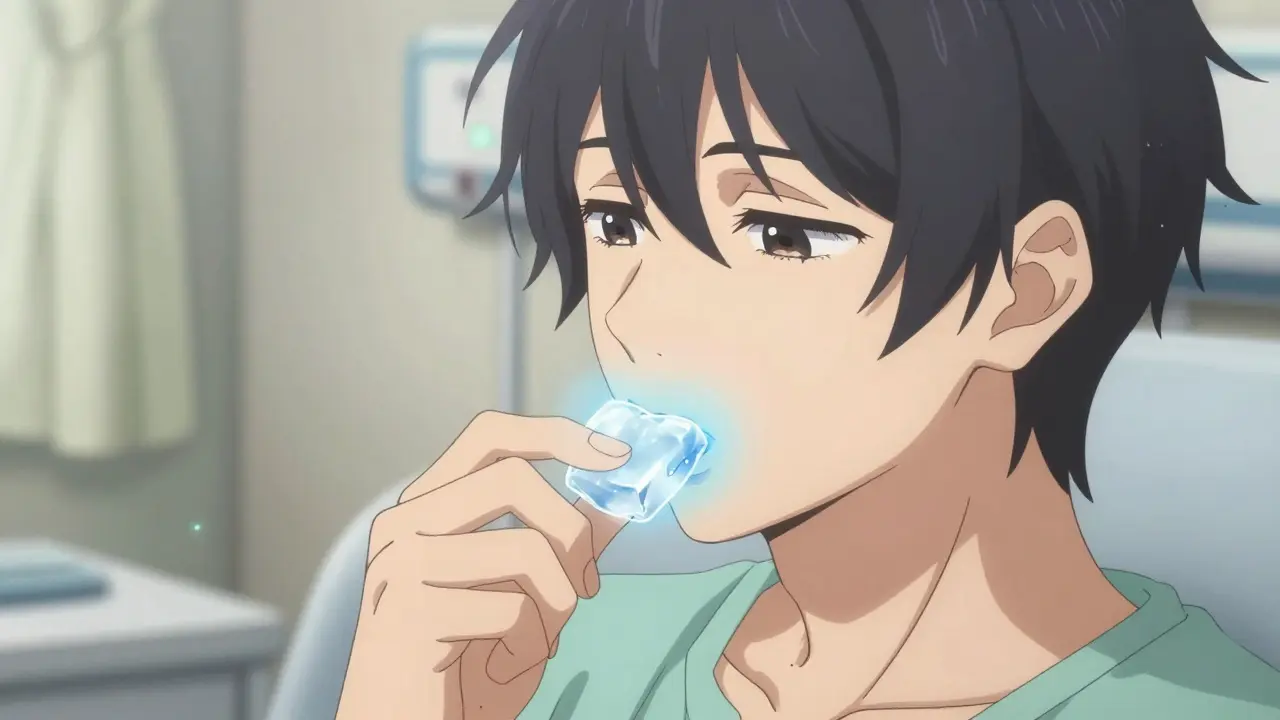
- Cryotherapy (ice chips): For patients getting chemo with melphalan or 5-fluorouracil, sucking on ice chips for 30 minutes-starting 5 minutes before treatment and continuing through-cuts severe sores by half. It works by freezing the mouth, slowing blood flow, and reducing how much chemo reaches the tissue. But it only works for these specific drugs. If you’re getting a different one, ice chips won’t help.
- Benzydamine mouthwash: This anti-inflammatory rinse reduces severe sores by 34% in radiation patients. It’s cheap ($15-$25 per course), doesn’t cause systemic side effects, and is recommended as first-line by experts. Use it 3-4 times a day, starting before treatment, and swish for 30 seconds before spitting out. Don’t swallow it. Some feel a stinging sensation, but 82% of users keep using it because the pain relief is worth it.
- Palifermin: For stem cell transplant patients, this injectable drug boosts cell repair and cuts severe mucositis from 63% to 20%. But it costs over $10,000 per treatment. It’s powerful, but only for specific, high-risk cases.
- Dental checkup before treatment: 78% of severe cases can be avoided with a dental exam 2-4 weeks before chemo or radiation. Fixing cavities, removing loose teeth, or treating gum disease beforehand makes a huge difference. Many patients skip this-big mistake.
What Doesn’t Work as Well
Not everything you hear about works. Some treatments are popular but have weak evidence-or hidden risks.
- Chlorhexidine mouthwash: Commonly prescribed, but studies show it only reduces risk by 15%. Worse, long-term use can stain your teeth and tongue. It’s not the game-changer some think.
- Glutamine supplements: One study showed a 43% drop in sore duration, but later reviews found it only helps in head and neck cancer patients on radiation-not in chemo-only cases. It’s hit or miss.
- Systemic antibiotics: The American Society of Clinical Oncology warns against using them to prevent mouth sores. A 2021 study found they raise the risk of a dangerous gut infection (C. diff) by 27%. Don’t take them unless you have a confirmed infection.
Managing Pain When Sores Happen
Even with prevention, some sores still form. When they do, pain control is critical.
- Dexamethasone mouthwash: A simple rinse (0.5mg in 5mL water, swished 4 times a day) reduces pain scores by 37%. It’s low-cost, easy to use, and works fast.
- Gelclair: This sticky oral gel coats the sores like a protective bandage. It’s rated 4.2 out of 5 by users, with 71% saying it gives immediate relief. The downside? It’s slimy. Some say it makes talking and eating harder. But for many, the pain relief outweighs the texture.
- Allopurinol mouthwash: Dissolve 500mg in 20mL water and swish four times daily. Early data shows a 40% drop in severe sores from radiation-but no proven benefit for chemo. Still worth asking your doctor about if you’re on radiation.
Also avoid anything that irritates your mouth: alcohol-based mouthwashes, spicy or acidic foods, and toothpaste with sodium lauryl sulfate (SLS). Switch to a soft-bristle brush (bristles under 0.008 inches) and fluoride toothpaste. Rinse with baking soda water (1 tsp in 8 oz water) after meals to neutralize acid.
What Patients Are Saying
Real people share what works in online communities:
- On CancerCare’s forum, 78% of patients using ice chips for 5-FU chemo said it helped a lot. But 42% quit because the cold was too painful.
- Reddit users love Gelclair for instant relief but complain about the slimy feel.
- One user on Smart Patients said, “Switched to a kids’ toothbrush-no more bleeding gums.”
- On the Canker Sore subreddit, 54% said avoiding SLS toothpaste made a noticeable difference.
Also, dry mouth is a big problem. Radiation often kills saliva glands. Use products like Biotene or take pilocarpine tablets (5mg, 3 times daily) to boost saliva flow by 47%. Saliva protects your mouth-it’s not just for drinking.
What’s New in 2026
Science is moving fast. In March 2024, a new drug called GC4419 showed a 38% reduction in severe mucositis duration in head and neck cancer patients. It’s not widely available yet, but it’s a promising step.
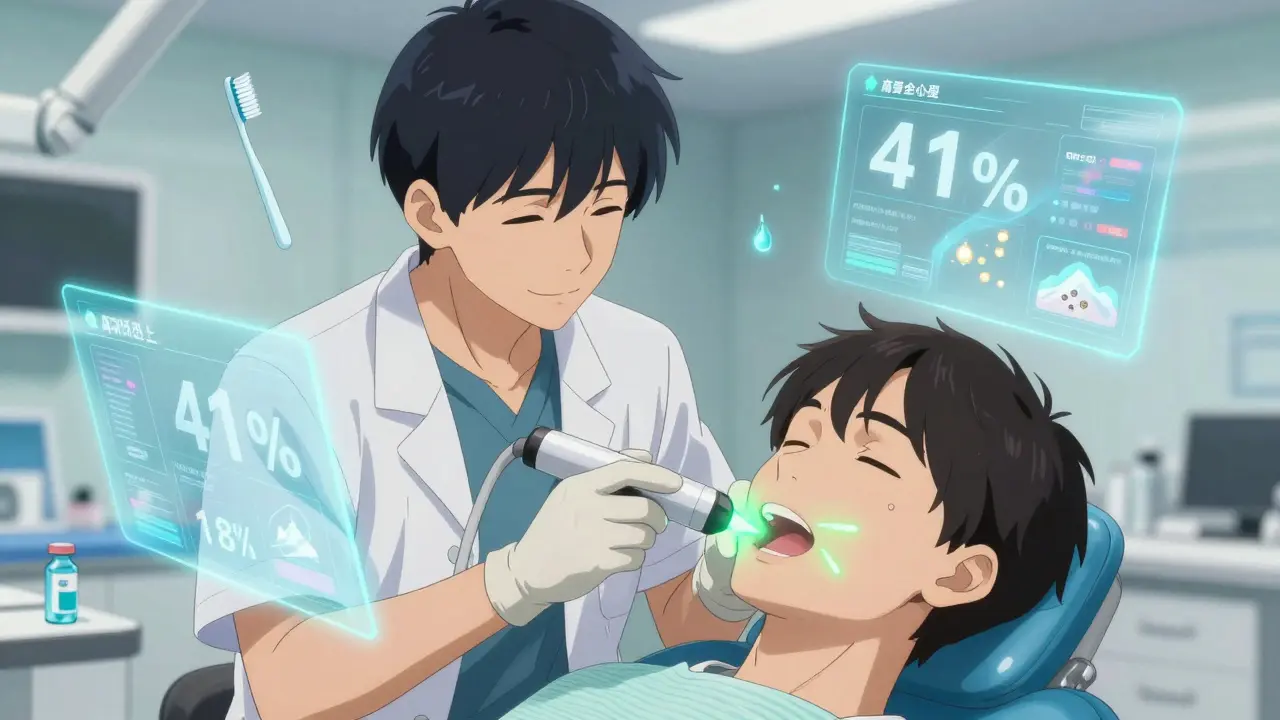
Low-level laser therapy (LLLT) is now being added to guidelines. A 2023 study found it cut severe sores from 41% to 18% using specific settings: 650nm wavelength, 40mW power, 2J/cm² energy. It’s non-invasive and painless. Some cancer centers are starting to offer it.
Memorial Sloan Kettering has built a risk-prediction tool that uses 12 factors-like age, cancer type, and chemo dose-to identify who’s most likely to get severe sores. It’s 84% accurate. Soon, prevention won’t be one-size-fits-all-it’ll be personalized.
What to Ask Your Doctor
Don’t wait until your mouth is bleeding. Talk to your oncology team early. Ask:
- “Which chemo or radiation am I getting, and which prevention methods are proven for it?”
- “Can I get a dental evaluation before treatment starts?”
- “Should I use benzydamine, ice chips, or another method?”
- “Is palifermin an option for me? What’s the cost?”
- “Do you recommend Gelclair or another soothing gel?”
And if you’re uninsured or underinsured, ask about patient assistance programs. Palifermin is expensive, but some foundations help cover costs. Don’t assume you can’t afford it-ask.
Final Thoughts
Mouth sores from medication aren’t inevitable. They’re a predictable side effect-and predictable means preventable. The most effective tools are simple: ice chips for the right chemo, benzydamine for radiation, dental care before treatment, and avoiding irritants. Pain relief is possible with dexamethasone rinses or Gelclair. What you avoid matters as much as what you use: no SLS toothpaste, no alcohol rinses, no unnecessary antibiotics.
The future is personalized. Soon, your treatment plan will include a tailored oral care strategy based on your exact cancer, drugs, and risk level. But today, the tools are already here. Use them. Your mouth-and your ability to eat, speak, and live-will thank you.




Dan Mayer
i cant believe people still believe in ice chips like its some magic cure lmao. its just cold. if your chemo is that sensitive to temp you probably shouldnt be alive. also benzydamine? who even makes that anymore? i got mine from canada cause the usa wont import it. #conspiracy
Janelle Pearl
I just want to say thank you for writing this. My mom went through chemo last year and we had no idea what to do. We didn’t even know to ask about dental checks before treatment. I wish I’d read this sooner. She’s doing better now, and we’ve switched to baking soda rinses. Small things matter so much.
Ray Foret Jr.
Gelclair changed my life 😭 seriously. it’s slimy? yeah. but it’s like a hug for your mouth. i use it before bed and wake up not crying. also switch to kids toothbrush. my gums stopped bleeding. 10/10 recommend
Robert Bliss
this is so helpful. i didnt know about the laser therapy thing. my cousin tried it and said it felt like a warm sunbeam in her mouth. no pain. no side effects. just... relief. hope more places start offering it
APRIL HARRINGTON
i tried the ice chips and it was the WORST EXPERIENCE OF MY LIFE like my teeth were gonna shatter and i had to spit out blood and i cried and then my nurse just looked at me like i was a child and said oh you’re not supposed to suck them you’re supposed to hold them like a lollipop?? i felt so dumb
Samantha Fierro
I appreciate the clinical detail here. The emphasis on prevention over reaction is critical. Many patients are left to fend for themselves, but structured pre-treatment protocols-especially dental evaluations-can reduce hospitalizations by over 60%. This is not anecdotal. It’s evidence-based care. Advocate for yourself. Ask for the protocol.
Peter Kovac
The claim that palifermin reduces mucositis from 63% to 20% is statistically misleading. The original trial had a sample size of 187 patients. The control group was not properly stratified by tumor type. Also, the cost-benefit analysis ignores long-term immunosuppression risks. This isn’t medicine. It’s pharmaceutical theater.
Nicholas Gama
You all are missing the point. The real reason these sores happen? The FDA approves chemo drugs without proper oral toxicity testing. Big Pharma doesn’t want you to know that mouth damage is predictable. They profit from treating complications. Ice chips? Benzydamine? Band-aids. The system is broken.
rafeq khlo
The use of low level laser therapy is not scientifically validated. The 2023 study referenced employed non-standardized irradiation parameters. Furthermore, the 650nm wavelength is known to induce photobiomodulation only in superficial tissues. The claim of 18% reduction is not reproducible under double-blind conditions. This is pseudoscience dressed as innovation.
Judith Manzano
I’ve been using Gelclair for 8 months now. The slime is real. But honestly? I don’t care. What matters is that I can drink water without screaming. I switched to SLS-free toothpaste too. My dentist said my gums are healthier than most 30-year-olds. Small wins. They count.