
That sharp, stabbing pain in your ear after a day at the pool? It’s not just discomfort-it’s likely swimmer’s ear, medically known as otitis externa. This is an infection or inflammation of the skin lining the outer ear canal. Unlike a middle ear infection (which happens behind the eardrum), this affects the tube leading from the outside to the eardrum. When water gets trapped in that warm, dark space, it creates a perfect breeding ground for bacteria or fungi. About 98% of cases are bacterial, often caused by Pseudomonas aeruginosa or Staphylococcus aureus. If you’ve ever pulled on your earlobe and felt a spike of agony, you’re probably dealing with this condition.
How to Spot Swimmer’s Ear Early
Catching otitis externa early makes treatment much easier. The symptoms usually hit fast-often within 48 to 72 hours of water exposure. Here is what to look for:
- Severe Pain: This is the hallmark symptom. In fact, 97% of patients report significant pain. A key test doctors use is the “tragus test.” If pressing on the tragus (the small flap of cartilage in front of your ear canal) or pulling your earlobe causes intense pain, it’s almost certainly swimmer’s ear. Middle ear infections rarely hurt when you touch the outside of the ear.
- Drainage: You might notice fluid leaking from the ear. It often starts clear but turns into yellow-green pus within a day or two. About 89% of cases involve this drainage.
- Hearing Loss: As the ear canal swells (edema), it can narrow by up to 75%. This blocks sound waves, causing a temporary conductive hearing loss of 20-30 decibels. It feels like someone stuffed cotton in your ear.
- Redness and Itching: The skin inside the ear looks red and inflamed. Before the pain sets in, many people feel intense itching.
If you have these symptoms, especially after swimming, don’t wait. See a doctor. Misdiagnosis is common-about 25% of cases are initially mistaken for middle ear infections, which delays proper treatment by an average of three days.
Why Did I Get It? Risk Factors Explained
You don’t have to be an Olympic swimmer to get otitis externa, though frequent swimmers are at higher risk. Swimming more than four days a week increases your risk by over seven times. However, how you treat your ears matters just as much as how much you swim.
The biggest culprit? Cotton swabs. Using Q-tips or other objects to clean your ears removes the protective wax layer and can cause tiny scratches in the skin. These micro-abrasions let bacteria in. According to medical data, 65% of cases are linked to trauma from inserting objects into the ear canal. Other risk factors include:
- Skin Conditions: Eczema or psoriasis in the ear canal weakens the skin barrier.
- Narrow Ear Canals: Some people naturally have narrower canals, making it harder for water to drain.
- Hot, Humid Weather: Summer months see 83% of all cases because heat and humidity promote bacterial growth.
Treating Swimmer’s Ear: What Works Best
The good news is that otitis externa is highly treatable. Most cases resolve completely within a week. The standard first-line treatment is topical antibiotic drops. Oral antibiotics are rarely needed unless the infection has spread beyond the ear canal.
| Treatment Type | Medication Example | Dosage & Duration | Success Rate |
|---|---|---|---|
| Antibiotic Drops (Bacterial) | Ciprofloxacin 0.3% + Hydrocortisone 1% | 10 drops, twice daily for 7 days | ~92% |
| Antifungal Drops (Fungal) | Clotrimazole 1% | 5 drops, twice daily for 14 days | ~89% |
| Pain Management (Mild) | Acetaminophen | 15 mg/kg every 6 hours | Effective for 32% of cases |
| Pain Management (Severe) | Oxycodone (prescription only) | 0.15 mg/kg every 4-6 hours | Required for 68% of cases |
If your ear canal is so swollen that drops can’t get in, a doctor might insert an ear wick. This is a tiny, absorbent ribbon made of paper or silicone that expands in the ear. It acts like a sponge, soaking up medication and delivering it deep into the infected area. Newer hydrogel wicks can maintain therapeutic antibiotic levels for much longer than standard drops.
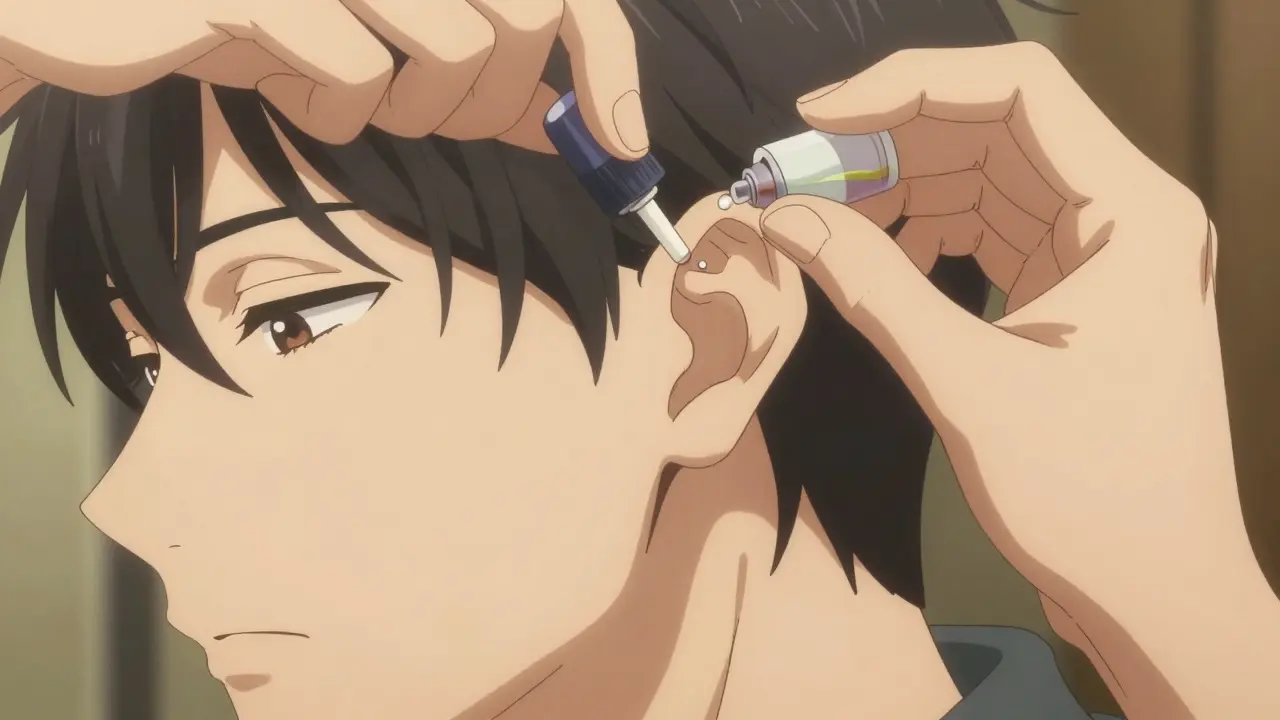
How to Apply Ear Drops Correctly
Using ear drops sounds simple, but doing it wrong reduces effectiveness by 40%. Here is the step-by-step method to ensure the medicine reaches the infection:
- Warm the Bottle: Hold the bottle in your hand for a few minutes. Cold drops can cause vertigo (dizziness) in 65% of users because they stimulate the inner ear.
- Position Yourself: Lie on your side with the affected ear facing up.
- Open the Canal: For adults, pull the pinna (outer ear) up and back. For children under three, pull it down and back. This straightens the ear canal.
- Administer Drops: Put the recommended number of drops into the ear. Don’t touch the dropper tip to your ear or fingers to avoid contamination.
- Stay Still: Keep lying down for at least five minutes. This increases contact time between the drug and the skin from 90 seconds to nearly five minutes. You can place a cotton ball loosely in the outer ear to catch any overflow.
Prevention: Keeping Your Ears Dry and Healthy
Prevention is far better than cure, especially if you suffer from recurrent infections. The goal is to keep the ear canal dry and intact.
After Swimming: Use a hairdryer on the cool setting held about 12 inches away from your ear for 30 seconds. This evaporates moisture without risking burns or pushing water deeper. Alternatively, use an alcohol-vinegar solution (70% isopropyl alcohol, 30% white vinegar). Studies show this mixture reduces infection incidence by 72% when used within 30 minutes of swimming. The alcohol dries the ear, while the vinegar restores the natural acidic pH that inhibits bacterial growth.
Protective Gear: Custom-molded silicone earplugs offer about 68% protection efficacy, compared to only 42% for cheap foam plugs. If you swim frequently, invest in custom molds. They fit snugly and stay in place during vigorous activity.
Behavioral Changes: Stop using cotton swabs. Clean only the outside of your ear with a washcloth. Let earwax do its job-it’s nature’s waterproofing sealant. Also, avoid getting water in your ears during showers by using a cotton ball coated with petroleum jelly as a temporary plug.

When to See a Doctor Immediately
While most cases are mild, some require urgent care. Seek medical attention if:
- You have diabetes or a weakened immune system. Swimmer’s ear can progress to malignant otitis externa, a serious bone infection, in these groups.
- The pain is unmanageable with over-the-counter medication.
- You experience fever, swelling around the ear, or facial weakness.
- Symptoms don’t improve after 48 hours of home care or prescribed drops.
Frequently Asked Questions
Can swimmer’s ear go away on its own?
It is possible for very mild cases to resolve spontaneously, but it is risky to wait. Without treatment, the infection can worsen, leading to severe pain, hearing loss, or spread to surrounding tissues. Medical guidelines recommend treating acute otitis externa promptly with topical antibiotics to ensure a full recovery within 7 days.
Is swimmer’s ear contagious?
No, swimmer’s ear is not contagious. It is caused by bacteria or fungi that thrive in moist environments, typically already present on your skin or in the water. You cannot catch it from another person through contact.
How long should I keep my ear dry during treatment?
You should keep your ear completely dry for the entire duration of your treatment, usually 7 to 10 days. Water prevents antibiotic drops from working effectively and can reintroduce bacteria. Use a shower cap or a cotton ball with petroleum jelly when bathing to protect the ear.
Can I use hydrogen peroxide for swimmer’s ear?
Hydrogen peroxide can help soften earwax, but it is not a treatment for active infection. In fact, if the eardrum is perforated (which can happen with severe infections), putting any liquid in the ear can cause damage. Stick to prescribed antibiotic drops or alcohol-vinegar solutions for prevention only.
Why does my ear hurt more when I chew or pull my ear?
This is a classic sign of otitis externa. The inflammation occurs in the outer ear canal, which is lined with sensitive skin and connected to jaw muscles. Chewing moves these muscles, irritating the inflamed tissue. Pulling the earlobe stretches the inflamed skin, causing sharp pain. This distinguishes it from middle ear infections, which typically do not hurt when the outer ear is touched.
What is the difference between swimmer’s ear and a middle ear infection?
Swimmer’s ear (otitis externa) infects the outer ear canal, causing pain when touching the ear or chewing. Middle ear infections (otitis media) occur behind the eardrum, often following a cold, and cause pressure, fever, and hearing loss without external tenderness. Treatment differs significantly: swimmer’s ear uses drops, while middle ear infections may require oral antibiotics.
Are there natural remedies for swimmer’s ear?
While garlic oil or olive oil are sometimes suggested, there is limited clinical evidence supporting their efficacy for active bacterial infections. Alcohol-vinegar mixtures are effective for prevention by drying the ear, but once an infection is established, prescription antibiotic drops are necessary to prevent complications. Do not put anything in your ear if you suspect a perforated eardrum.
How can I prevent swimmer’s ear if I swim competitively?
Competitive swimmers should use custom-molded silicone earplugs before every practice. After swimming, dry ears thoroughly with a hairdryer on cool setting or use an alcohol-vinegar drop solution. Avoid using cotton swabs entirely, as they damage the protective skin barrier. Consistency is key-missing even one drying session can increase risk.
When do I need an ear wick for swimmer’s ear?
An ear wick is needed when the ear canal is so swollen that it closes up, preventing ear drops from reaching the infected area. A doctor inserts the wick, which absorbs the medication and delivers it deep into the canal. The wick usually falls out on its own after a few days as swelling decreases, or the doctor removes it.
Does swimmer’s ear affect hearing permanently?
In most cases, no. The hearing loss associated with swimmer’s ear is conductive and temporary, caused by swelling and debris blocking the ear canal. Once the infection clears and swelling goes down, hearing returns to normal. Permanent damage is rare and usually only occurs if the infection spreads to the bone or damages the eardrum, which is uncommon with timely treatment.