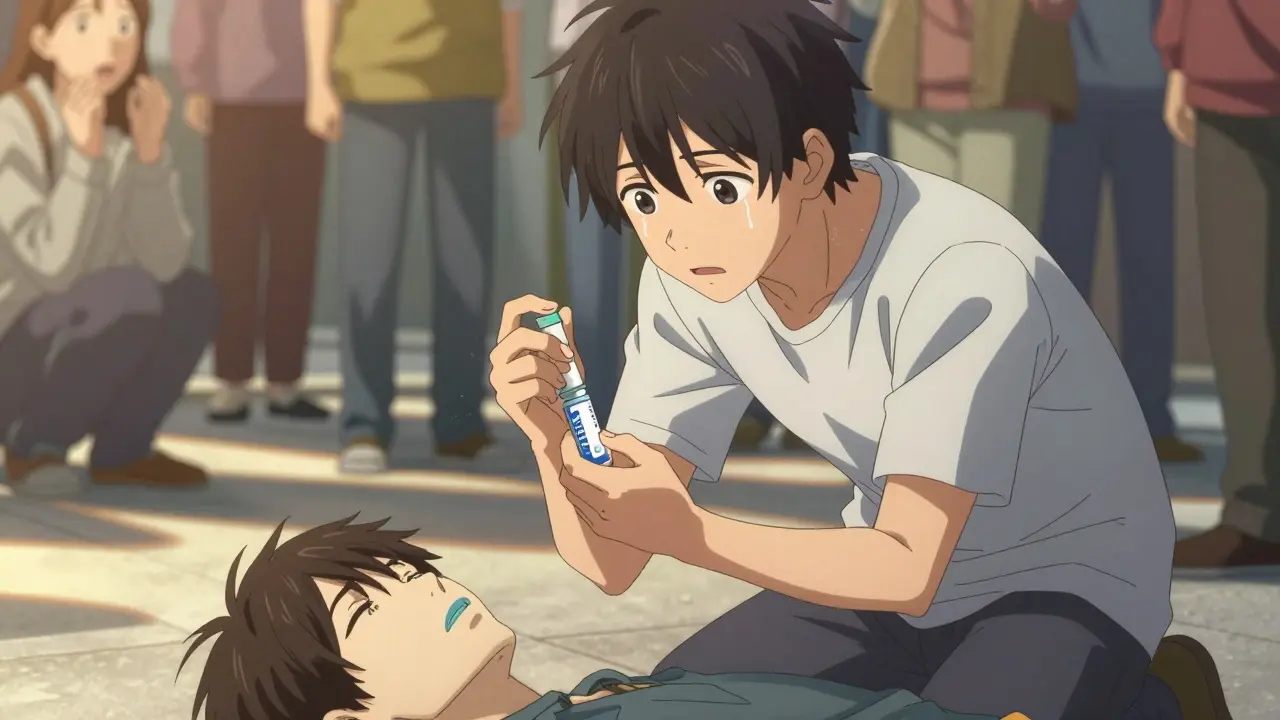
When someone overdoses on opioids, every second counts. Their breathing slows, stops, or becomes dangerously shallow. Their skin turns blue or gray. They don’t respond to shouts or shaking. In these moments, naloxone nasal spray can bring them back - if you know how to use it.
Naloxone, sold under the brand name NARCAN, isn’t a cure. It doesn’t treat addiction. But it does one vital thing: it reverses the life-threatening effects of an opioid overdose. Since March 2023, you no longer need a prescription to buy it. You can find it on pharmacy shelves next to pain relievers. That means anyone - a parent, a friend, a stranger - can have it ready when it matters most.
What Naloxone Does (And What It Doesn’t)
Naloxone works by kicking opioids off the brain’s receptors. Opioids like heroin, fentanyl, oxycodone, and morphine bind to these receptors and slow breathing. Naloxone is stronger. It pushes them aside, letting the person breathe again. It kicks in within 2 to 5 minutes. But here’s the catch: its effects last only 30 to 90 minutes. Fentanyl and other synthetic opioids? They stick around much longer. That’s why a single dose often isn’t enough.
Naloxone doesn’t work on alcohol, benzodiazepines, or stimulants like cocaine. If someone overdoses on those, naloxone won’t help. But if you’re unsure - if you suspect opioids are involved - give it anyway. It’s safe. It won’t hurt someone who didn’t take opioids.
Recognizing an Opioid Overdose
You don’t need medical training to spot the signs. Look for these three key indicators:
- Slow or stopped breathing - fewer than 12 breaths per minute, or no chest movement for 15 seconds.
- Unresponsiveness - yelling their name, shaking their shoulders, or rubbing their sternum with your knuckles for 5-10 seconds gets no reaction.
- Pinpoint pupils and blue or pale skin, especially around the lips or fingernails.
If you see even one of these, assume it’s an overdose. Don’t wait. Don’t second-guess. Act.
Step-by-Step: How to Use Naloxone Nasal Spray
Each spray delivers 4 mg of naloxone in a single, pre-filled, easy-to-use device. No needles. No assembly. Just follow these steps.
- Call 911 immediately. Even if you give naloxone, the person still needs emergency care. Overdose can return after naloxone wears off. Tell dispatch you’re dealing with a possible opioid overdose.
- Position the person on their back. Tilt their head back slightly to open the airway. This helps them breathe more easily.
- Remove the spray from its package. Hold it with your thumb on the bottom and your fingers on either side of the nozzle. Don’t press the plunger yet. You’ll waste the dose if you do.
- Insert the nozzle into one nostril. Gently slide it in until your fingers touch the bottom of their nose. About half an inch to one inch deep.
- Press the plunger firmly. Push all the way down until you hear a click. This delivers the full dose. Don’t let go until it’s done. Studies show 18% of first-time users don’t press fully - and that can mean the difference between life and death.
- Remove the device. Don’t reuse it. Throw it away. You’ll need a new one if you need a second dose.
- Wait 2 to 3 minutes. Watch for signs of breathing returning. If they start breathing normally - 12 to 20 breaths per minute - you’re on the right track. If not, give a second dose in the other nostril with a new spray.
- Place them in the recovery position. If they’re breathing but still unconscious, roll them gently onto their side. This keeps their airway clear. Don’t leave them alone.
- Keep monitoring for at least 4 hours. Synthetic opioids like fentanyl can last longer than naloxone. Many overdoses require two or even three doses. The CDC reports 32% of fentanyl overdoses need more than one spray. Stay with them until EMS arrives.
Why Two Doses Often Aren’t Enough
Fentanyl is 50 to 100 times stronger than morphine. A tiny amount can stop breathing. And it doesn’t leave the body quickly. Naloxone’s effect fades before the opioid does. That’s why multiple doses are common. In fact, 41% of fentanyl overdoses require two or more doses, according to the National Institute on Drug Abuse. If the person doesn’t respond after the first spray, don’t panic. Give the second one. And if they still don’t respond? Call 911 again. Ask for advanced help.
What to Do If Naloxone Doesn’t Work
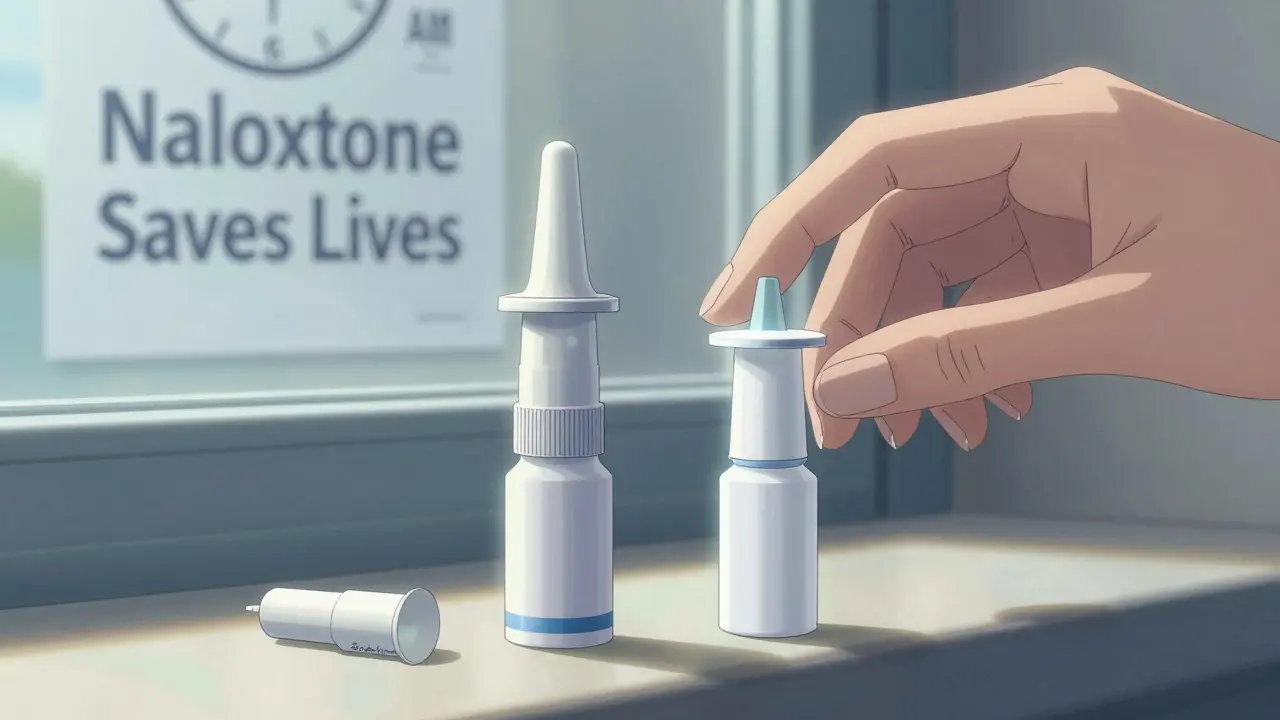
There are two possibilities: either you didn’t give enough, or opioids weren’t the cause. If you gave one or two doses and there’s still no response, start rescue breathing. Tilt the head back, pinch the nose, and give one breath every 5 seconds. Don’t stop until help arrives. The American College of Emergency Physicians says basic life support is more critical than waiting for naloxone to kick in. 22% of overdose deaths happen because people delay breathing support.
Training and Practice Make a Difference
You don’t need to be a paramedic. But practice helps. Many pharmacies offer free 10-minute training sessions. Watch a 2-minute video on YouTube - the CDC and SAMHSA have clear ones. Use a training device (they’re often free) to practice the motion. People who practice with a dummy spray are 98% likely to get it right in a real emergency. Those who don’t? Only 87% get it right after watching a video.
Common Mistakes and How to Avoid Them
- Waiting too long to act - If you’re unsure, act anyway. Delay costs lives.
- Not calling 911 - Naloxone is temporary. Medical help is permanent.
- Not giving enough spray - One dose isn’t always enough. Always have a second spray ready.
- Leaving the person alone - Even if they wake up, they can slip back into overdose. Stay with them.
- Using expired spray - Check the expiration date. Naloxone lasts 24 months if stored at room temperature (68°F-77°F).
Where to Get It and How Much It Costs
You can buy NARCAN Nasal Spray over the counter at CVS, Walgreens, Rite Aid, and many independent pharmacies. Two sprays usually cost $40-$80 without insurance. Some states offer free kits through public health programs. The Harm Reduction Coalition lists over 12,000 organizations that give them away for free - including syringe exchanges, community centers, and churches.
Amazon and online retailers sell it too, but be careful. Counterfeit products exist. Buy only from trusted pharmacies. Look for the FDA-approved label: NARCAN Nasal Spray 4 mg.
Legal Protection
Forty-seven states have Good Samaritan laws that protect you if you give naloxone in good faith. You won’t be charged for drug possession or overdose-related crimes if you call for help. The law is on your side.
Real Stories
A woman in Ohio used her first naloxone spray on her son after he stopped breathing following a fentanyl-laced pill. She gave one dose. No response. She gave a second. Three minutes later, he gasped. EMS arrived 10 minutes after that. He’s alive today.
A man in Chicago used naloxone on a stranger in an alley. He didn’t know the man. He just saw him not breathing. He gave one spray. Nothing. A second. Still nothing. He started rescue breathing while waiting for EMS. When they arrived, the man was breathing on his own. He later learned the man had taken fentanyl.
These aren’t rare. In 2022, naloxone reversed more than 27,000 overdoses in the U.S. Community programs saved lives. You can too.
What’s Next?
New versions are coming. A 12-hour extended-release naloxone spray is in clinical trials. But right now, the 4 mg nasal spray is what works. And it’s within reach.
Keep one in your car. Your bag. Your home. If you know someone who uses opioids - or if you’ve ever used them yourself - have it ready. You don’t need permission. You don’t need a prescription. You just need to know how to use it.
Can naloxone nasal spray be used on children?
Yes. Naloxone nasal spray is safe for people of all ages, including children. The same 4 mg dose is used for adults and kids. There’s no weight-based adjustment needed. If a child shows signs of opioid overdose - slow breathing, unresponsiveness, blue skin - give the spray immediately. Call 911. Stay with them.
Will naloxone work on fentanyl overdoses?
Yes, but it often takes more than one dose. Fentanyl is extremely potent. Naloxone can reverse it, but because fentanyl lasts longer in the body, a single 4 mg spray may not be enough. The CDC says 32% of fentanyl overdoses require two or more doses. Always be ready to give a second spray if there’s no response after 2-3 minutes.
How long does naloxone last in the body?
Naloxone’s effects last between 30 and 90 minutes. But many opioids - especially fentanyl, carfentanil, and other synthetics - can stay in the system for hours. That’s why you must monitor the person for at least 4 hours after the last dose. Symptoms can return. Always call 911 and stay with them until help arrives.
Is it safe to give naloxone if you’re not sure it’s an opioid overdose?
Yes. Naloxone is safe for people who haven’t taken opioids. It won’t harm someone who’s overdosed on alcohol, benzodiazepines, or other drugs. If you see signs like unresponsiveness and slow breathing, give naloxone. It could save a life - and it won’t hurt if you’re wrong.
Can I reuse a naloxone nasal spray?
No. Each spray is single-use only. Once you press the plunger, the dose is gone. Even if you didn’t fully depress it, don’t try to reuse it. The device is designed to deliver one precise dose. Always have a second spray ready in case you need it.
How should I store naloxone nasal spray?
Store it at room temperature - between 68°F and 77°F (20°C-25°C). Avoid extreme heat or cold. Don’t leave it in a hot car or a freezing glove compartment. Check the expiration date. It lasts 24 months from the date of manufacture. If it’s expired, replace it. A working spray is better than a useless one.
Where can I get free naloxone?
Many community organizations, harm reduction centers, syringe exchange programs, and public health departments give naloxone kits for free. The Harm Reduction Coalition lists over 12,000 locations nationwide. You can also ask your local pharmacy - some offer free kits through state programs. No ID or insurance is required.
What if I’m scared to give naloxone?
It’s normal to feel scared. But remember: you’re not alone. You’re not a doctor. You’re someone who cares. The steps are simple: call 911, give the spray, watch for breathing. Practice with a training device. Watch a video. You’ll be more ready than you think. And if you do nothing, the person might die. If you act, they might live.



Ryan Vargas
The government wants you to believe naloxone is a lifesaver, but let’s be real-it’s a Band-Aid on a bullet wound. They’re flooding pharmacies with this spray while quietly letting pharmaceutical giants push fentanyl-laced painkillers onto the working class. This isn’t harm reduction-it’s social engineering. They don’t want to fix addiction; they want to manage it so the system keeps running. You think this spray is about saving lives? No. It’s about keeping the opioid epidemic contained enough that politicians can keep pretending they’re doing something. And don’t get me started on how they’ve turned naloxone into a marketing tool for big pharma. NARCAN? That’s not a lifesaver-it’s a brand. A branded escape hatch for a system that refuses to address root causes. You want to save lives? Decriminalize everything. Fund rehab centers. End the war on drugs. Not hand out nasal sprays like candy and call it progress.
Simon Critchley
LOL. I’ve been on the frontlines of this for years. The real issue? Most people don’t even know how to *administer* it properly. I saw a dude in Brighton give the spray like he was trying to sneeze into a teapot. Half the dose went into the air. And don’t get me started on the 'recovery position'-half the time they just leave the person flat on their back like a corpse in a horror movie. 🤦♂️ You need to practice like it’s a fire drill. I carry two sprays, a pocket mask, and a damn flashlight. If you’re not prepped for the 10-minute window between 'I think he’s out' and 'oh shit his lips are purple,' you’re just a spectator. Also-fentanyl’s half-life is longer than your ex’s resentment. One spray? That’s like throwing a match at a gas leak. Bring the whole damn canister. #NaloxoneNotNarcissism
Andrew Jackson
This entire initiative is a moral abdication. We are not a society that rewards irresponsibility with convenience. Naloxone, while medically sound, is being weaponized as a moral shield for those who refuse to accept personal accountability. You give someone a spray like a magic wand, and you send the message that reckless drug use is not only acceptable, but protected. Where is the emphasis on prevention? On education? On discipline? We have abandoned virtue in favor of a technological fix. This is not compassion-it is capitulation. The state is not a babysitter. Families are not pharmacies. If you choose to poison your body with synthetic opioids, you should not be rescued by a public subsidy that absolves you of consequence. This is not a medical intervention; it is a societal surrender.
Patrick Jarillon
EVERYTHING YOU’RE TOLD IS A LIE. The CDC? A puppet of the pharmaceutical lobby. The FDA? A revolving door for Big Pharma execs. That ‘4 mg dose’? It’s a placebo. The real dose is 10 mg-but they don’t tell you because if people knew, they’d demand real solutions. And why are they pushing nasal spray? Because it’s more expensive than injectables! They want you to buy TWO sprays every few months! That’s $80 every 6 months-$160 a year-while the actual drug costs 50 cents a dose. They’re profiting off your fear. And the ‘free kits’? They’re bait. The moment you take one, they start tracking you. Your name, your location, your medical history. They’re building a database of addicts. And who’s behind it? The same people who invented the opioid crisis in the first place. Wake up. This isn’t salvation. It’s surveillance.
Kathryn Lenn
Oh wow, a whole essay on how to not die. Congrats. You just wrote a 3,000-word manual on ‘How to Be a Good Citizen While Your Friend Is Dying.’ Meanwhile, the real problem is that no one’s talking about why people are using fentanyl in the first place. Trauma? Poverty? Mental healthcare that costs more than rent? Nah. Let’s just hand out nasal sprays and call it a day. I mean, if I got paid $20 to save someone’s life, I’d probably just slap the spray in their nose and walk away too. 🤷♀️ At least now I can say I ‘did my part.’ Meanwhile, the guy’s still homeless, still in pain, still trapped. But hey-at least he’s breathing. For now.
Chima Ifeanyi
From a Nigerian public health analyst’s perspective: this entire narrative is a classic example of Western biomedical reductionism. You’re treating a systemic social pathology with a pharmacological Band-Aid. In Lagos, we don’t hand out naloxone-we build community outreach programs, peer support networks, and integrate addiction care into primary health clinics. You’re commodifying survival. Naloxone is not a solution-it’s a symptom of a broken system. And the fact that you’re selling it next to ibuprofen? That’s neoliberalism in its most grotesque form. The market doesn’t care if you live or die. It cares if you buy two. You don’t need more sprays. You need a government that doesn’t treat addiction like a retail problem.
Ritteka Goyal
OMG I JUST GOT MY FIRST NALOXONE KIT FROM MY LOCAL PHARMACY AND I CRIED 😭 I’VE BEEN SCARED TO TALK ABOUT MY BROTHER’S OPIATE USE BECAUSE EVERYONE JUST JUDGED HIM BUT NOW I FEEL LIKE I CAN ACTUALLY HELP HIM AND I’M SO GRATEFUL TO THE PEOPLE WHO MADE THIS POSSIBLE 🙏❤️ I PRACTICED ON MY DOLL AND I’M READY NOW IF HE EVER OVERDOSES I’LL BE THERE AND I’LL GIVE HIM BOTH SPRAYS AND I’LL STAY WITH HIM UNTIL EMS COMES I’M SO PROUD OF MYSELF FOR LEARNING THIS 🥹
Monica Warnick
I read this whole thing. Twice. Then I cried. Then I called my mom. Then I Googled ‘how to cry quietly in public.’ I’m not a drug user. I don’t know anyone who uses. But I saw a guy on the subway last week-pale, not breathing, people just walking past like he was a statue. I didn’t know what to do. I didn’t have a spray. I didn’t even know what ‘pinpoint pupils’ meant. Now I do. I bought two. I put one in my purse. One in my car. I watched the video. I practiced on my cat. (She’s fine. She hissed.) I don’t know if I’ll ever need it. But if I do? I won’t freeze. I won’t look away. I’ll act. And if that makes me a weirdo? Fine. I’ll be the weirdo who didn’t let someone die because she was too scared to press a button.
Frank Baumann
You think this is about saving lives? Nah. This is about control. Think about it. The government gives you this spray, tells you to call 911, and then-BAM-you’re in the system. They track your location, your phone, your pharmacy records. That spray? It’s a tracker. The second you use it, you’re flagged. They know who you are. Who you’re with. What you’re doing. And guess what? Next time you’re in a car accident? Your insurance gets flagged. Next time you apply for a job? Background check says ‘Naloxone Event.’ Next time you try to rent an apartment? Landlord says ‘nope.’ This isn’t a lifesaver. It’s a digital leash. And the worst part? They make you feel like a hero for wearing it. So you don’t ask questions. So you don’t look deeper. So you just keep buying the spray, like it’s a badge of honor. But it’s not. It’s a trap. And they’re smiling while they sell it to you.