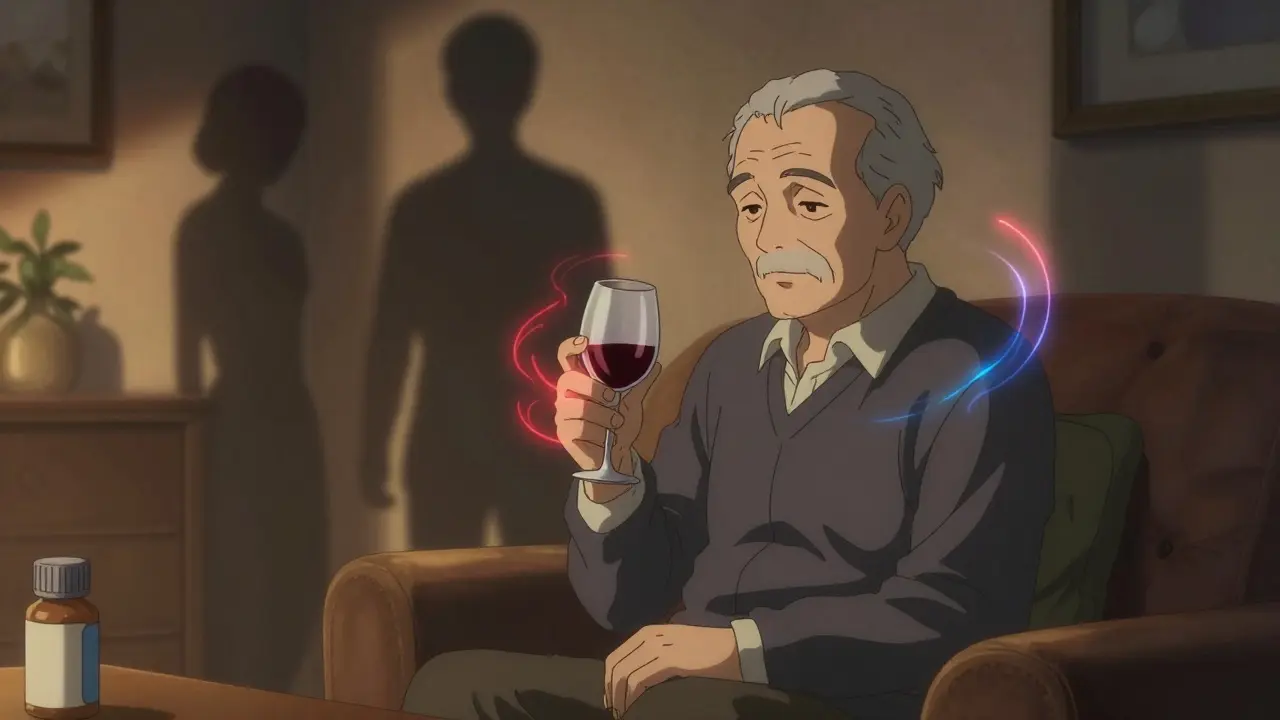
More than 40% of adults over 65 in the U.S. are taking prescription drugs that can become dangerous when mixed with even one drink of alcohol. This isn’t a rare edge case-it’s a quiet, widespread health crisis happening in living rooms, nursing homes, and senior centers across the country. People aren’t trying to be reckless. They’re just unaware that their evening glass of wine could be turning their painkiller into a silent killer.
Why Alcohol and Medications Don’t Mix
Alcohol doesn’t just make you sleepy. When it meets prescription drugs, it can change how your body processes them-sometimes in deadly ways. There are two main types of dangerous interactions: pharmacokinetic and pharmacodynamic.Pharmacokinetic interactions happen in your liver, where enzymes break down both alcohol and medications. Chronic drinking can speed up the breakdown of drugs like propranolol, making them less effective. A 2021 study in US Pharmacist found this can reduce effectiveness by 30-50%. On the flip side, having even one drink right before taking a medication can slow down that breakdown, causing dangerous buildup. Warfarin, a blood thinner, can spike in concentration by up to 35% after alcohol use, raising the risk of internal bleeding.
Pharmacodynamic interactions are even scarier. These happen when alcohol and a drug amplify each other’s effects on your body. Both alcohol and benzodiazepines like Xanax or Valium depress your central nervous system. Together, they don’t just add up-they multiply. Research from the National Institute on Alcohol Abuse and Alcoholism shows this combo increases sedation by 400%. That means you could pass out, stop breathing, or fall without warning.
High-Risk Medications You Need to Avoid with Alcohol
Some medications are just too dangerous to mix with alcohol. The risk isn’t theoretical-it’s backed by death statistics.Opioids like oxycodone, hydrocodone, and fentanyl are the deadliest. The CDC reports that in 2022, alcohol-opioid combinations were involved in 2,318 overdose deaths. Even one drink with a therapeutic opioid dose doubles your risk of a fatal crash. WebMD analysis shows these combinations account for 26% of all prescription drug overdose deaths. The danger isn’t just from binge drinking-it’s from that one beer after your pain pill.
Benzodiazepines-prescribed for anxiety, insomnia, or seizures-are another major red flag. Mixing them with alcohol doesn’t just make you drowsy. It increases fall risk in older adults by 50%, according to the Journal of the American Geriatrics Society. A 2023 update to the American Geriatrics Society’s Beers Criteria lists 15 alcohol-interacting drugs as potentially inappropriate for seniors. In nursing homes, 78% of falls involving sedatives happened when the patient had drunk alcohol within six hours.
NSAIDs like ibuprofen and naproxen are common, but they’re not harmless with alcohol. A case-control study of 200,000 patients showed heavy drinkers (three or more drinks a day) had a 300% higher risk of upper gastrointestinal bleeding when taking NSAIDs. The stomach lining gets battered from both sides.
Acetaminophen (Tylenol) is especially tricky. People think it’s safe because it’s over-the-counter. But with regular alcohol use, it creates a toxic metabolite that can cause acute liver failure. The FDA warns that 1 in 200 regular drinkers who take acetaminophen daily could develop liver failure. That’s not a one-in-a-million chance-it’s a real, measurable threat.
Who’s Most at Risk?
Age, gender, and health conditions make some people far more vulnerable.Adults over 65 are 3.2 times more likely to suffer severe interactions. Why? Their livers process alcohol and drugs slower. Their bodies have less water, so alcohol concentrates more in their blood. Many are on multiple medications, creating a perfect storm.
Women face 20% higher interaction severity than men, even at the same weight. That’s because women naturally have less body water, so alcohol stays more concentrated. A woman who drinks one glass of wine with her blood pressure pill may feel the same effect as a man who drinks two.
If you have liver disease, your risk with acetaminophen and alcohol jumps fivefold. If you’re on antidepressants like SSRIs, even moderate drinking can cause drowsiness in 35% of patients over 65, doubling fall risk.
What About ‘Just One Drink’?
Many people think, “I’m not a heavy drinker. One drink won’t hurt.” But that’s exactly where the danger lies.A 2023 WebMD survey found 57% of adults believe one drink is safe with most medications. That’s wrong. One standard drink-a 12-ounce beer, 5-ounce glass of wine, or 1.5-ounce shot of spirits-can be enough to trigger a reaction with opioids, benzodiazepines, or sleep aids. Blood alcohol levels as low as 0.02% (just one drink) can double crash risk when combined with opioids.
And it’s not just hard liquor. Wine, beer, and even alcohol-based cough syrups or mouthwashes can cause interactions. A patient on warfarin might not realize that a daily mouthwash with alcohol is enough to raise their INR levels dangerously.
Why Doctors and Pharmacists Don’t Always Warn You
You’d think this would be common knowledge. But the system is failing patients.Only 38% of benzodiazepine prescriptions include an explicit alcohol warning on the label, according to a 2022 FDA audit. A 2023 study in JAMA Internal Medicine found 43% of primary care physicians couldn’t correctly identify all high-risk medication classes.
Patients aren’t being told. Healthgrades data shows 68% of people prescribed benzodiazepines were never warned about alcohol. One Reddit user wrote: “Prescribed oxycodone after wisdom teeth surgery. No warning about alcohol. Had two beers. Couldn’t breathe for 20 minutes.”
But there’s hope. Pharmacists are often the last line of defense. A Google Review from a patient said: “My Walgreens pharmacist refused to fill my lorazepam prescription when I admitted to regular drinking-probably saved my life.”
What You Can Do Right Now
You don’t need to be a medical expert to protect yourself. Here’s what works:- Check the label. Look for “Do not drink alcohol” or “Avoid alcohol” on your prescription bottle. If it’s not there, don’t assume it’s safe.
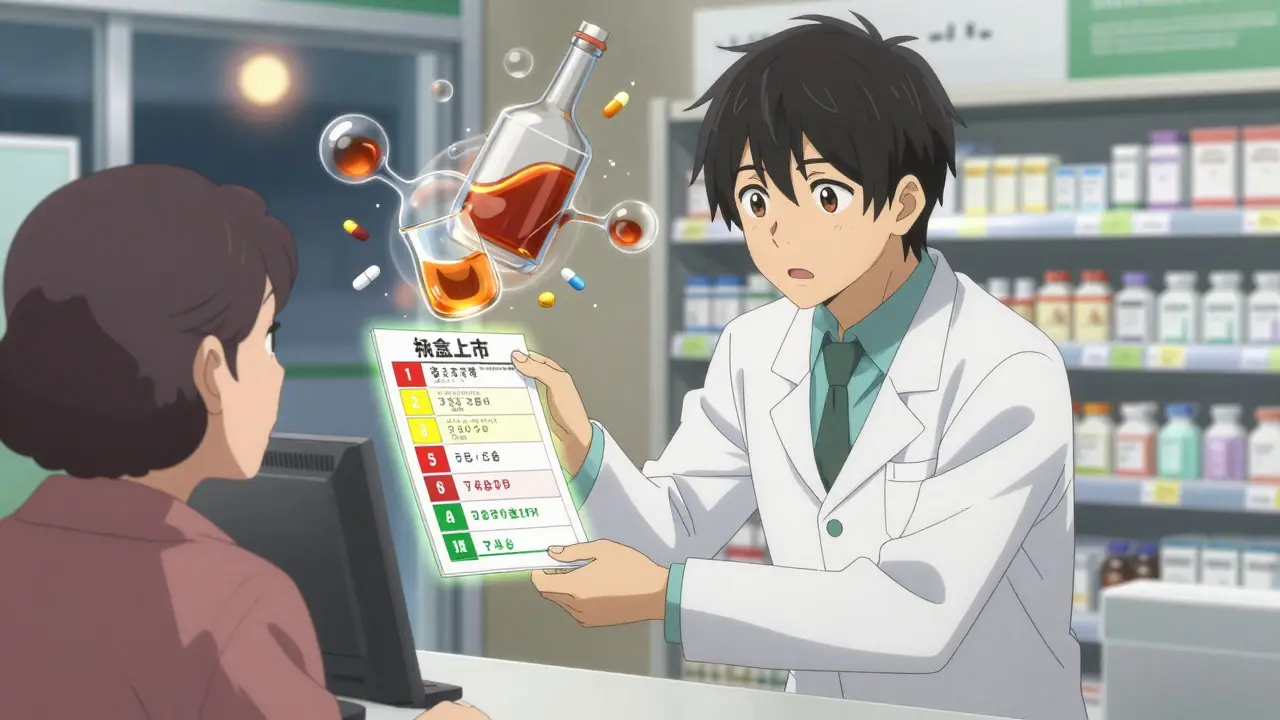
- Ask your pharmacist. They’re trained to spot interactions. Use the 4-question screening tool: “Am I taking anything that interacts with alcohol?” “Do I drink regularly?” “Have I had any side effects I can’t explain?” “Should I stop drinking while on this?”
- Use free tools. The NIAAA’s “Alcohol Medication Check” app lets you scan your prescription and get instant risk alerts. It covers over 2,300 medications.
- Use color-coded risk charts. GoodRx’s 2023 study showed visual red/yellow/green risk labels improve understanding by 47% compared to text-only warnings.
Don’t wait for your doctor to bring it up. Bring it up yourself. Say: “I have a glass of wine every night. Is this safe with my meds?”
The Bigger Picture
The market is starting to respond. The global medication interaction software market is projected to hit $2.84 billion by 2030. VA hospitals have mandatory alcohol-screening protocols. 73% of U.S. hospitals now use real-time clinical systems that flag alcohol-drug conflicts.But technology won’t fix this alone. Only 28% of high-risk patients completely stop drinking despite warnings, according to a 2023 Annals of Internal Medicine study. The real problem isn’t lack of data-it’s lack of communication.
Doctors are busy. Pharmacies are understaffed. Patients assume “if it’s prescribed, it’s safe.” But safety isn’t automatic. It’s something you have to ask for, check, and insist on.
Alcohol and prescription drugs aren’t just a bad combo-they’re a silent killer. And the most dangerous part? It’s entirely preventable.
Can I have one drink with my painkillers?
No, not if your painkiller is an opioid like oxycodone, hydrocodone, or tramadol. Even one drink can double your risk of respiratory depression and death. The CDC confirms that blood alcohol levels as low as 0.02%-equivalent to one standard drink-can be deadly when combined with therapeutic opioid doses. If you’re unsure, assume it’s unsafe.
Is it safe to drink wine with antidepressants?
It’s not recommended. While SSRIs like sertraline or fluoxetine don’t cause dangerous chemical reactions like opioids do, alcohol can make you much more drowsy, dizzy, or uncoordinated. A 2021 study found 35% of patients over 65 experienced clinically significant drowsiness after just one drink with SSRIs. This doubles fall risk and impairs judgment. Even if your doctor says it’s okay, monitor yourself closely and avoid driving or operating machinery.
Does alcohol affect blood pressure meds?
Yes. Alcohol can lower blood pressure, and when combined with beta-blockers or calcium channel blockers, it can cause your pressure to drop too low. This leads to dizziness, fainting, or falls. A 2021 US Pharmacist review found that drinking three or more drinks a day reduces the effectiveness of propranolol by 25% while increasing hypotension risk by 40%. If you’re on these meds, limit alcohol to one drink or less, and never drink on an empty stomach.
Can I drink alcohol while taking antibiotics?
Most common antibiotics like amoxicillin or azithromycin don’t have dangerous interactions with alcohol. But some do. Metronidazole and tinidazole can cause severe nausea, vomiting, and rapid heartbeat if mixed with alcohol. Isoniazid, used for tuberculosis, can cause liver damage when combined with alcohol in 15% of users. Always check your specific antibiotic. When in doubt, skip the drink.
What should I do if I accidentally mixed alcohol and medication?
If you feel unusually drowsy, dizzy, confused, or have trouble breathing, call 911 or go to the ER immediately. Don’t wait. If you’re unsure but feel fine, call your pharmacist or doctor right away. Keep the medication bottle and alcohol container handy-they’ll need to know what you took and how much. Most reactions happen within an hour, so monitor yourself closely.
Are there any apps that check for alcohol-drug interactions?
Yes. The National Institute on Alcohol Abuse and Alcoholism (NIAAA) offers a free app called “Alcohol Medication Check” that scans over 2,300 medications and gives you a risk level. GoodRx and Medscape also have interaction checkers built into their apps. These tools are reliable, updated regularly, and free to use. Don’t rely on Google searches-use a trusted medical tool instead.




Sidra Khan
This post is a masterpiece. I didn’t realize my nightly glass of wine was basically playing Russian roulette with my blood pressure meds. Now I’m terrified to even sip water.
Joe Jeter
Let me guess-next they’ll tell us breathing is dangerous when combined with oxygen. This is just fearmongering dressed up as public health. I’ve had wine with my oxycodone for years and I’m still standing. Maybe the real problem is doctors overprescribing and then blaming the patient for being human.
Lu Jelonek
As someone who works in geriatric pharmacy, I see this every day. A lot of seniors aren’t told about interactions because the prescriber assumes they don’t drink. But many do-just one glass with dinner. The real issue isn’t the alcohol, it’s the lack of clear communication. I always ask patients: ‘What’s your usual evening routine?’ If they say ‘wine,’ I check every med. Simple. Effective. No drama.
Ademola Madehin
YOOOOO I just mixed a whole bottle of wine with my Xanax and now I’m in the ER and my dog is crying and my neighbor called the cops because I was screaming at the ceiling fan. THIS IS WHY WE CAN’T HAVE NICE THINGS. 🤡
siddharth tiwari
u think this is bad? wait till u find out the gov is putting fluoride in the water to make old ppl dumber so they dont notice the drugs arent working. also the pharma companies own the niaaa app. its a trap. i checked my meds and it said ‘safe’ but i know better. i use a crystal ball now. it’s more accurate.
suhani mathur
Wow. So the solution to a systemic failure in healthcare is to make every elderly person feel like a walking hazard? Brilliant. I’m sure they’ll appreciate being told their 40-year habit of wine and ibuprofen is ‘a silent killer’-especially when their doctor never mentioned it. Maybe instead of scaring people, we should fix the system that lets 68% of patients go unwarned. Or is that too much to ask?
Diana Alime
okay but like… i took tylenol after a glass of wine and then i cried for 20 minutes because my cat looked at me wrong. is that liver failure or just my emotional state? also my pharmacist looked at me like i’d just confessed to stealing his lunch. why is everyone so dramatic about this??
Adarsh Dubey
There’s a real problem here, and this post does a good job laying it out. But the tone risks alienating the very people it’s trying to help. Many older adults aren’t tech-savvy, don’t use apps, and trust their doctors implicitly. The solution isn’t just better warnings-it’s better training for providers, more time in pharmacy consultations, and less guilt-tripping. One drink isn’t a moral failing. It’s a habit. And habits change with support, not fear.