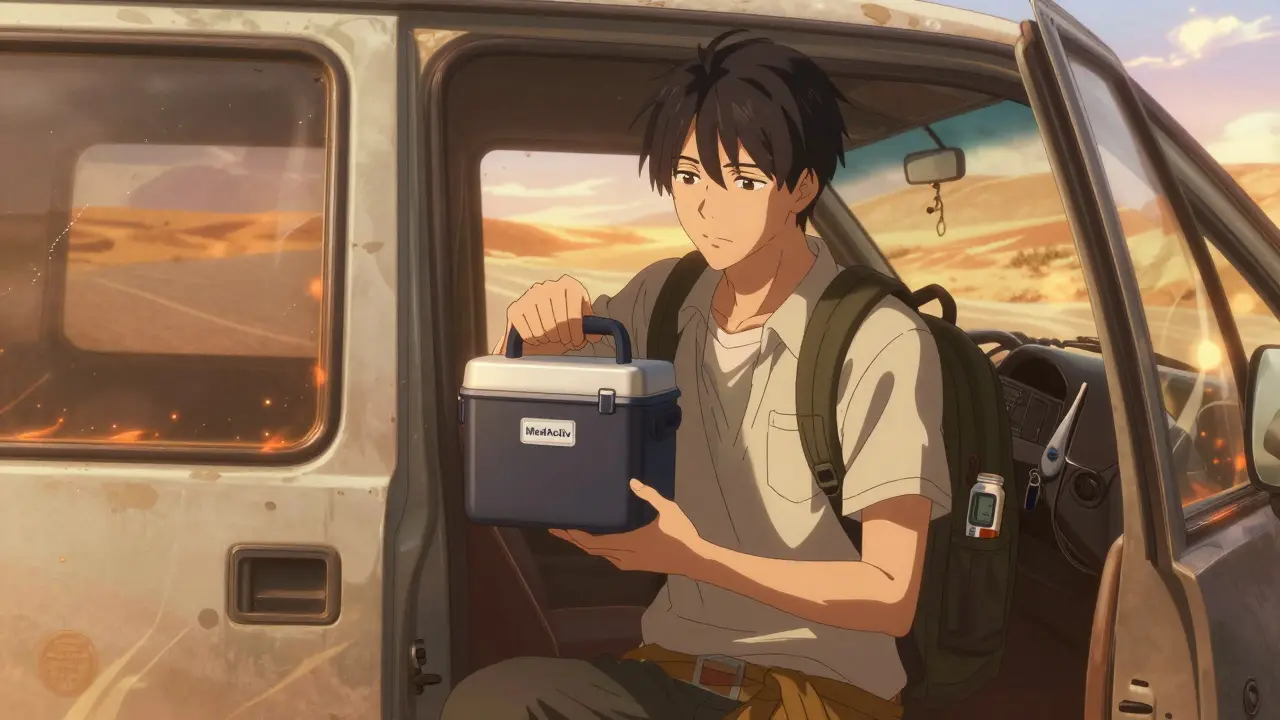
When you’re traveling in a hot climate, your medications aren’t just sitting in your bag-they’re sitting in a sauna. A car parked in the sun can hit 140°F (60°C) in under 30 minutes. That’s not just uncomfortable-it’s dangerous for your pills, patches, pens, and inhalers. If you’re managing insulin, EpiPens, birth control, or even common antibiotics, heat isn’t just a nuisance. It’s a silent killer of effectiveness.
Why Heat Destroys Medications
Most medications are designed to stay stable between 68°F and 77°F (20°C to 25°C). That’s not "room temperature" as most people think of it-especially in summer. In Adelaide, even a cool indoor room can hit 82°F. Outside? Forget it. Medications don’t just lose potency. They can break down into harmful compounds. Insulin is one of the most vulnerable. Studies show it starts degrading at 86°F (30°C). After 24 hours at 104°F (40°C), some types lose up to 32% of their effectiveness. That means your blood sugar could spike, even if you’re giving the right dose. EpiPens? Their epinephrine can crystallize in heat, making them useless during an allergic emergency. Birth control pills? One user on Reddit shared her story: her birth control failed after being left in a car for two days on a 95°F trip. She got pregnant. Even your albuterol inhaler can fail. A Drugs.com user reported his inhaler stopped working after a beach day. He ended up in the ER. These aren’t rare cases. They’re predictable.What You Can’t Trust
There are three places you should never leave your meds:- Car glove compartment-It’s the #1 mistake. Even on a 75°F day, it can hit 120°F in 20 minutes.
- Car trunk-Hotter than the cabin. Temperatures can exceed 140°F.
- Direct sunlight on a beach towel or patio table-Sunlight doesn’t just warm-it accelerates chemical breakdown.
What Works: The Right Tools
You don’t need fancy gear, but you do need the right kind.Insulated Bags with Phase-Change Materials
These aren’t regular coolers. They use special gels that stay at 59°F-77°F for 48-72 hours without freezing. The MedActiv Travel Case is one example-it’s $34.99, lightweight, and fits in a backpack. Independent tests show it keeps insulin safe even in 110°F heat.Pharmaceutical-Grade Coolers
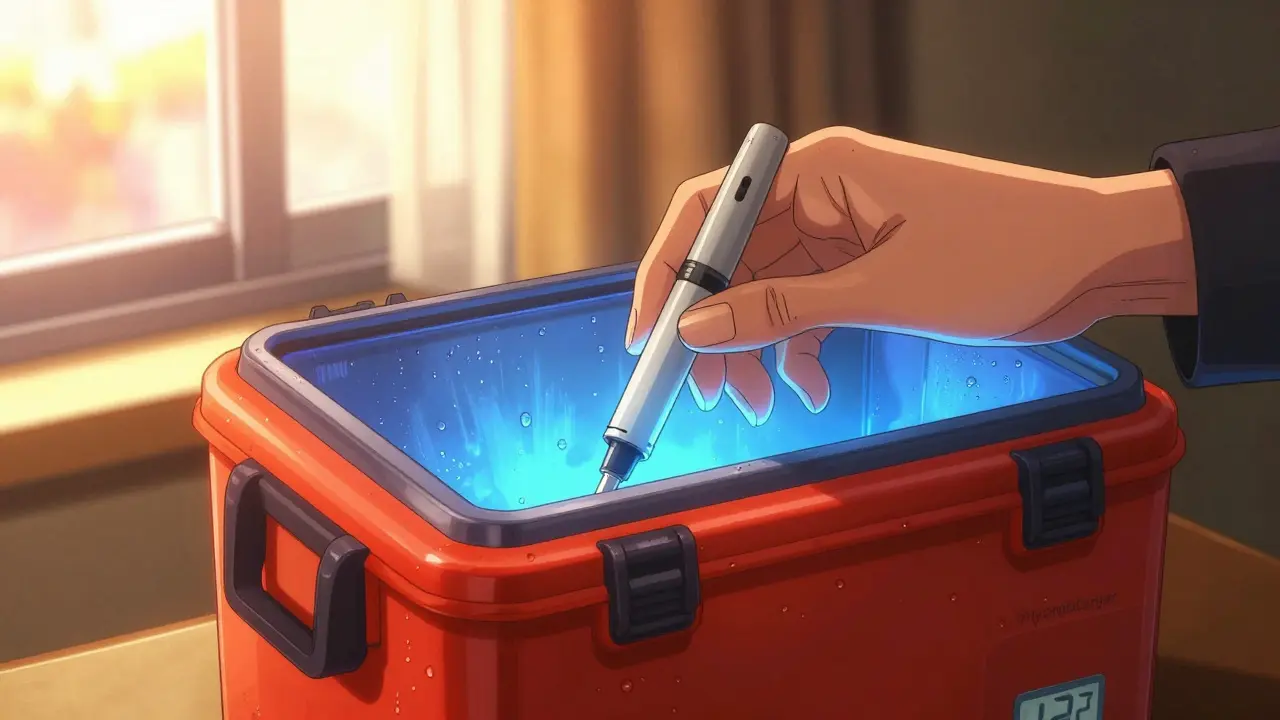
For refrigerated meds like insulin or certain antibiotics, you need more. The MyMediCarrier is a hard-shell cooler with ice bricks that maintain 36°F-46°F for 72 hours. One user in Arizona tracked the internal temp with a thermometer: it held steady at 42°F during a 102°F road trip.Smart Coolers with Bluetooth Monitoring
The TempSure Medication Cooler costs $129.99, but it gives you real-time data. It connects to your phone and alerts you if temps go outside the safe range. If you’re flying with insulin or chemo meds, this isn’t luxury-it’s insurance.Simple, Cheap Fixes
Not everyone wants to spend $100. Here’s what works:- Wrap ice packs in a towel-never let them touch your meds directly. Ice can freeze and damage some drugs.
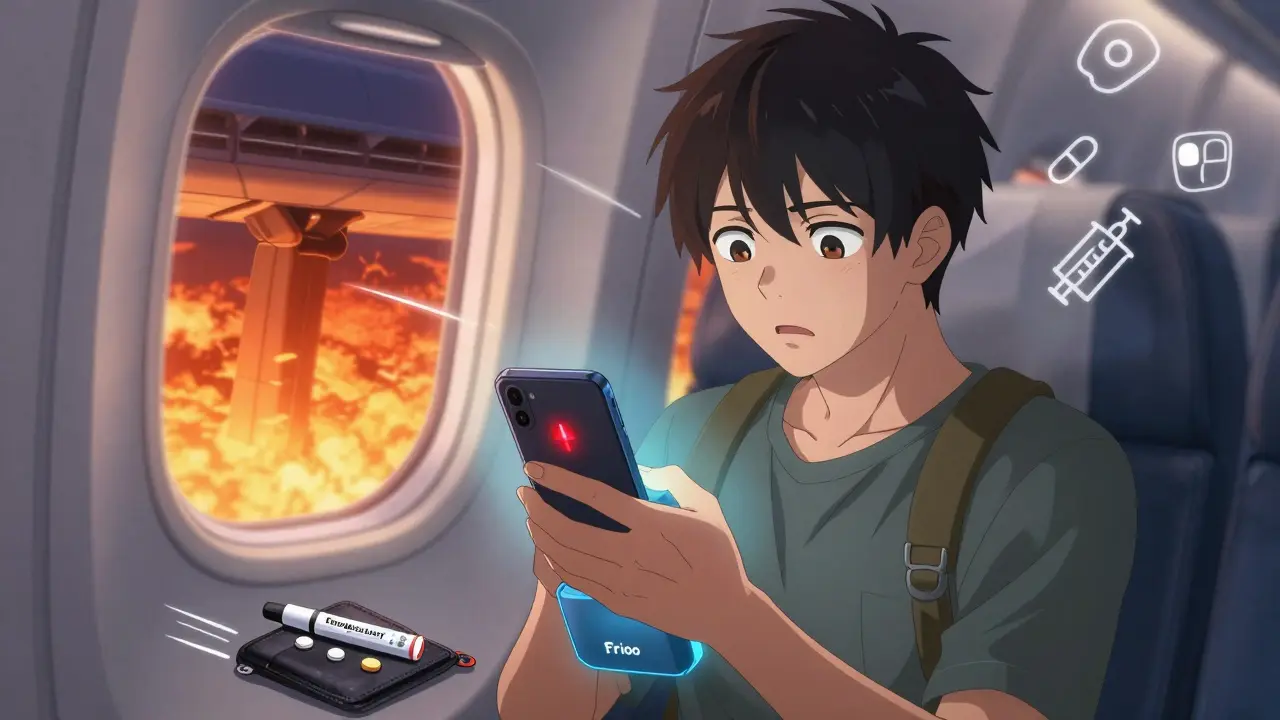
- Use a Frio Insulated Wallet ($24.99). It’s a reusable, water-activated cooling pouch that keeps meds under 77°F for 48 hours. Nurses and diabetics swear by it.
- Put your meds in a small cooler with a damp cloth over it. The evaporation can lower internal temps by 10-15°F.
Air Travel: What to Do Before You Board
Carry-on is non-negotiable. Checked bags are a gamble.- Keep all meds in original bottles with pharmacy labels. TSA requires this.
- Declare them at security. You’re not asking for permission-you’re informing them.
- Use a small insulated pouch inside your carry-on. Don’t rely on cabin temperature alone-even if it’s 70°F, the bag near the window can heat up.
- Bring a digital thermometer. A $10 one from Amazon lets you verify your meds are safe. The American Society of Health-System Pharmacists now recommends this for all travelers.
What to Do If Your Meds Got Hot
If you realize your insulin was in a hot car for more than 30 minutes, or your EpiPen felt warm to the touch:- Don’t use it. Even if it looks fine, the chemical structure may be damaged.
- Check the expiration date. If it’s expired, toss it.
- Call your pharmacist. The FDA says any temperature excursion over 24 hours requires professional advice.
- If you’re abroad and can’t get a replacement, go to a hospital pharmacy. They often have emergency supplies.
Special Cases: What’s Most at Risk
Not all meds are equal. Here’s what needs extra care:- Insulin-Loses potency fast. Never leave it in a car.
- EpiPens-If the liquid looks cloudy or has particles, it’s ruined.
- Birth control pills-Heat can break down hormones. A failed pill isn’t always obvious.
- Anti-seizure meds-Even small changes in dosage can trigger seizures.
- Antibiotics-Some (like doxycycline) become toxic when heated.
- Inhalers-Pressure can change. Test the spray before you need it.
Planning Ahead: The 15-Minute Rule
Before any trip, spend 15 minutes packing your meds properly:- Take meds out of the bathroom cabinet-humidity and heat are enemies.
- Put them in original containers with labels.
- Wrap refrigerated meds in towels, then place them in your cooler with two frozen ice packs.
- Put the cooler in your carry-on, not under your seat where it can get warm.
- Bring a thermometer. Check the temp when you arrive.
What’s Changing in 2026
The industry is catching up. By late 2024, airlines will start installing temperature-controlled compartments for meds in cabins. The FDA is pushing for color-coded labels on bottles that turn red if exposed to dangerous heat. And more pharmacies now give you a printed storage guide with your prescription-up from 42% in 2020 to 68% in 2023. But until those systems are everywhere, you’re still the last line of defense.Final Tip: Think Like a Pharmacist
If you wouldn’t leave your coffee on a radiator, don’t leave your meds in a car. If you wouldn’t microwave your vitamins, don’t let them bake in the sun. Medications aren’t just pills-they’re life-saving tools. Their chemistry is precise. Heat doesn’t just ruin them-it can turn them into risks. Keep them cool. Keep them dry. Keep them with you. Your body will thank you.Can I leave my pills in the hotel room if it’s hot?
No. Hotel rooms in hot climates often hit 85°F or higher, especially near windows. Medications like birth control, insulin, and antibiotics degrade faster above 86°F. Always use a portable cooler or insulated bag, even in your hotel room.
Is it safe to carry insulin in my pocket?
Only for short periods-like 10-15 minutes while walking to your car. Body heat is around 98.6°F, which is above the safe limit for insulin. Use an insulated pouch instead. If you must carry it in your pocket, check the temperature with a thermometer and replace it if it’s been exposed for more than 30 minutes.
Do I need to refrigerate all my meds?
No. Only specific ones: insulin, some antibiotics, EpiPens (if stored long-term), and certain hormones. Most tablets and capsules are fine at room temperature (68°F-77°F). Always check the label or ask your pharmacist. If it says "refrigerate," treat it like food that spoils.
Can I use a regular cooler with ice for my insulin?
Yes-but only if you wrap the ice packs in towels and don’t let them touch the insulin vials. Direct contact can freeze the insulin, making it unusable. A regular cooler without insulation can also swing from 35°F to 50°F, which stresses the medication. For long trips, a pharmaceutical-grade cooler with temperature control is safer.
What if I’m traveling to a country with no pharmacies nearby?
Pack extra-50% more than you think you’ll need. Bring a copy of your prescription in English and the local language. Know the generic names of your meds. Some countries don’t recognize brand names. If you run out, go to a hospital pharmacy-they’re more likely to have emergency supplies than a retail pharmacy.
Are travel insurance policies covering heat-damaged meds?
Some do. Allianz Global Assistance reported a 37% increase in claims for heat-damaged medications from 2021 to 2022. Check your policy for "medication replacement" coverage. If it’s not listed, call your provider and ask. It’s worth adding if you’re taking critical meds.







Sami Sahil
bro i left my insulin in my car for 2 hours in hyderabad and it was 110f... i thought i was gonna die. bought a frio wallet after that and now i just toss it in my backpack. no more panic attacks at the beach. 🙌
Donna Macaranas
i never realized how much i took my meds for granted until i got stuck in a heatwave in arizona. now i carry a tiny thermometer in my purse. it’s weirdly comforting to know my birth control isn’t cooking. 😅
Naresh L
it’s fascinating how we treat pills like they’re inert objects, when in reality they’re delicate chemical systems evolved for precision. heat doesn’t just degrade them-it alters their molecular identity. we wouldn’t leave a vaccine in a hot car, so why treat insulin differently? the body doesn’t care about your convenience.
perhaps the real failure isn’t the lack of coolers, but our cultural assumption that medicine is disposable. we treat it like a soda can, not a life-support system.
franklin hillary
IF YOU’RE NOT USING A PHARMACEUTICAL COOLER YOU’RE PLAYING RUSSIAN ROULETTE WITH YOUR LIFE
my cousin died because her epipen froze then melted then froze again in checked luggage. the hospital said it was ‘chemical instability.’ i say it was negligence. get the tempsure. it’s $130. your funeral isn’t.
also stop putting meds in your pocket. body heat is 98.6. insulin degrades at 86. math is hard but it’s not optional.
Ishmael brown
lol who even carries meds anymore? just buy new ones when you get there. it’s not like you need insulin to survive or anything 😎
Nancy Nino
How quaint. I suppose next you’ll be recommending that we store our antibiotics in the refrigerator during a monsoon. I mean, it’s not like the pharmaceutical industry has spent billions on stability testing. 🤷♀️
Lu Gao
the frio wallet is great-but make sure you soak it in water for 15 minutes before use. i learned this the hard way when mine didn’t activate and my insulin turned to soup. 🙃
Nidhi Rajpara
Actually, I think you're all overreacting. My grandmother stored all her pills in the bathroom cabinet for 40 years and never had an issue. Heat is not a problem if you're not weak-minded. Also, why do you need a thermometer? Just trust your gut.
Chris & Kara Cutler
insulin + frio wallet = life saver 🥶❤️
Jamie Allan Brown
as someone who’s traveled through the sahara with diabetes, i can say: the real hero here isn’t the cooler-it’s the pharmacist who gave me a handwritten list of generic names in arabic. if you’re going somewhere remote, do that. no tech beats human connection.
also, never assume your hotel has a fridge. i once had to hide my meds in a bucket of ice at a roadside stall. the guy thought i was smuggling drugs. i just smiled and said, ‘it’s medicine.’ he gave me extra ice.
Nicki Aries
I appreciate this guide... but honestly, I think the real issue is that pharmaceutical companies don't design medications with real-world conditions in mind. Why aren't all insulin formulations heat-stable by default? Why do we have to carry around $130 coolers just to stay alive? It's not a personal responsibility issue-it's a systemic failure. And yes, I'm angry about it.
June Richards
why are you all so dramatic? i’ve left my pills in the glovebox for years. nothing happened. you’re probably just anxious. maybe you need therapy, not a cooler.