Opioid & Antihistamine Interaction Checker
Check Your Medication Combination
Interaction Result
Safer Alternatives:
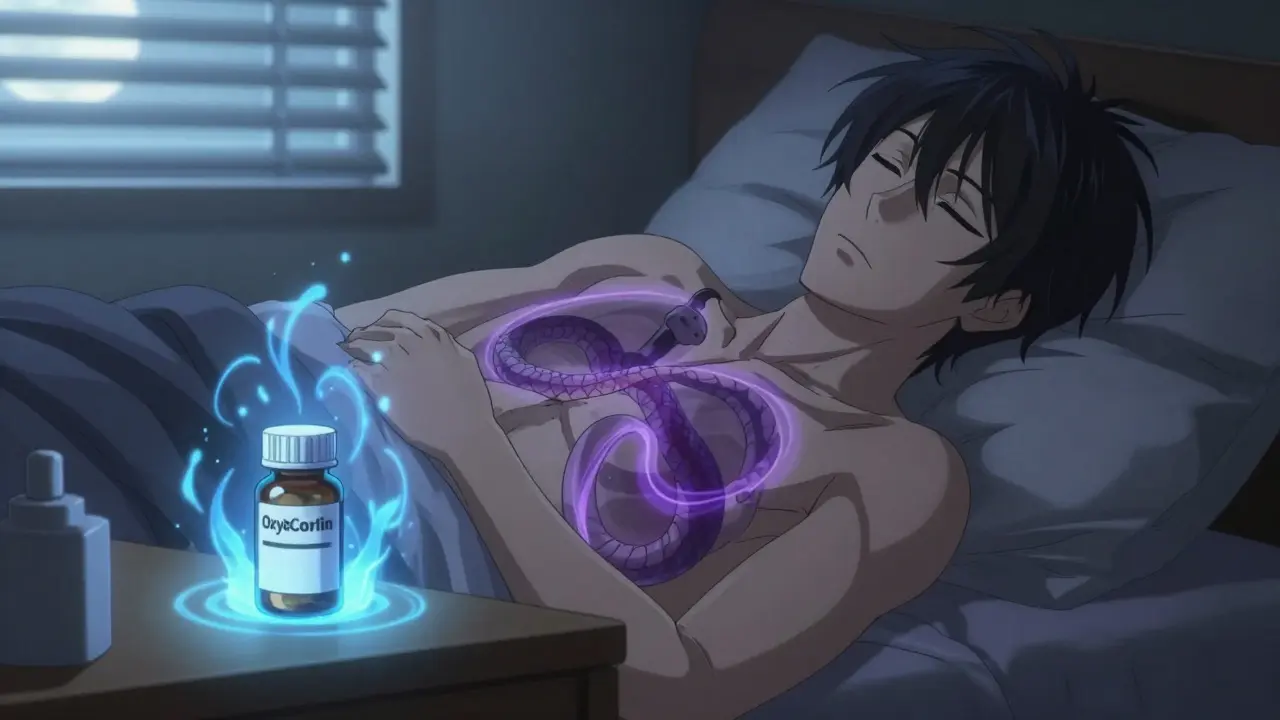
It’s not just alcohol or benzodiazepines that can turn a prescription painkiller into a life-threatening mix. Many people don’t realize that a common over-the-counter allergy pill - like Benadryl or Zyrtec - can dangerously amplify the effects of opioids. When you take an opioid for pain and an antihistamine for allergies or sleep, your body doesn’t just feel extra drowsy. It can stop breathing. And that’s not a hypothetical risk. It’s happening in hospitals, homes, and emergency rooms across the country.
How Opioids and Antihistamines Work Together to Slow Breathing
Opioids like oxycodone, hydrocodone, and fentanyl work by binding to receptors in your brain and spinal cord. They reduce pain, but they also depress the part of your brain that controls breathing. That’s why overdose deaths from opioids often involve slowed or stopped breathing - a condition called respiratory depression. First-generation antihistamines - diphenhydramine (Benadryl), hydroxyzine (Atarax), doxylamine (Unisom), and chlorpheniramine - do something similar. They cross the blood-brain barrier and block histamine, which is why they make you sleepy. But they also directly suppress the brainstem’s drive to breathe. Unlike second-generation antihistamines like loratadine or fexofenadine, which barely enter the brain, these older drugs hit your central nervous system hard. When you combine them, it’s not a 1 + 1 = 2 effect. It’s more like 1 + 1 = 5. The two drugs amplify each other’s depressant effects. Your brain’s breathing center gets overwhelmed. Oxygen levels drop. Carbon dioxide builds up. You don’t just feel sleepy - you become unresponsive. In severe cases, your breathing stops entirely.The FDA Warned About This in 2016 - But People Still Don’t Listen
In August 2016, the U.S. Food and Drug Administration issued a formal safety alert. It said combining opioids with other central nervous system depressants - including alcohol, benzodiazepines, and sedating antihistamines - could cause extreme sleepiness, coma, or death. The warning was clear. But it didn’t make headlines the way opioid overdose stories do. Why? Because antihistamines are easy to get. You don’t need a prescription. You don’t need to talk to a doctor. You grab a bottle from the shelf while picking up your pain meds. Many patients assume, “It’s just an allergy pill. How bad could it be?” The truth? A 2021 study in JAMA Internal Medicine showed that hospitals using electronic alerts to flag opioid-antihistamine combinations reduced adverse events by 42%. That means nearly half of the dangerous interactions were preventable - if the system caught them.Real Cases. Real Consequences.
A 68-year-old man with chronic back pain was prescribed hydrocodone. He also took Benadryl every night because he had trouble sleeping. One morning, his wife found him unresponsive. He spent 36 hours in the ICU. He survived - barely. Another patient, a 72-year-old woman on oxycodone for arthritis, started taking hydroxyzine for itching from a skin condition. She didn’t tell her doctor. One afternoon, she fell while walking to the bathroom. She fractured her hip. The fall wasn’t just bad luck - it was sedation. She couldn’t react in time because her brain was too suppressed. A survey of 147 healthcare professionals on Sermo found that 32% of patients who took opioids with sedating antihistamines needed naloxone - the opioid overdose reversal drug - to survive. That’s not rare. That’s common enough to be a red flag.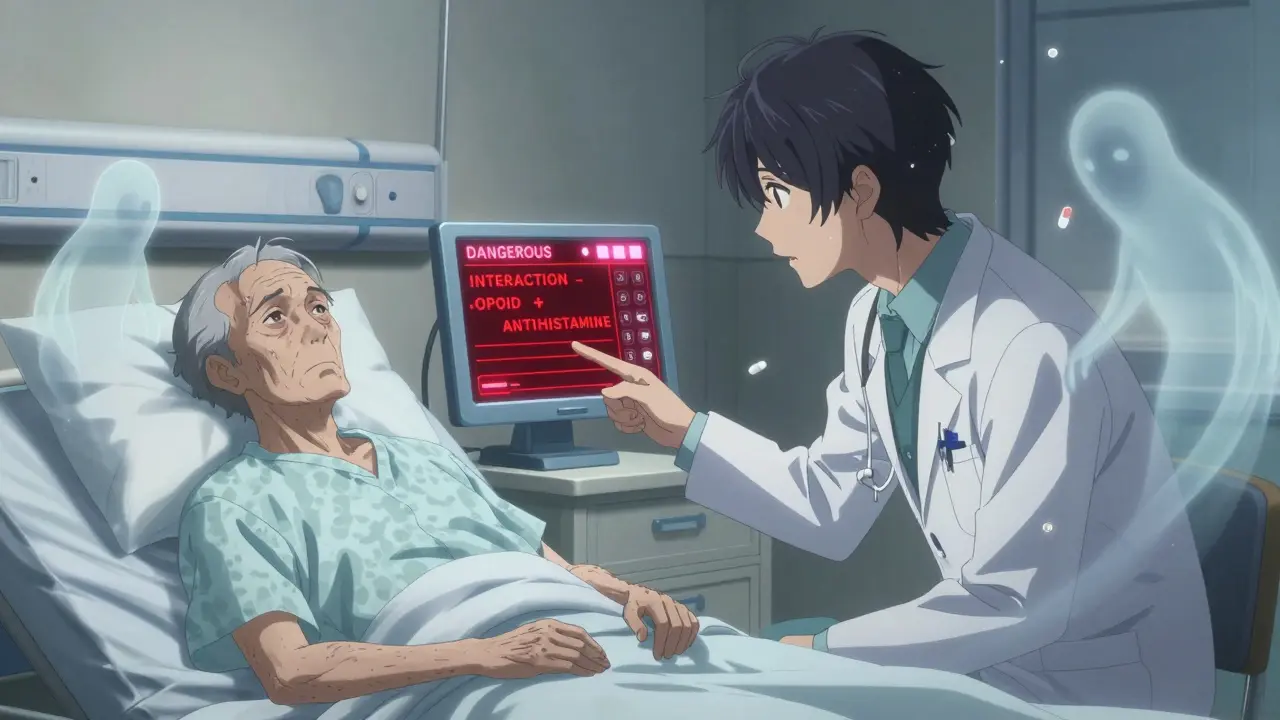
Who’s at Highest Risk?
This isn’t a risk for everyone. But for some people, the danger is much higher:- Elderly patients: Their bodies process drugs slower. Their brains are more sensitive to sedation. The Beers Criteria - a guide used by geriatric doctors - lists diphenhydramine and hydroxyzine as “potentially inappropriate” for people over 65 because of their anticholinergic burden.
- People with COPD or sleep apnea: Their lungs are already struggling. Adding opioids and antihistamines pushes them past the edge. Studies show OIRD (opioid-induced respiratory depression) occurs most often in the first 24 hours after surgery - and even more in those with pre-existing breathing problems.
- Those taking high-dose opioids: The higher the opioid dose, the more likely sedation becomes. When you add antihistamines on top, even a moderate opioid dose can become dangerous.
- People who mix multiple sedatives: If you’re taking an opioid, an antihistamine, and alcohol - or a sleep aid - you’re stacking depressants. Each one makes the next more dangerous.
What You Can Do: Safer Alternatives and Clear Rules
You don’t have to suffer from allergies or insomnia just because you’re on pain medication. There are safer choices:- Switch to non-sedating antihistamines: Fexofenadine (Allegra), loratadine (Claritin), and cetirizine (Zyrtec) have minimal brain penetration. They treat allergies without making you drowsy. Zyrtec can still cause mild sedation in some people - but it’s far less than Benadryl.
- Use non-drug options: For allergies, try saline nasal rinses, HEPA filters, or avoiding triggers. For sleep, try sleep hygiene: no screens before bed, cool room temperature, consistent schedule.
- Ask your doctor before taking anything new: Even if it’s “just an OTC pill.” Your pharmacist can also flag dangerous interactions when you pick up your prescription.
- Never take antihistamines for sleep if you’re on opioids: Many people use Benadryl or doxylamine as a sleep aid. That’s a recipe for disaster when paired with painkillers.

Why This Interaction Is Harder to Spot Than Others
Unlike benzodiazepines - which are tightly controlled and usually prescribed - antihistamines fly under the radar. No one asks, “Are you taking allergy meds?” when you’re getting an opioid prescription. Patients don’t think to mention them. Providers don’t always ask. A 2021 NIH survey found that 68% of patients don’t tell their doctors about over-the-counter medications they’re using. That’s a massive blind spot. And because there’s no antidote for antihistamine overdose - unlike naloxone for opioids - treatment is harder. You can’t reverse the sedation. You can only support breathing until the drug wears off.What Providers Are Doing to Prevent This
Hospitals and clinics are starting to catch up. Electronic health records like Epic now have “hard stop” alerts when a prescriber tries to order an opioid with a sedating antihistamine. In 92% of U.S. hospitals using Epic, these alerts block the prescription unless the doctor overrides it with a reason. The FDA’s Opioid Analgesic REMS program now requires all prescribers to complete training on drug interactions - including antihistamines - by December 2023. The CDC’s 2022 guidelines say: “Avoid combining opioids with other CNS depressants whenever possible.” But the real change needs to happen at the patient level. You have to speak up.Bottom Line: Don’t Guess. Ask.
If you’re on an opioid for pain, treat every sedating medication like a loaded gun - even if it’s in the medicine cabinet next to your toothpaste. Benadryl, Unisom, Atarax, and similar drugs aren’t harmless. They can slow your breathing to a stop. The safest path? Use non-sedating antihistamines. Talk to your doctor or pharmacist before taking anything new. And if you feel unusually drowsy, confused, or have trouble breathing - get help immediately. This isn’t about being overly cautious. It’s about survival.Can I take Benadryl with my opioid painkiller?
No. Combining Benadryl (diphenhydramine) with opioids like oxycodone or hydrocodone can cause extreme drowsiness, slowed breathing, coma, or death. Even one dose can be dangerous, especially in older adults or people with breathing problems. Use non-sedating alternatives like Allegra or Claritin instead.
Are all antihistamines dangerous with opioids?
No. Only first-generation antihistamines - like diphenhydramine, hydroxyzine, and doxylamine - cross into the brain and cause sedation. Second-generation antihistamines like fexofenadine (Allegra), loratadine (Claritin), and cetirizine (Zyrtec) have very little brain penetration and are much safer to use with opioids. Still, check with your doctor before combining any medication.
Why doesn’t my doctor warn me about this?
Many doctors assume patients won’t mention over-the-counter meds, and patients don’t realize antihistamines can be risky. A 2022 CDC report found only 34% of patients prescribed opioids receive counseling on drug interactions. Always volunteer your full medication list - including OTC pills, supplements, and alcohol - to every provider.
What should I do if I feel too sleepy after taking both?
If you feel unusually drowsy, confused, have slow or shallow breathing, or can’t stay awake, call 911 immediately. Naloxone won’t reverse antihistamine effects, but it can help if opioids are also involved. Emergency responders can provide oxygen and breathing support. Don’t wait - respiratory depression can lead to brain damage or death within minutes.
Can I use Zyrtec with opioids?
Cetirizine (Zyrtec) is generally safer than Benadryl because it causes less sedation. However, it can still cause drowsiness in some people, especially at higher doses or when combined with opioids. Use the lowest effective dose, avoid alcohol, and monitor for excessive sleepiness. If you feel overly tired, switch to Allegra or Claritin instead.








Nicholas Miter
Been on oxycodone for years after my back surgery. Started taking Zyrtec for seasonal allergies last spring. Didn’t think twice until my pharmacist flagged it. Turned out Zyrtec still made me feel like a zombie. Switched to Allegra - total game changer. No more midday naps, no more fuzzy head. Just say no to Benadryl if you’re on pain meds. Seriously.
Also, side note: my cat started sleeping on my chest more since I stopped the diphenhydramine. Guess she sensed I was less of a lump.
tl;dr - non-sedating antihistamines exist. Use them.
Betty Bomber
My grandma took Benadryl every night with her hydrocodone. Said it helped her sleep. She fell three times last winter. Broke her hip. Now she’s on a walker and we don’t talk about it anymore. This post? Spot on.
Why do people treat OTC like it’s candy? It’s not. It’s a silent killer.
Mohammed Rizvi
Oh wow, so the same guy who told me to take Unisom for insomnia is now in a nursing home after his ‘accidental’ overdose? Classic. I’ve seen this movie before. You take the pill, you feel chill, you think you’re being smart… then your brain forgets how to breathe. No thanks.
Also, if you’re using antihistamines as sleep aids, you’re not sleeping - you’re sedated. Big difference. Go read a book. Or count sheep. Or stare at the ceiling like a normal person.
Suresh Kumar Govindan
It is an empirical fact that the central nervous system depressant synergy between opioid receptor agonists and histamine H1 antagonists has been documented since the 1970s. The fact that this remains a public health blind spot is a testament to the pathological disregard for pharmacological literacy in contemporary Western society.
Moreover, the FDA’s 2016 alert was not merely a recommendation - it was a categorical imperative grounded in neuropharmacological evidence. The persistence of this behavior reflects a cultural epistemological failure.
Aishah Bango
People like you think you’re saving lives by posting this. But here’s the truth - if someone’s dumb enough to mix Benadryl with opioids, they deserve what they get. You don’t get to be a grown adult and still treat medicine like a buffet. Stop coddling people. Let nature take its course.
Conor Flannelly
There’s something deeply ironic about how we treat medicine in the West. We’ll spend hours researching the best coffee beans, but when it comes to what we put into our bodies? ‘Oh, it’s just an OTC pill.’
It’s not ignorance - it’s a refusal to acknowledge vulnerability. We want to believe we’re in control. But the brain doesn’t care about your willpower. It cares about receptor binding.
I’ve seen patients on hospice care who took Benadryl for ‘nerves’ and slipped into respiratory arrest. No one meant to harm anyone. That’s the horror of it.
We’re not just talking about drugs. We’re talking about how we relate to our own mortality. You think you’re being clever by taking a little something to sleep? You’re just postponing the conversation with death. And it always wins.
So yeah - use Allegra. Talk to your pharmacist. Be humble. The alternative isn’t just dangerous - it’s tragic in the Greek sense. Not because it’s violent. But because it’s unnecessary.
Conor Murphy
My cousin took hydrocodone after her knee surgery. She also had a rash and grabbed some hydroxyzine from her mom’s cabinet. Didn’t tell anyone. Woke up in the ER the next day with her oxygen levels at 78%.
She’s fine now. But she says she’ll never forget the feeling - like someone was slowly squeezing her lungs with invisible hands.
Just… please. Don’t be like her. Even if you think you’re ‘fine.’ You’re not.
eric fert
Okay, so let me get this straight - the government is now telling us that we can’t take Benadryl with painkillers? What’s next? Are they going to ban aspirin with wine? Are they going to make us sign a waiver before we drink water after taking Tylenol?
This is just the beginning. Next they’ll say you can’t take melatonin with caffeine because it might ‘interfere with your circadian rhythm.’ Then they’ll say you can’t breathe while sitting down because it might ‘reduce lung efficiency.’
People are dying from opioids? Sure. But they’re also dying from bad life choices. Why are we criminalizing ignorance instead of fixing the system that lets people get opioids like candy in the first place?
And why is no one talking about how the pharmaceutical industry profits from this? They make the opioids. They make the antihistamines. They make the naloxone. They make the rehab centers. They make the lawsuits. They win either way.
Wake up. This isn’t about safety. It’s about control. And the people who wrote this post? They’re probably on the payroll of some pharma lobby that sells Allegra.
Renia Pyles
Oh my god I’m so tired of this fearmongering. I take Benadryl with my oxycodone every night and I’ve never had a problem. You’re just trying to scare people into buying expensive ‘non-sedating’ meds that don’t even work as well.
My grandma lived to 92 and she took Unisom with her pain pills. She was fine. You’re just a woke medical drone who thinks everyone needs a 20-page pamphlet before they take a pill.
Also, Zyrtec is just as bad as Benadryl - I’ve tested it. I’m not falling for your marketing.
Kipper Pickens
From a pharmacokinetic standpoint, the CYP3A4 and CYP2D6 metabolic pathways are critically relevant here - particularly when polypharmacy is involved. First-gen antihistamines exhibit high volume of distribution due to lipophilicity, which facilitates CNS penetration, whereas second-gen agents are substrates for P-glycoprotein efflux pumps, thereby minimizing brain exposure.
Additionally, the synergistic GABAergic modulation via histaminergic antagonism amplifies opioid-induced mu-receptor depression. This isn’t anecdotal - it’s a well-characterized pharmacodynamic interaction.
That said, the real issue isn’t the drugs - it’s the absence of clinical decision support integration in EHRs. If your EMR doesn’t auto-flag this combo, your provider isn’t doing their job. Blame the system, not the patient.
Marian Gilan
They’re lying. This whole thing is a psyop. Benadryl doesn’t slow your breathing - it’s the government’s new way to track who’s on painkillers. The ‘respiratory depression’? Fake. The ICU stats? Doctored. They want you to switch to Allegra so they can implant microchips in your pills.
Also, did you know Zyrtec was originally developed by the CIA? That’s why it’s ‘safer’ - it’s designed to make you docile. The FDA? A front for Big Pharma. The CDC? Controlled by the WHO. You think your pharmacist gives a damn? They’re paid by the same companies that make the opioids.
Don’t be fooled. The real danger is compliance.
Ryan W
Why are we even having this conversation? In America, you can buy a rifle without a background check, but you can’t take a sleep aid with your pain meds? That’s backwards. If you’re dumb enough to mix drugs, you shouldn’t be allowed to own a toaster.
Also, why is this post written like a medical textbook? Who even reads this? People who already know better. The people who need to read it? They’re too busy scrolling TikTok to care.
eric fert
Wait - so you’re saying the real villain here isn’t Big Pharma or the DEA… it’s the patient? That’s rich. Let me guess - you’re one of those people who thinks addiction is a moral failing, right? You don’t think the system that floods neighborhoods with opioids while demonizing the people who use them might be the problem?
And now you’re blaming grandma for taking Unisom? That’s not education - that’s shame. You think telling people ‘don’t do this’ fixes anything? No. You need to fix the fact that 70% of chronic pain patients don’t have access to physical therapy, counseling, or non-opioid alternatives.
Fix the system. Stop policing the victims.