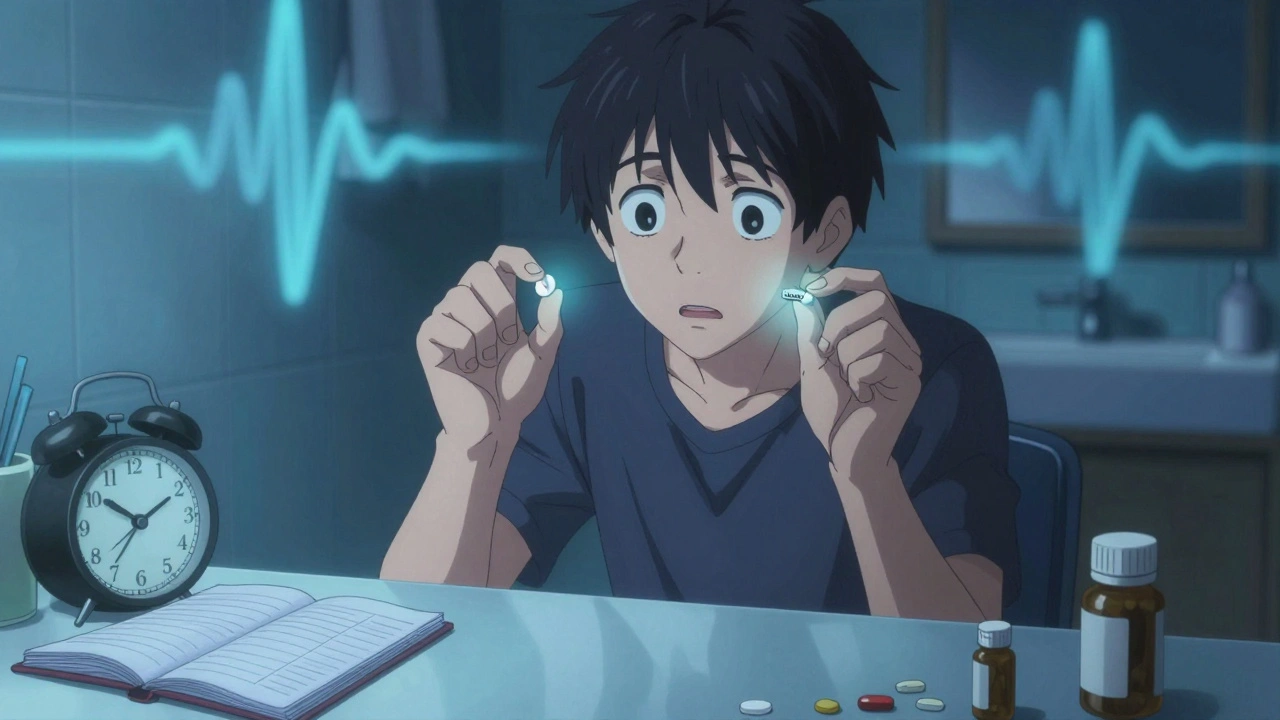
Switching from a brand-name antiseizure medication to a generic version might seem like a simple cost-saving move-but for people with epilepsy, it can be anything but simple. Even small changes in how a drug is absorbed can lead to breakthrough seizures, increased side effects, or hospital visits. This isn’t theoretical. Real people are having seizures after their pharmacy switched their pills. And doctors are seeing it too.
Why Antiseizure Medications Are Different
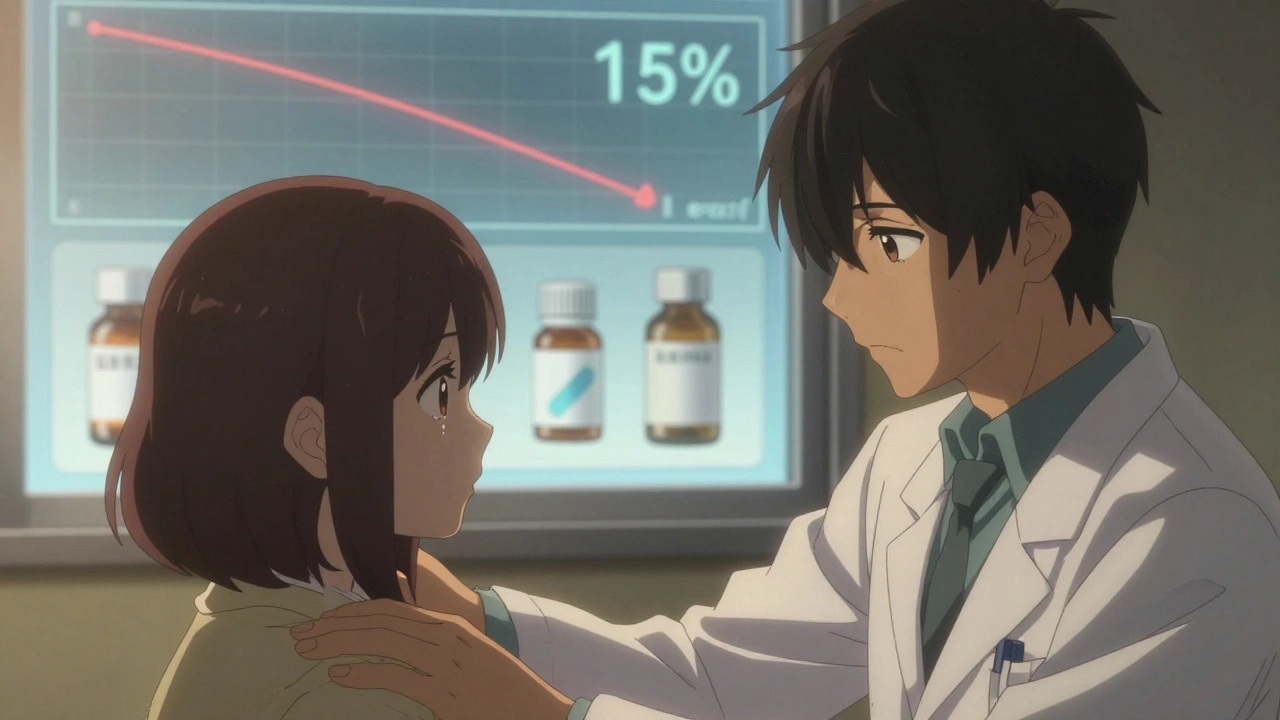
Not all medications are created equal when it comes to switching. Most drugs-like antibiotics or blood pressure pills-have a wide safety margin. If your dose goes up or down a little, your body can handle it. But antiseizure medications are NTI drugs-narrow therapeutic index drugs. That means the difference between a dose that works and one that causes harm is tiny. For example, if your blood level of lamotrigine drops just 15%, you might start having seizures again. If it rises 20%, you could get dizziness, rashes, or even life-threatening toxicity. These drugs don’t give you room for error. And generics, while chemically identical on paper, can behave differently in your body because of tiny variations in fillers, coatings, or how the pill breaks down.The FDA’s Stand vs. Real-World Evidence
The FDA says generics are safe. They require generic versions to match the brand-name drug in active ingredient, strength, and how quickly it enters the bloodstream. Their standard? The drug’s absorption must fall within 80% to 125% of the brand’s levels. Sounds tight, right? But here’s the problem: that 45% range is huge for a drug where 15% can trigger a seizure. Studies show that even within that range, some people experience problems. A 2008 study in Neurology found that patients switched to generic lamotrigine had 23% more doctor visits and 18% more hospital stays than those who stayed on the brand. Another global survey of 1,247 healthcare workers found that 40% had seen an increase in seizures after switching to generics. The FDA argues that many people have seizures even while on the same brand. That’s true. But that doesn’t mean switching made it worse. It means we need to be smarter about when and how we switch.Who’s Most at Risk?
Not everyone will have issues. But certain people are far more vulnerable:- People with frequent or hard-to-control seizures
- Those on multiple antiseizure drugs (polytherapy)
- Patients with memory problems or cognitive issues
- Children and older adults
- People whose seizures are triggered by stress or anxiety
Which Drugs Cause the Most Problems?
Some antiseizure medications are more likely to cause issues when switched. The World Health Organization lists three as high-risk:- Carbamazepine - Known for unpredictable absorption between brands
- Lamotrigine - Thin therapeutic window; even small changes can cause rashes or seizures
- Valproic acid - Blood levels fluctuate easily; can lead to liver toxicity or increased seizure risk
What Doctors Are Saying
There’s no consensus among neurologists. Dr. Jacqueline French, a top epilepsy expert, says FDA standards are appropriate. But she also advises “heightened caution” for high-risk patients. Dr. Philip Glass, who runs a major epilepsy center, says: “The evidence is clear that for narrow therapeutic index drugs like many ASMs, even small variations matter.” His center keeps patients on the same formulation-brand or generic-throughout their treatment. In the UK, the MHRA explicitly warns that for drugs where failure could be deadly, “consistency of supply is important.” That’s not just a suggestion-it’s policy. And here’s a telling statistic: patients switching from generic back to brand-name antiseizure drugs do so at more than double the rate of other medications. That’s not because people are fussy. It’s because they feel worse-or worse, they start seizing.What You Can Do
You don’t have to accept a switch without asking questions. Here’s how to protect yourself:- Ask your neurologist before any switch-even if your pharmacist says it’s “the same.”
- Get it in writing-Ask your doctor to write “Dispense as written” or “Brand necessary” on your prescription. Pharmacists can’t legally substitute if the doctor says no.
- Know your pills-Keep a note of the shape, color, and imprint on your medication. If it changes, call your pharmacy and your doctor.
- Track your seizures-Use a journal or app to record any change in frequency, severity, or side effects after a switch.
- Speak up if something’s off-If you have more seizures, feel dizzy, or get a rash, don’t wait. Call your neurologist immediately.
Cost vs. Safety: The Hard Choice
Generics save money. That’s undeniable. In the U.S., generics make up 90% of antiseizure prescriptions. A brand-name drug might cost $500 a month. The generic? $50. But if switching leads to a seizure, you might end up in the ER. You might lose your job. You might need more medications, more tests, more doctor visits. The real cost isn’t just the pill-it’s the life disruption. Some patients choose to pay more to stay on the same version. The Epilepsy Foundation’s Medication Access Program helps 12,000 people a year afford brand-name drugs when necessary. If cost is a barrier, talk to your doctor. There are options.The Future: Personalized Decisions
The old model-“all generics are equal”-is outdated. The 2024 International Epilepsy Guidelines now recommend individualized assessments. That means:- If you’ve been stable for years on a brand, don’t switch.
- If you’re newly diagnosed and on a low-cost generic, monitor closely.
- If you’re on multiple drugs, avoid switching unless absolutely necessary.
- If you have anxiety, memory issues, or a history of seizures triggered by stress, stick with what you know.
Bottom Line
Generic antiseizure medications are not dangerous for everyone. But they’re not risk-free either. For people with epilepsy, consistency matters more than cost. A pill that looks different isn’t just a different pill-it’s a potential trigger. Talk to your neurologist. Know your meds. Don’t let a pharmacy decision override your medical care. Your seizures aren’t a cost center. They’re your life.Can I be switched to a generic antiseizure medication without my doctor’s approval?
In most cases, yes-unless your doctor writes "Dispense as written" or "Brand necessary" on the prescription. Pharmacists are allowed to substitute generics unless the prescriber blocks it. That’s why it’s critical to have this conversation with your neurologist before your prescription is filled.
What should I do if I notice more seizures after switching to a generic?
Contact your neurologist immediately. Do not wait. Keep a log of when the seizures happened, what the pill looked like before and after the switch, and any new side effects. This information helps your doctor determine if the switch caused the problem. You may need to switch back to your original formulation.
Are all generic antiseizure medications the same?
No. Different manufacturers use different fillers, coatings, and manufacturing processes. Even if two generics are labeled the same, they can behave differently in your body. A study found that switching between two different generic versions of the same drug could still trigger seizures in sensitive patients. Consistency-sticking with one manufacturer-is key.
Why do some pharmacies keep switching my medication?
Pharmacies often switch to the lowest-cost generic available through their supplier. This is a business decision, not a medical one. If you’re being switched repeatedly, ask your doctor to write "Do not substitute" on your prescription. You can also ask your pharmacy to source your preferred brand or generic consistently.
Is there financial help if I need to stay on a brand-name drug?
Yes. Organizations like the Epilepsy Foundation’s Medication Access Program help patients afford brand-name antiseizure drugs if medically necessary. Drug manufacturers also offer patient assistance programs. Talk to your neurologist or pharmacist-they can connect you with these resources.
Do other countries handle generic substitution differently?
Yes. The European Medicines Agency uses stricter bioequivalence standards for narrow therapeutic index drugs than the FDA. In the UK, the MHRA explicitly advises against switching antiseizure medications unless absolutely necessary. In low-income countries, access to consistent generics remains a major challenge, and poor-quality products sometimes enter the supply chain.









Arjun Deva
So let me get this straight: the FDA says it’s safe, but people are SEIZING because of a different shade of pill? And the drug companies? They’re laughing all the way to the bank while we’re on the floor, drooling and confused. I’m not even surprised. They’ve been poisoning us with glyphosate in our Cheerios for decades. This is just the next chapter in the Great Pharmaceutical Conspiracy. Someone’s gotta stop this. Someone’s gotta burn the FDA down. I’m not joking. I’m not exaggerating. I’m just… tired.
Jackie Petersen
Ugh, another anti-generic rant from the medical elite. We’re in AMERICA. We don’t pay $500 for a pill. If you can’t afford your meds, maybe don’t live in a 5k rent apartment and get a real job. My cousin takes generic lamotrigine and she’s fine. You people are just scared of saving money. This isn’t a crisis-it’s a lifestyle choice. Stop crying and take the pill.
Geraldine Trainer-Cooper
It’s not about generics. It’s about control. The system doesn’t want you to be stable. It wants you dependent. Pills, appointments, bills, anxiety-all of it keeps you in the machine. You think the pharmacy switch is the problem? Nah. The problem is you were never meant to be free. Your seizures? They’re not just neurological. They’re existential.
Kenny Pakade
Oh wow, another liberal sob story. The FDA’s got 40 years of data. You think some guy in India making pills is going to kill you? Get real. This is just woke medicine. People are having seizures because they’re stressed about their TikTok feeds, not because of a different pill color. Stop making everything a medical emergency. Just take the damn generic and get over it.
Brooke Evers
I just want to say-this is so important. I’ve been there. My sister was seizure-free for 7 years on Lamictal. Then the pharmacy switched her to a generic. She didn’t miss a dose. She didn’t change anything. But suddenly, she was having mini-seizures every other day. We didn’t even realize it was the pill until she noticed the imprint changed from ‘LAM 100’ to ‘LMT 100’. We called the doctor, got the brand back, and within two weeks, she was herself again. I know it’s expensive. But your life? It’s worth it. Please, if you’re reading this-don’t let a pharmacy decision override your health. You’re not being dramatic. You’re being smart.
Nigel ntini
There is a clear and well-documented clinical distinction between bioequivalence and therapeutic equivalence, particularly for narrow therapeutic index drugs. The FDA’s 80–125% range is statistically acceptable for most medications, but for antiepileptics, it is demonstrably insufficient. The WHO, EMA, and MHRA all acknowledge this. The UK’s policy of non-substitution is not arbitrary-it is evidence-based. To dismiss patient reports as anecdotal is to ignore the very foundation of clinical medicine: observation, correlation, and, above all, patient safety.
Ashish Vazirani
My cousin’s daughter-12 years old, brilliant artist, seizures since age 5-was stable on Lamictal for 4 years. Then the pharmacy switched her to a generic. She started having 3 seizures a day. She stopped drawing. She cried every night. We went back to brand-same dose, same everything-and within 72 hours, she drew her first picture in months. A butterfly. With tears in her eyes, she said, ‘I feel like me again.’ This isn’t about money. It’s about who we are. Who we let ourselves become when we choose profit over people. I’m not angry. I’m heartbroken.
Mansi Bansal
It is an egregious dereliction of public health duty to permit the substitution of narrow therapeutic index pharmaceuticals without explicit prescriber authorization. The pharmacokinetic variability inherent in generic formulations-particularly with regard to dissolution profiles and excipient composition-poses an unacceptable risk to individuals with epilepsy, whose neurological homeostasis is precariously balanced. One must question the ethical integrity of a healthcare system that prioritizes cost-efficiency over neurological integrity. This is not merely a regulatory failure; it is a moral abdication.
Kay Jolie
Okay, but have you considered that the real issue isn’t the generic-it’s the *vibes*? Like, the pill has a different shape, so your brain goes, ‘This isn’t safe,’ and your amygdala triggers a seizure because your subconscious is like, ‘Wait, this isn’t the one I trust.’ It’s psychosomatic, but it’s real. We need pill therapy. Like, imagine if your pill had a little aura. Lamictal: soft lavender glow. Generic: flickering neon green. You’d know instantly. This is a spiritual crisis disguised as a pharmacological one.
pallavi khushwani
I think we’re all just trying to survive in a system that treats us like numbers. I’ve been on generics for years and I’m fine. But I also know people who aren’t. Maybe the answer isn’t ‘ban generics’-it’s ‘let people choose.’ If someone needs the brand, they should be able to get it without begging. If someone wants to save money and is stable, they can switch. But no one should be forced. It’s not about being right. It’s about being kind.
Dan Cole
You’re all missing the point. The real problem is that we’ve outsourced medical authority to pharmacists. The doctor doesn’t even know what pill you’re getting. That’s not healthcare-that’s logistics. The FDA doesn’t care. Pharma doesn’t care. But here’s the truth: if you’re on an NTI drug, your neurologist should be the only one who decides what goes in your body. Not a computer. Not a pharmacy contract. Not a cost-per-pill algorithm. You are not a supply chain. You are a human being. And you deserve to be treated like one.