
Penicillin Allergy Assessment Tool
This tool helps you understand if your past reaction to penicillin was likely a true allergy or just a side effect. Based on information from the JAMA Internal Medicine study and the PEN-FAST assessment tool, your answers will determine whether you're more likely to have a true allergy or if you've been mislabeled.
More than 10% of people in the U.S. say they’re allergic to penicillin. But here’s the startling truth: over 90% of them aren’t. If you’ve been told you’re allergic to penicillin because you got a rash as a kid, or felt nauseous after taking it once, you might be carrying around a label that’s not just wrong-it’s dangerous.
What’s Really Going On?
Penicillin is one of the oldest and most effective antibiotics ever made. It’s been saving lives since the 1940s. But because so many people think they’re allergic to it, doctors often avoid prescribing it. Instead, they turn to stronger, broader-spectrum antibiotics like vancomycin, clindamycin, or fluoroquinolones. These drugs work-but they come with big risks. When you’re wrongly labeled allergic to penicillin, you’re more likely to get a C. diff infection. That’s a severe, sometimes deadly gut infection caused by antibiotics wiping out good bacteria. You’re also more likely to develop MRSA. And studies show you’re at higher risk of dying within a year after hospitalization compared to people who can safely take penicillin. The real problem? Most people don’t know the difference between a true allergy and a side effect.True Penicillin Allergy: The Immune System’s Overreaction
A true penicillin allergy means your immune system has mistakenly identified the drug as a threat. This isn’t just feeling sick-it’s your body launching a full-scale defense. There are two main types:- Immediate reactions (IgE-mediated): These happen within minutes to an hour after taking the drug. Symptoms include hives, swelling of the lips or throat, wheezing, trouble breathing, or a sudden drop in blood pressure. This is anaphylaxis-the kind of reaction that needs emergency epinephrine. It’s rare, but it’s real.
- Delayed reactions: These show up days later. Think rash, fever, joint pain, or swollen lymph nodes. These are usually not IgE-mediated and are less likely to be life-threatening, but they’re still immune-driven.
Side Effects: Not an Allergy-Just an Unpleasant Reaction
Most people who think they’re allergic to penicillin are actually just experiencing side effects. These aren’t immune responses. They’re normal, predictable, and harmless in most cases. Common side effects include:- Mild nausea or upset stomach (happens in 5-10% of people)
- Diarrhea (1-2% of users)
- Headache
- Vaginal yeast infection (due to antibiotic disruption of natural flora)
- Mild rash (often viral, not drug-related)
Why Mislabeling Costs Lives (and Money)
When you’re labeled penicillin-allergic, your treatment changes. And not for the better. A 2018 study in JAMA Internal Medicine found that patients with false penicillin allergy labels cost hospitals an extra $1,000 per admission. Why? Because they get more expensive, broader-spectrum antibiotics. These drugs aren’t just pricier-they’re less targeted. That means more harm to your good bacteria, more chances for superbugs to grow, and longer hospital stays. The CDC estimates that mislabeling contributes to 8 million extra hospital days and $20 billion in extra costs each year in the U.S. alone. That’s not just a healthcare problem-it’s a public health crisis. And here’s the worst part: people with false allergy labels are 6 times more likely to die within a year after being hospitalized than those who can safely take penicillin.
How to Find Out If You’re Really Allergic
If you think you’re allergic to penicillin, here’s what you need to do:- Look back at your reaction. Was it a rash? When did it start? Did you have trouble breathing? Did you need epinephrine? Write it down. The details matter.
- Ask your doctor about testing. You don’t need to go to a specialist right away. Many primary care providers now use a simple tool called PEN-FAST. It asks: Did the reaction happen within an hour? Was it life-threatening? Did you need treatment? Was it confirmed by a doctor? If you score low, you’re likely safe.
- Get skin tested. This is the gold standard. A tiny amount of penicillin is placed under your skin. If you’re allergic, you’ll get a raised bump. It’s quick, safe, and highly accurate.
- Do an oral challenge. If skin testing is negative, you’ll be given a small dose of amoxicillin under observation. Over 95% of people who go through this process pass without issue.
What Happens After You’re De-Labelled?
Once you’re cleared, your medical record gets updated. No more “penicillin allergy” warning. That means:- Next time you have an infection, your doctor can prescribe the best, safest antibiotic-not just the one they think is “safe” for you.
- You’re less likely to get C. diff or MRSA.
- You’ll probably spend less time in the hospital.
- You’ll save money on drugs and avoid unnecessary complications.
Why Isn’t Everyone Getting Tested?
The science is clear. The tools exist. So why are so many people still mislabeled? For one, many doctors don’t know how to test. A 2022 study found only 39% of primary care doctors knew that delayed rashes are rarely true allergies. They’re taught to avoid the drug, not to investigate. Also, access is a problem. You need an allergist. But in many places, especially outside big cities, they’re hard to find. Insurance doesn’t always cover testing. Some patients are scared to try it-even though the chance of a reaction during testing is less than 1%. But change is coming. The CDC, Harvard, and the American Academy of Allergy are pushing hard for routine testing. By 2025, hospitals will be financially penalized if they don’t reduce inappropriate antibiotic use. That means more clinics will start offering allergy evaluations. And there’s a new smartphone tool-called PAAT-developed by the CDC and University of Pennsylvania. It asks you five questions and tells you if you’re a good candidate for testing. It’s 94% accurate.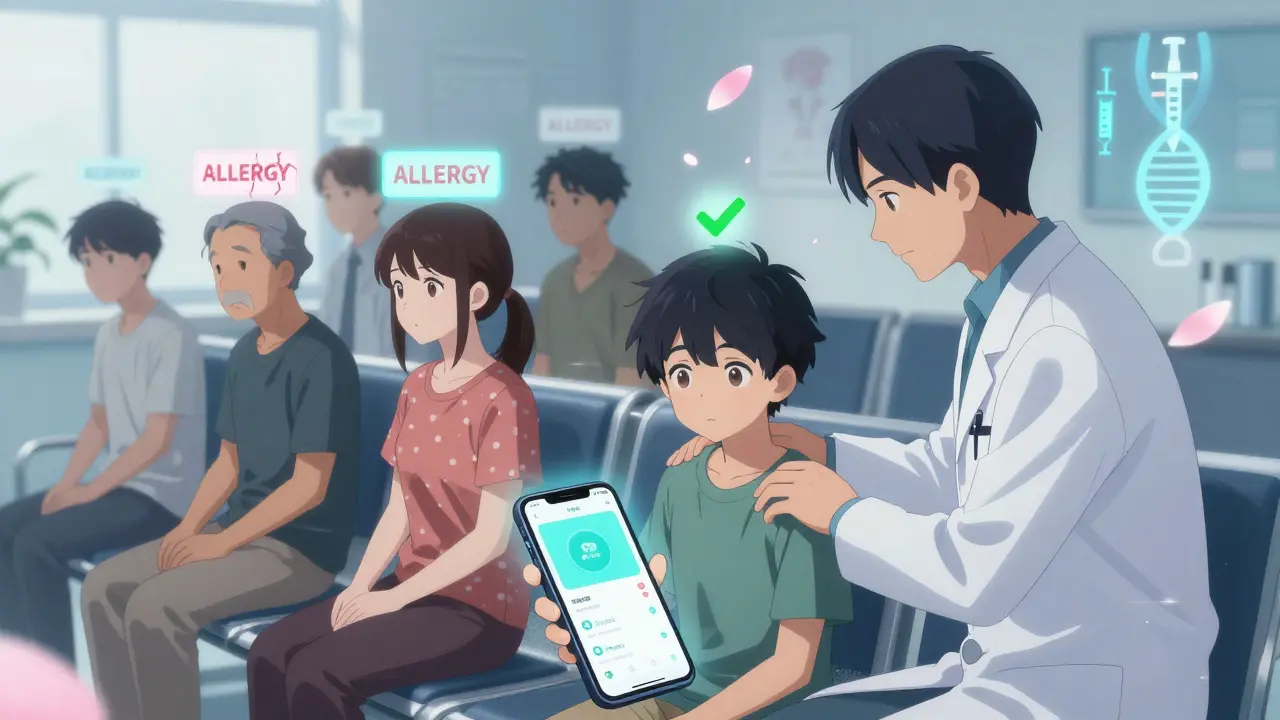
What Should You Do Now?
If you’ve ever been told you’re allergic to penicillin:- Don’t assume it’s true.
- Don’t avoid penicillin forever.
- Don’t let fear stop you from asking for a test.
Myths vs. Facts
- Myth: If I had a reaction once, I’m always allergic.
Fact: 80% of people lose their penicillin allergy after 10 years-even if it was real. - Myth: Penicillin allergy is rare.
Fact: True allergy is rare. Mislabeling is common. - Myth: I can’t take other antibiotics if I’m allergic to penicillin.
Fact: Most people with penicillin allergy can safely take cephalosporins (like cephalexin). Cross-reactivity is less than 1%. - Myth: Testing is dangerous.
Fact: In over 50,000 tests at Mayo Clinic, there were zero serious reactions during oral challenges.
Final Thought
Penicillin isn’t just a drug. It’s a lifeline. It’s cheap. It’s effective. It’s targeted. And for most people, it’s safe. If you’ve been avoiding it out of fear, it’s time to question that fear. Not because you’re brave. But because you deserve the best care possible. Your body isn’t broken. Your label is.Can you outgrow a penicillin allergy?
Yes, most people do. Studies show that 80% of people who had a true penicillin allergy in childhood lose their sensitivity after 10 years. Even if you had a serious reaction back then, it doesn’t mean you’re still allergic today. Testing can confirm whether your immune system still reacts to the drug.
Is a rash always a sign of penicillin allergy?
No. Many rashes that appear while taking penicillin are caused by viruses-not the drug. In kids especially, rashes from illnesses like mononucleosis or roseola often coincide with antibiotic use. Doctors sometimes mistake this for an allergy. But if the rash isn’t hives, doesn’t swell, and doesn’t cause breathing trouble, it’s likely not an allergic reaction.
What if I had anaphylaxis to penicillin years ago?
If you had a true anaphylactic reaction, you should still be cautious. But even then, testing under medical supervision can help determine if you still carry the IgE antibodies. Many people who had severe reactions in the past no longer react. Testing is the only way to know for sure.
Can I take amoxicillin if I’m allergic to penicillin?
Amoxicillin is a type of penicillin. If you have a true penicillin allergy, you should avoid it. But if your allergy label is incorrect, amoxicillin is often the first drug used in oral challenge tests. In fact, over 95% of people who think they’re allergic to penicillin can safely take amoxicillin after proper testing.
Are there alternatives if I’m truly allergic?
Yes. If you have a confirmed penicillin allergy, doctors can use alternatives like azithromycin, clindamycin, or doxycycline. But these are not ideal-they’re broader-spectrum, more expensive, and carry higher risks of side effects like C. diff. That’s why avoiding penicillin unnecessarily is worse than taking it when you can.
Can I be tested if I’m pregnant?
Yes. Penicillin allergy testing is safe during pregnancy. In fact, it’s recommended if you’ve been labeled allergic and need antibiotics for an infection like group B strep. Penicillin is the safest and most effective choice for pregnant women. Avoiding it unnecessarily puts both mother and baby at risk.
Will my doctor know how to test me?
Not always. Many primary care providers aren’t trained in allergy testing. But more hospitals and clinics are now offering pharmacist-led programs or partnering with allergists. Ask if your clinic has a penicillin de-labeling program. If not, request a referral to an allergist or immunologist. You have the right to accurate information about your health.









Sidra Khan
I got a rash on penicillin at 7 and have avoided it ever since. Turns out it was roseola. My doctor never checked. Now I’m paying for it with $2000 antibiotics every time I get a sinus infection. 🤦♀️
Andrea Di Candia
This is one of those things that feels like it should be common knowledge but isn’t. We treat medical labels like tattoos when they’re more like sticky notes that can be peeled off. So many people are living with unnecessary fear because no one ever bothered to recheck. It’s not just about drugs-it’s about how we trust the system.
Dan Gaytan
My mom was labeled allergic in the 80s after a rash. She took amoxicillin last year for a UTI with zero issues. She cried when the allergist told her she’d been avoiding penicillin for 40 years for nothing. We all need to stop assuming and start asking.
Chris Buchanan
So let me get this straight-doctors are giving people vancomycin because they’re scared of a 2% chance of allergy, and we’re okay with that? Meanwhile, the real threat is the superbugs we’re creating by overusing antibiotics. We’re fighting fire with gasoline and calling it ‘caution.’ 🤡
Wilton Holliday
I work in a rural clinic and we just started a penicillin de-labeling program. We use PEN-FAST and then do oral challenges. Over 90% of people pass. The best part? Patients come back saying they feel like they got their health back. It’s not just medical-it’s emotional.
Raja P
In India, most people don’t even know what penicillin is. We just take what the doctor gives. But this post made me think-maybe my uncle’s rash from childhood wasn’t an allergy. He’s been on expensive antibiotics for years. I’ll ask his doctor.
Joseph Manuel
While the statistics presented are compelling, the article lacks methodological rigor in its sourcing. The Mayo Clinic data cited is not peer-reviewed in this context, and the PEN-FAST tool’s validation studies have not been independently replicated across diverse populations. This is anecdotal advocacy dressed as public health guidance.
Andy Grace
I had a cousin who went into anaphylaxis on penicillin as a kid. He’s still allergic. So yeah, some people are mislabeled-but not all. Don’t throw out the caution just because most cases are false. There’s a reason we test before we assume.
Delilah Rose
I think what’s really missing here is the psychological weight of being told you’re allergic-it becomes part of your identity. I remember being 10 and being handed a medical bracelet that said ‘Penicillin Allergy’ and feeling like I had a secret weakness. Even after I found out it wasn’t true, I still hesitated for years. It’s not just a label on a chart-it’s a story we tell ourselves about our bodies, and rewriting that story takes more than a skin test.
Spencer Garcia
If you think you’re allergic, get tested. It’s 30 minutes. No big deal. Your doctor can refer you. Done.
Bret Freeman
I’m 34 and I’ve been avoiding penicillin since I was 5 because I got a rash after taking it. Now I’m being told I’m not allergic? So what does that make my doctor? A liar? My mom? The entire medical system? I don’t know whether to feel relieved or betrayed. This feels like someone just told me my whole life has been a mistake.
Lindsey Kidd
I’m a nurse and I’ve seen so many patients scared to take penicillin. One lady cried because she thought she couldn’t have kids because of it-she didn’t know it’s safe in pregnancy. 🫂 We need more of these conversations. You’re not broken. Your label is. 💙
Austin LeBlanc
So you’re telling me that for the past 20 years, I’ve been paying extra for antibiotics because I let a 7-year-old rash dictate my health? And now you want me to trust a test that might kill me? No thanks. I’ll stick with the $1500 vancomycin. At least I know what I’m getting into.