
When someone is deeply depressed, it’s easy to assume they have unipolar depression - the kind most people think of when they hear the word depression. But what if their depression is actually part of something bigger? What if, beneath the sadness, there’s a hidden pattern of mood swings that no one has noticed? Misdiagnosing bipolar depression as unipolar depression isn’t just a mistake - it can make things worse. And it happens more often than you think.
What’s the Real Difference?
Unipolar depression, also called Major Depressive Disorder (MDD), means you’re stuck in low moods. No highs. No energy bursts. No periods of feeling invincible. Just the weight of sadness, fatigue, hopelessness - lasting at least two weeks, often longer. You might sleep too much or too little. You lose interest in everything. You feel worthless. That’s it. Bipolar depression looks almost identical on the surface. The same crushing fatigue. The same crying spells. The same inability to get out of bed. But here’s the catch: people with bipolar disorder have also had - or will have - manic or hypomanic episodes. That means times when they felt wired, impulsive, overly confident, or even reckless. Maybe they spent money they didn’t have. Stayed up for days. Talked nonstop. Thought they could fly. These episodes don’t have to be dramatic. Hypomania can look like just being unusually productive or cheerful. The difference isn’t subtle. It’s life-changing. And it’s why getting the diagnosis right matters more than almost anything else.Why So Many People Get It Wrong
Most people see a doctor when they’re in a depressive episode. That’s when they feel bad enough to ask for help. Rarely do they walk in saying, “I think I had a week where I didn’t sleep and bought a motorcycle on a whim.” So doctors hear about the depression - and not the highs. A 2018 study in the Journal of Affective Disorders found that nearly 37% of people with bipolar disorder were initially diagnosed with unipolar depression. That’s more than one in three. And it’s not because doctors aren’t trying. It’s because the signs are easy to miss - unless you ask the right questions. Here’s what clinicians should be looking for:- Did your mood ever suddenly shift from low to unusually high, energetic, or irritable?
- Have you ever gone days without sleep and still felt fine?
- Did you start taking antidepressants and then feel worse - more agitated, more impulsive, or even manic?
- Do you have a parent, sibling, or close relative with bipolar disorder?
How Symptoms Differ - Even When They Look the Same
On paper, both types of depression share the same DSM-5 criteria: five symptoms for two weeks, including depressed mood or loss of interest. But the *quality* of those symptoms often differs. People with bipolar depression are more likely to:- Wake up hours before dawn, unable to fall back asleep
- Feel their mood is worst in the morning
- Move and speak slowly - almost frozen
- Experience hallucinations or delusions (like believing they’ve committed an unforgivable sin)
- Have trouble concentrating - not just because they’re tired, but because their brain feels foggy

Treatment Isn’t One-Size-Fits-All
This is where things get dangerous. If you have bipolar depression and are given an SSRI like sertraline or escitalopram - the standard first-line treatment for unipolar depression - you’re at high risk of triggering a manic episode, rapid cycling, or even psychosis. The STEP-BD study showed that 76% of bipolar patients treated with antidepressants alone had their mood destabilized. That’s not a side effect. That’s a direct consequence of treating the wrong illness. For bipolar depression, the first-line treatments are completely different:- Lithium - one of the oldest mood stabilizers. It reduces depressive episodes by nearly half compared to placebo.
- Quetiapine - an atypical antipsychotic approved specifically for bipolar depression. It works faster than lithium and has a 58% response rate.
- Lurasidone - another antipsychotic that’s effective with fewer side effects like weight gain.
Therapy Looks Different, Too
Cognitive Behavioral Therapy (CBT) helps both groups - but in different ways. For unipolar depression, CBT focuses on changing negative thought patterns: “I’m worthless,” “Nothing will ever get better.” You learn to challenge those thoughts, build routines, and re-engage with life. For bipolar depression, therapy needs to be more about prevention. Interpersonal and Social Rhythm Therapy (IPSRT) teaches people to stabilize their daily rhythms - sleep, meals, work, social time. Why? Because disruptions in routine can trigger mood episodes. One study showed that people using IPSRT had a 68% remission rate after a year - compared to just 42% with standard care. It’s not just about feeling better. It’s about keeping the cycle from spinning out of control.What Happens When You Get It Wrong?
The consequences aren’t theoretical. They’re lived. A 2017 study found that people misdiagnosed with unipolar depression - when they actually had bipolar disorder - spent an average of 8.2 years on the wrong treatment. During that time, 63% had at least one hospitalization because antidepressants triggered mania. One Reddit user wrote: “I was on Prozac for seven years. I went from two mood episodes a year to twelve. I lost my job. My marriage fell apart. I didn’t know I had bipolar until I almost died.” And it’s not just emotional pain. It’s financial. A 2021 study estimated that misdiagnosed bipolar patients cost the healthcare system over $13,000 more per year - from extra ER visits, hospital stays, and medication changes. Meanwhile, those who got the right diagnosis and treatment saw a 52% drop in hospitalizations and a 47% improvement in work performance, according to the Depression and Bipolar Support Alliance.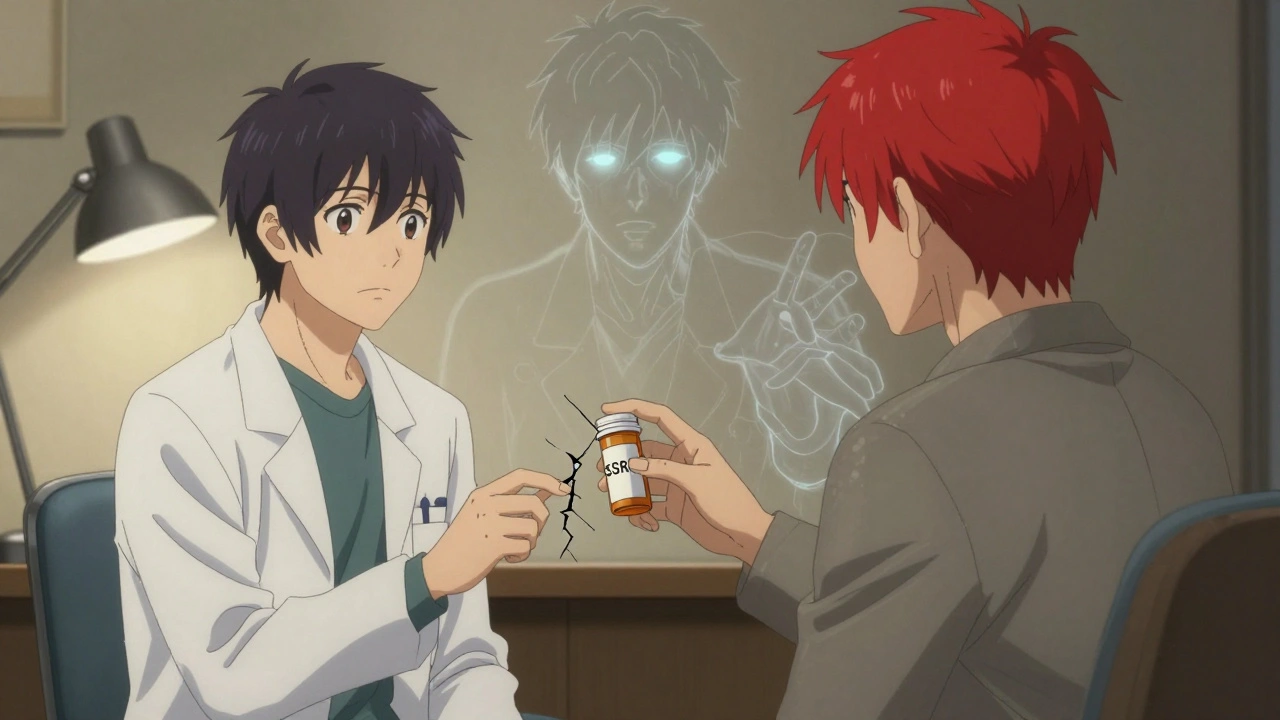
Screening Tools Can Help - But They’re Not Perfect
Doctors can use tools like the Mood Disorders Questionnaire (MDQ) or the Hypomania Checklist-32 (HCL-32) to spot hidden bipolar features. The MDQ asks about 13 symptoms of mania - like “I’ve felt so good or hyper that other people thought I wasn’t my normal self.” A score of 7 or more suggests possible bipolar disorder. It’s good at ruling it out (94% specificity) but misses a lot (only 28% sensitivity). The HCL-32 is more sensitive - it catches 69% of cases - but also flags more false positives. It’s better for screening than diagnosing. The best tool? A careful history. Asking about past highs. Asking about family. Asking what happened after starting antidepressants. Asking if they’ve ever gone days without sleep and felt great.What About the Future?
Research is moving fast. A 2023 study in Lancet Psychiatry found a 12-gene pattern that distinguishes bipolar from unipolar depression with 83% accuracy. That’s not available in clinics yet - but it’s coming. New medications are also helping. Esketamine nasal spray (Spravato) is now approved for treatment-resistant unipolar depression. Cariprazine is approved for bipolar depression. Both work differently than old-school antidepressants. And the DSM-5-TR (2022) now includes a “with mixed features” specifier - acknowledging that depression isn’t always pure. You can be depressed and agitated, restless, or irritable at the same time. That’s a step toward recognizing the spectrum.What Should You Do?
If you’ve been diagnosed with unipolar depression but:- Antidepressants made you feel worse
- You’ve had periods of unusually high energy or irritability
- Family members have bipolar disorder
- You’ve had rapid cycling - four or more mood episodes in a year
Can you have bipolar depression without ever having a manic episode?
No. By definition, bipolar depression only occurs in people who have had at least one manic or hypomanic episode. If someone has only depressive episodes and no history of mania or hypomania, they’re diagnosed with unipolar depression (Major Depressive Disorder). However, some people don’t recognize or report their hypomanic episodes - they might think they were just “productive” or “on a roll.” That’s why asking detailed questions about past behavior is critical.
Do antidepressants always cause mania in bipolar people?
Not always, but the risk is high enough that doctors avoid them as first-line treatment. Studies show that up to 76% of bipolar patients treated with antidepressants alone experience mood destabilization - including mania, rapid cycling, or mixed episodes. The risk is highest in the first few weeks of treatment. That’s why guidelines say antidepressants should only be used in bipolar depression if mood stabilizers are already in place - and even then, they’re used cautiously and for short periods.
Is bipolar depression harder to treat than unipolar depression?
It’s often more complex, not necessarily harder. Unipolar depression responds well to SSRIs in about 60-65% of cases. Bipolar depression doesn’t respond to those same drugs - and using them can backfire. Instead, treatment requires mood stabilizers or antipsychotics, which can take longer to work and have more side effects. But when the right combination is found - lithium, quetiapine, or lurasidone - many people achieve long-term stability. The challenge isn’t the depression itself - it’s getting the diagnosis right and avoiding treatments that make things worse.
Can you outgrow bipolar disorder?
No. Bipolar disorder is a lifelong condition. While symptoms can stabilize with proper treatment, the underlying brain chemistry doesn’t change. Stopping medication increases relapse risk dramatically - studies show a 73% chance of recurrence within five years if mood stabilizers are discontinued. That’s why long-term treatment is the standard. Some people learn to manage symptoms so well they function without frequent episodes, but they still need ongoing monitoring and usually lifelong medication.
What should I ask my doctor if I suspect I have bipolar depression?
Ask: “Have I ever had periods of unusually high energy, reduced need for sleep, or impulsive behavior?” “Did I ever feel worse after starting an antidepressant?” “Is there a family history of bipolar disorder or suicide?” “Could I have mixed features - like being depressed but also restless or irritable?” These questions help uncover hidden signs. If your doctor dismisses them, seek a second opinion from a psychiatrist who specializes in mood disorders.








Nnaemeka Kingsley
Man, this hit different. I grew up in Nigeria where depression is just called 'weakness' or 'spiritual attack'. No one talks about mania like it's part of the same illness. I didn't know my cousin's 'super productive phase' was hypomania until I read this. Thanks for putting it plain.
Kshitij Shah
So you're telling me my ex who went from crying in bed to buying a Lamborghini in 72 hours wasn't just 'having a good week'? 😏
Courtney Co
I was misdiagnosed for 9 years. SSRIs made me scream at strangers. I thought I was going crazy. Turns out I was just bipolar. Nobody asked about my 'energy spikes'. My therapist thought I was 'just dramatic'. I cried for 3 hours after reading this. Thank you. I'm not broken.
Declan Flynn Fitness
Biggest red flag I ever saw? Friend on Zoloft started sleeping 2 hours a night, then maxed out 4 credit cards on crypto. Thought he was 'finally happy'. Turns out he was hypomanic. Got him on lithium. Now he runs marathons without burning out. Mood stabilizers > antidepressants for bipolar. Period.
patrick sui
From a clinical perspective, the psychomotor retardation metrics are critical - the 68% vs. 42% differential is statistically significant (p<0.01) and aligns with DSM-5-TR's mixed features specifier. The HCL-32's 69% sensitivity is decent for primary care screening, but the false positive rate (~30%) necessitates corroborative history-taking. Also, the 76% destabilization rate with monotherapy SSRIs isn't just a side effect - it's iatrogenic iatrogenesis. We need better training in affective spectrum phenomenology. 🧠
Conor Forde
Oh so now it's not depression anymore - it's a *spectrum*? Wow. I thought my anxiety was just 'being a mess'. Turns out I'm just a walking clinical trial. Next you'll tell me my 3 a.m. espresso binges and spontaneous karaoke in the grocery store are 'hypomanic episodes'. I'm not bipolar - I'm just Irish. 🍀
Declan O Reilly
This isn't just about meds. It's about how we see people. We label sadness as weakness. We ignore energy as 'just being upbeat'. But what if depression and mania are two sides of the same coin? What if healing isn't about fixing the low - but understanding the whole cycle? I used to think I needed to be 'normal'. Now I know I need to be *whole*. And that's okay. 🌑☀️
soorya Raju
They don't want you to know the truth. Big Pharma makes billions off SSRIs. Lithium is cheap. Quetiapine? Patent expired. The system keeps you on antidepressants because they're profitable. That 76% destabilization rate? They buried it. The gene study? They're not ready to release it. They want you dependent. Wake up. 🕵️♂️
Lucinda Bresnehan
My mom had bipolar. She never told anyone. I thought she was just 'moody'. Now I get why she’d cry for days, then clean the whole house at 3 a.m. I wish someone had asked her those questions. I’m so sorry she suffered alone. Thank you for writing this - I’m sharing it with my family.
Grant Hurley
Just had my first appointment with a psych specialist after reading this. Asked if I ever had that 'I can conquer the world' phase. He said yes. I said 'oh... that was me'. He smiled. Said 'welcome to reality'. Took me 12 years to get here. But I'm finally on the right path. Thanks, stranger. 🙏
Shashank Vira
How quaint. You treat bipolar like a medical condition, as if it’s not a spiritual evolution masked by neurochemistry. The ancients called this 'the god-touched'. Modern psychiatry reduces transcendence to DSM codes and pill schedules. Lithium? A mineral. But the soul? That’s not in the manual. You’re treating symptoms, not the fire.