
When a patient walks into a hospital with high blood pressure, diabetes, or an infection, they rarely get to pick their medication. Instead, the drug they receive is chosen by a hidden system-hospital formularies. These aren’t just lists. They’re living, breathing decision engines that decide which generic drugs make the cut, and which ones get left out. And behind every approved pill is a rigorous, evidence-based process designed to balance safety, effectiveness, and cost. This is how hospitals choose generic drugs-not by price alone, but by what actually works for real patients.
What Exactly Is a Hospital Formulary?
A hospital formulary is a curated list of medications approved for use within a healthcare system. It’s not static. It’s updated regularly-often quarterly-based on new data, shortages, or clinical outcomes. Most U.S. hospitals with over 100 beds use a closed formulary, meaning only drugs on the list are routinely stocked and prescribed. If a doctor wants to use something off-formulary, they need special approval, often through prior authorization. The goal? As defined by the American Society of Health-System Pharmacists (ASHP), it’s to provide the safest, most effective medications at the most reasonable cost. That means a generic drug isn’t automatically approved just because it’s cheaper. It has to prove it works just as well as the brand-name version-and sometimes better.The Science Behind Choosing Generics
Not all generics are created equal. The FDA says a generic drug must be bioequivalent to the brand-name version, meaning it delivers the same amount of active ingredient into the bloodstream within 80-125% of the original. That’s the bare minimum. Hospitals go further. Formulary committees, called Pharmacy and Therapeutics (P&T) committees, review every drug submission using real clinical data. They look at:- At least 15-20 peer-reviewed studies on efficacy and safety
- Adverse event reports from the FDA’s FAERS database
- Real-world outcomes like hospital readmissions and length of stay
- How the drug affects patient compliance-some generics have different pill shapes, colors, or dosing schedules that confuse patients
How Generics Are Tiered-and Why It Matters
Hospital formularies are divided into tiers, usually three to five levels. Generic drugs almost always sit in Tier 1-the lowest cost tier for patients. But inside that tier, there’s still competition. Let’s say three different generic versions of metformin are available. One costs $3 a month. Another costs $5. The third costs $4 but comes in a once-daily extended-release formulation. Even though they’re all bioequivalent, the committee might pick the $4 version because:- Patients are more likely to take it once a day
- It reduces pill burden
- Studies show better adherence leads to fewer ER visits
Who Decides? The P&T Committee
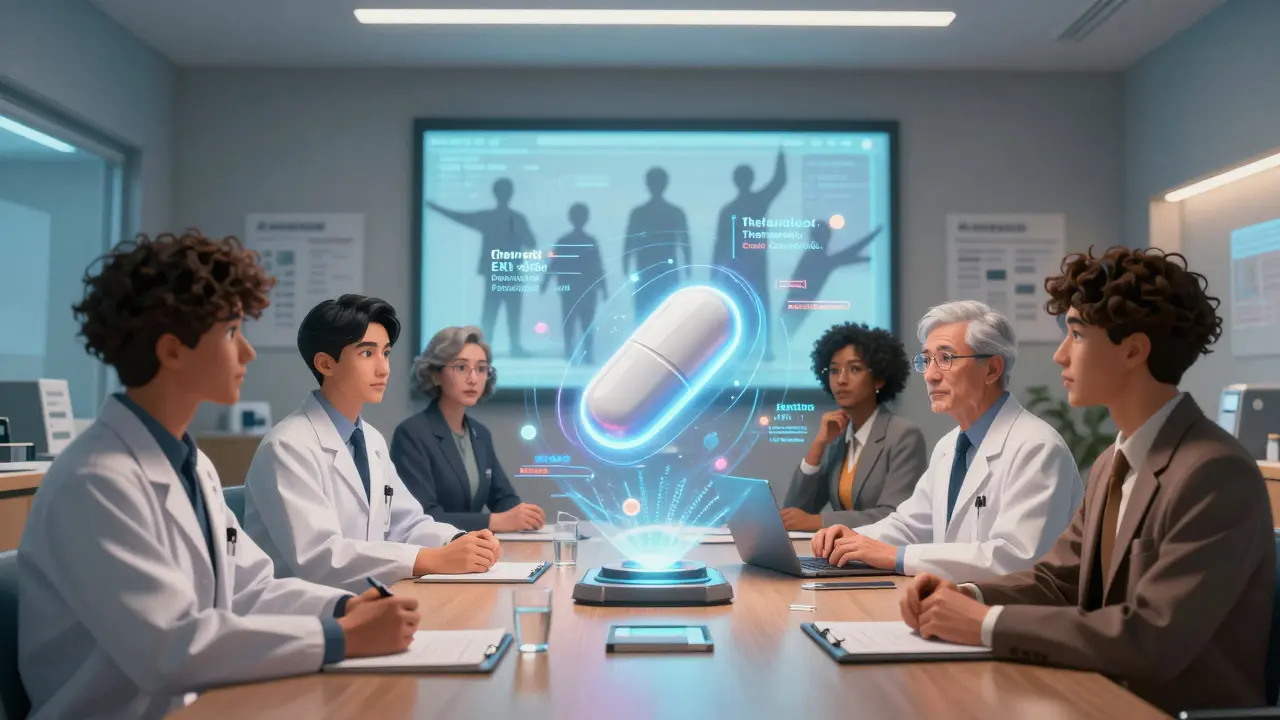
These aren’t bureaucrats. They’re frontline experts: pharmacists with Board Certification in Pharmacotherapy (BCPP), physicians specializing in internal medicine or infectious disease, and healthcare economists. Most committees have 12-15 members. They meet monthly. Each drug request comes with a full dossier: clinical trials, pharmacokinetic data, manufacturer pricing, and even patient feedback. The process takes 45-60 days for standard requests. For urgent cases-like during a drug shortage-it’s sped up to 14-21 days. But even then, they don’t rush. If a generic has a history of inconsistent bioavailability, it gets rejected, no matter how cheap it is. A 2023 study in the Journal of Managed Care & Pharmacy found that 89% of academic hospitals use the GRADE methodology to rate the quality of evidence. That means every decision is graded on how strong the science is-not who paid for the study.The Hidden Challenges
It’s not all smooth sailing. One of the biggest headaches? Drug shortages. In 2022, 268 generic medications faced supply issues. When a formulary-approved generic runs out, hospitals scramble. Some switch to another generic. Others go back to brand-name drugs-costing five times more. At Massachusetts General Hospital, pharmacists had to temporarily remove three generic versions from the formulary in 2022 because of inconsistent manufacturing. That meant doctors had to re-prescribe, nurses had to re-educate, and patients got confused. One nurse reported a 12% spike in medication errors during the transition. Another issue? Physician resistance. A 2021 AMA survey found 32% of doctors felt formulary restrictions delayed care. Some feel sidelined when pharmacists substitute a generic without consulting them. In fact, 57% of pharmacists report conflicts with physicians over substitution decisions. And then there’s the influence of pharmaceutical reps. Harvard’s Dr. Jerry Avorn documented how drug reps still push formulary committees with marketing materials that overstate benefits. Even with conflict-of-interest disclosures, subtle pressure remains.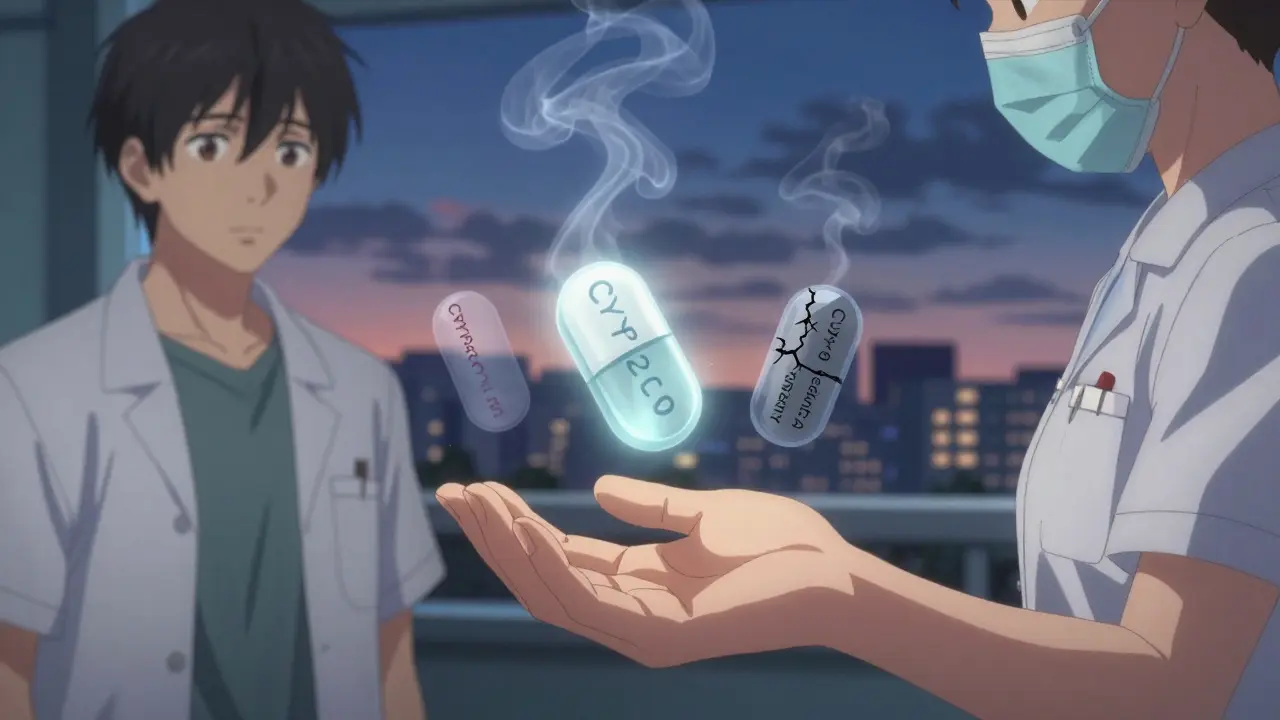
What’s Changing Now?
The game is shifting. Hospitals are no longer just looking at acquisition cost. They’re using predictive analytics to model how a drug affects the entire care journey: ER visits, rehab stays, readmissions, even long-term disability. A 2023 KLAS Research report found 61% of hospitals now use these models. Some are even tying contracts to outcomes. If a generic drug leads to fewer hospitalizations, the manufacturer gets a higher payment. If it doesn’t, the price drops. Another big change? Pharmacogenomics. Eighteen percent of academic hospitals are now testing patients for genetic markers before prescribing certain drugs. For example, if a patient has a specific variant of the CYP2C19 gene, they metabolize clopidogrel poorly. So the formulary might exclude that generic and only approve an alternative. The Inflation Reduction Act (2022) is also pushing hospitals to align with Medicare’s new pricing rules. By 2025, hospital formularies will need to reflect the same cost caps that apply to Medicare Part D. That means even more pressure to pick generics that deliver real value.Why This System Works-When It’s Done Right
Critics say formularies limit choice. But data says otherwise. Hospitals that follow ASHP guidelines cut medication costs by 18-22% without increasing adverse events. In fact, outcomes often improve because patients get standardized, evidence-based care. Take warfarin. Before formularies, patients got seven different generic versions. Some had inconsistent absorption. After standardizing to one high-quality generic, bleeding incidents dropped by 19%. The key isn’t restricting access. It’s ensuring every drug on the shelf has earned its place. That’s the difference between a list of cheap pills-and a system that actually protects patients.What’s Next?
Biosimilars are the next frontier. Unlike traditional generics, biosimilars are complex biologic drugs-like those for rheumatoid arthritis or cancer. Only 37% of hospitals have formal protocols to evaluate them. That’s changing fast. As more biosimilars hit the market, formularies will need to adapt-using the same rigorous standards they’ve applied to generics for decades. By 2028, the Agency for Healthcare Research and Quality predicts all Medicare-certified facilities will be required to have formal formularies. That means this system isn’t going away. It’s becoming the norm. The bottom line? Choosing a generic drug isn’t about finding the lowest bid. It’s about finding the right one. And in hospitals, that decision is made by people who’ve seen what happens when shortcuts are taken-and what happens when they’re not.Are all generic drugs the same in hospital formularies?
No. While all FDA-approved generics must meet bioequivalence standards, hospitals select the version with the best clinical track record-based on consistency, safety, patient adherence, and supply reliability. Two generics may have the same active ingredient, but different fillers, coatings, or release mechanisms can affect how well they work in real patients.
Why do hospitals use closed formularies instead of open ones?
Closed formularies reduce variability in care, lower costs, and improve safety. By limiting choices to proven, cost-effective drugs, hospitals avoid prescribing based on marketing or habit. Studies show closed formularies reduce medication errors and cut spending by 18-22% without harming outcomes.
Can doctors prescribe drugs not on the formulary?
Yes, but it requires prior authorization. Doctors must justify why a non-formulary drug is necessary-often because the patient had an allergic reaction or failed multiple formulary options. This process slows things down but prevents unnecessary spending on unproven or expensive alternatives.
How do drug shortages affect hospital formularies?
When a formulary-approved generic runs out, hospitals must quickly find a substitute. This often means switching to another generic or temporarily using the brand-name drug-sometimes at five times the cost. Many hospitals now maintain a list of pre-approved therapeutic alternatives to avoid disruptions during shortages.
Do formularies save money without hurting patient care?
Yes. Multiple studies, including those from Johns Hopkins and the American Managed Care Pharmacy, show hospitals using structured formularies reduce drug costs by 18-22% while maintaining or even improving clinical outcomes. The key is selecting generics based on total cost of care-not just acquisition price.







Neil Thorogood
So let me get this straight - we’re trusting a bunch of pharmacists with fancy titles to pick our meds instead of letting doctors or patients decide? 🤔
Meanwhile, my cousin got prescribed a generic that made her hallucinate. No one even blinked. 💊👻
They call it ‘evidence-based’ but I call it ‘corporate cost-cutting with a lab coat.’
At least tell me the pill looks different so I know I didn’t get switched mid-course. 🤷♂️
Angie Thompson
OMG this is SO cool!! 🌟
Like, I never thought about how a pill’s color or shape could make someone forget to take it 😱
And the part about once-daily metformin saving ER visits?? That’s literally life-changing 💖
Pharmacists are the real MVPs of healthcare - why don’t we have parades for them?? 🎉💊
Also, biosimilars?? I need a TikTok explainer now 😭
Skye Kooyman
They pick the generic that works best not the cheapest. That’s actually kind of radical in this system
Peter Sharplin
There’s a lot here worth unpacking. The P&T committees are doing the heavy lifting no one sees - reviewing real-world data, not just pharma bro spreadsheets.
That 19% drop in bleeding with standardized warfarin? That’s not luck. That’s clinical rigor.
And yes, physician resistance is real - but it’s often because they weren’t consulted, not because they’re against generics.
Good formularies don’t restrict care. They elevate it.
Also, pharmacogenomics is the future. If you’re on clopidogrel and have CYP2C19*2? Your doctor should know before prescribing. It’s not magic. It’s genetics.
Kipper Pickens
The institutionalization of evidence-based pharmacotherapy via closed formulary governance structures represents a paradigmatic shift from commodity-driven procurement models toward value-based therapeutic stewardship.
Adherence metrics, pharmacoeconomic modeling, and real-world outcomes data are now core KPIs in P&T decision matrices.
Moreover, the integration of GRADE methodology ensures epistemic integrity in evidence appraisal, mitigating confounding by industry-sponsored bias.
That said, the logistical friction induced by drug shortages remains a systemic vulnerability requiring dynamic contingency protocols.
Faisal Mohamed
Isn’t it ironic? We live in a world where algorithms choose our Netflix shows, but when it comes to life-or-death meds, we outsource to a committee of white-coated priests who’ve never met the patient?
It’s not control - it’s quiet authoritarianism dressed in clinical jargon.
And don’t get me started on ‘predictive analytics’ - that’s just AI with a lab coat telling you what you’re allowed to survive.
Where’s the autonomy? Where’s the consent? 🤔🩺
Allie Lehto
so like i read this and i was like wow but then i remembered my uncle died because the hospital gave him the wrong generic because they switched without telling anyone and now im just mad and also i think the FDA is lying to us and also why do we even have brands if generics are the same??????
Dan Nichols
This whole system is a scam. If generics were truly equivalent, why do we need committees? Why not just pick the cheapest and be done with it?
They’re not choosing based on science. They’re choosing based on who has the best sales rep.
And don’t give me that ‘evidence-based’ nonsense - the same people who said cigarettes were safe wrote those studies.
Also, why are you so proud of saving money? We’re not running a grocery store.
Renia Pyles
You people are delusional. This isn’t about patient care - it’s about corporate profits. The hospitals are making millions off these formularies by pushing generics they get kickbacks on. The ‘evidence’? Manufactured. The ‘outcomes’? Suppressed. You think they’d let a drug that causes more readmissions stay on the list? Please. They’re just hiding the data until the next audit. And the doctors? They’re paid to shut up.
Rakesh Kakkad
Respected colleagues, I must express my profound admiration for the rigorous methodological frameworks employed in hospital formulary governance.
However, I must also respectfully inquire whether the pharmacoeconomic models account for the cultural and linguistic heterogeneity of patient populations, particularly in multilingual urban centers where medication adherence is influenced by visual pill recognition and dosage regimen clarity.
Furthermore, I would be grateful if future publications could include anonymized patient feedback in native languages to ensure holistic evaluation.
Suresh Kumar Govindan
The entire system is a controlled experiment. They use generics to track your health data. Every pill you take is logged. Your DNA, your habits, your insurance claims - all tied to the formulary. They’re building a database. You’re the product.
Karen Droege
Okay but let’s talk about the nurses for a sec - they’re the ones catching the errors when the formulary switches and patients get confused pills.
They’re the ones explaining why the new blue pill isn’t ‘the same’ even though the label says it is.
And when the shortage hits? They’re the ones staying late to re-educate the whole floor.
This whole system works because of them - not the committees, not the algorithms.
So next time you see a nurse, thank them. And maybe give them a raise. 💪❤️