What Is Otitis Media?
Otitis media is an infection or inflammation of the middle ear, the air-filled space behind the eardrum that contains the tiny vibrating bones of the ear. It’s one of the most common reasons parents take their kids to the doctor-especially in the first few years of life. Over 80% of children have at least one middle ear infection by age 3, according to the Children’s Hospital of Philadelphia. The peak age is between 3 months and 3 years, mostly because their Eustachian tubes-the tiny channels that drain fluid from the middle ear-are still developing. In babies, these tubes are shorter and more horizontal, making it easier for germs from the nose and throat to travel up and get trapped.
There are two main types: acute otitis media (AOM), which is a sudden infection with pain, fever, and fluid buildup, and otitis media with effusion (OME), where fluid stays behind the eardrum after the infection clears. OME usually doesn’t hurt and often goes away on its own within a few weeks. But AOM can be painful and needs careful attention.
What Causes It?
Otitis media doesn’t happen in a vacuum. It usually follows a cold, flu, or other upper respiratory infection. When the nose and throat get swollen from a virus, the Eustachian tube gets blocked. Fluid builds up in the middle ear, and that’s when bacteria or viruses start to grow. The most common bacteria are Streptococcus pneumoniae, Haemophilus influenzae (non-typeable), and Moraxella catarrhalis. Viruses like rhinovirus, RSV, and even some coronaviruses can trigger it too.
Some kids are more likely to get ear infections. Risk factors include:
- Being exposed to cigarette smoke-this raises the risk by about 50%
- Bottle-feeding while lying down instead of upright
- Going to daycare-kids in group care have 2 to 3 times more ear infections
- Living in areas with high air pollution
- Not being breastfed-breastfeeding helps build immunity and keeps the baby upright during feeding
Even something as simple as a family history of ear infections can play a role. If one sibling had frequent ear infections, another is more likely to too.
How Do Doctors Diagnose It?
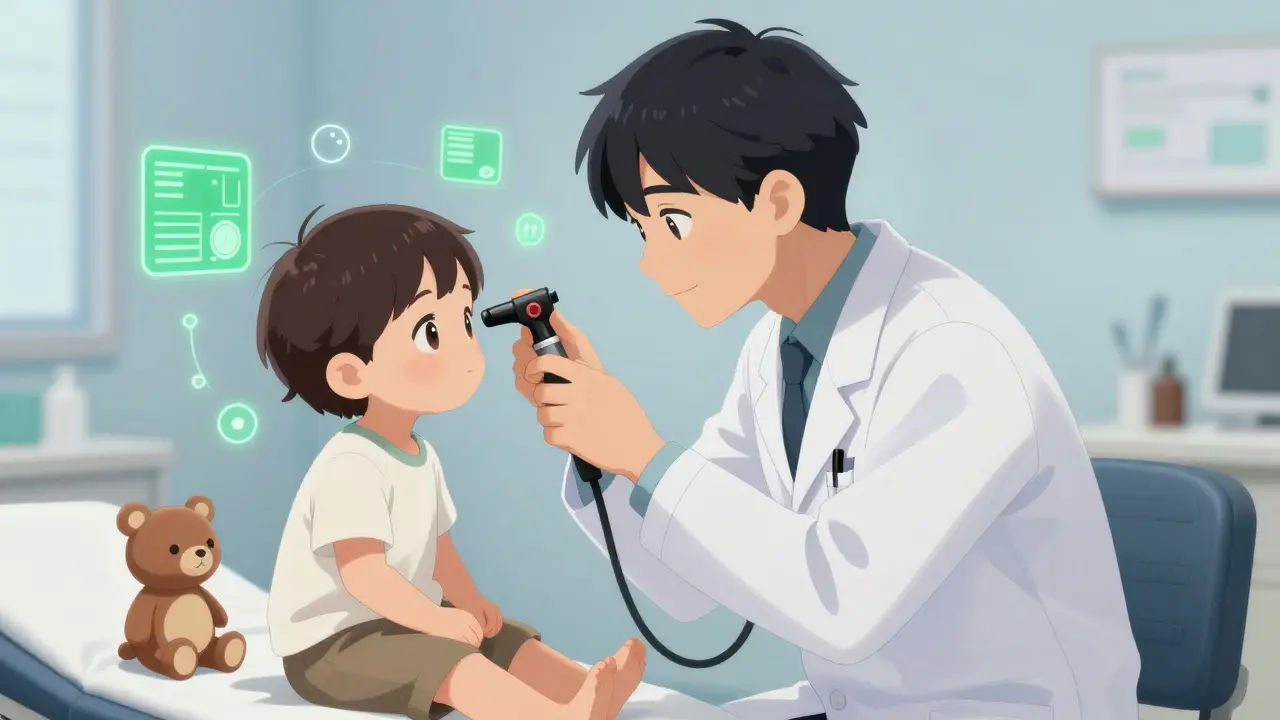
It’s not just about a child crying or tugging at their ear. Many parents assume ear tugging means infection, but that’s not always true. Doctors use a tool called a penumatic otoscope to look inside the ear. They check if the eardrum looks red, swollen, or bulging-and whether it moves when air is gently puffed into the ear canal. A normal eardrum flexes; an infected one is stiff and stuck.
In some clinics, especially those focused on pediatrics, they also use tympanometry, a quick test that measures how the eardrum responds to pressure changes. This helps confirm fluid is present. If hearing loss is suspected, an audiogram might be done. During an active infection, hearing can drop by 15 to 40 decibels-enough to make soft sounds hard to hear. That’s why kids with ear infections sometimes seem to ignore you or turn up the TV.
Antibiotics: When Are They Really Needed?
This is where things get tricky. For years, antibiotics were the go-to for every ear infection. But research has changed that. The American Academy of Pediatrics and the American Academy of Family Physicians now say: not every ear infection needs antibiotics.
Here’s the current guideline:
- For babies under 6 months: antibiotics are almost always recommended
- For kids 6 to 23 months: antibiotics if symptoms are severe (fever over 39°C / 102.2°F, ear pain lasting more than 48 hours) or if both ears are infected
- For kids 2 years and older: if symptoms are mild (low fever, mild pain), doctors often suggest watchful waiting for 48 to 72 hours
Why? Because 80% of uncomplicated ear infections clear up on their own within three days. Antibiotics only speed up recovery by about a day-and they come with risks.
The first-line antibiotic is amoxicillin, given at 80-90 mg per kg of body weight per day, split into two doses. For kids under 2, treatment lasts 10 days. For older kids with mild cases, it can be just 5 to 7 days. If a child is allergic to penicillin, alternatives include ceftriaxone (a single shot), cefdinir, or azithromycin.
Why Avoid Antibiotics When Possible?
Antibiotic overuse is a global problem. In the U.S., ear infections account for about 15 million antibiotic prescriptions every year-second only to sore throats. But here’s the catch: about 30-50% of Streptococcus pneumoniae strains in the U.S. are now resistant to penicillin. That means standard doses may not work anymore.
Also, antibiotics cause side effects. About 10-25% of kids get diarrhea. Around 5-10% get a rash. Some get vomiting or yeast infections. And every time antibiotics are used, it increases the chance of future infections being harder to treat.
Parents who’ve tried watchful waiting often report better outcomes. One parent on Reddit wrote: “We waited 48 hours. The fever broke, the crying stopped, and the infection vanished-no antibiotics needed. No diarrhea, no fuss.”
But there are exceptions. Some kids do get worse. A parent in Ohio shared: “After 72 hours of pain meds, my 2-year-old spiked a 104°F fever. We ended up in the ER with a ruptured eardrum.” That’s why watchful waiting isn’t for everyone.
What Should Parents Do at Home?
Whether or not antibiotics are used, pain control is the top priority. Here’s what works:
- Acetaminophen (10-15 mg per kg) every 4-6 hours
- Ibuprofen (5-10 mg per kg) every 6-8 hours-often more effective for inflammation
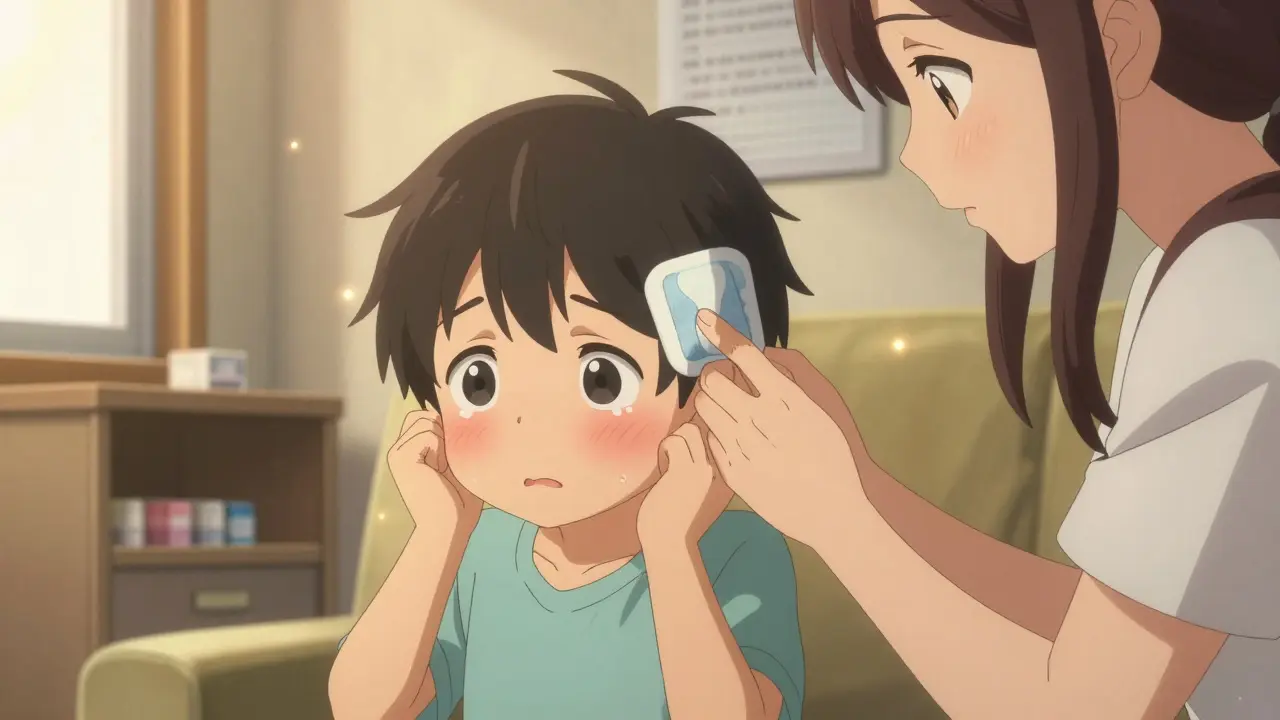
- A warm compress over the ear can help soothe pain
- Keep the child upright while feeding to reduce pressure on the ear
Never put ear drops in if the eardrum might be ruptured. Signs of rupture include sudden drainage of pus or blood from the ear, followed by pain relief. That’s actually a good sign-it means pressure was released. But it still needs a doctor’s check.
For families choosing watchful waiting, track symptoms. Use a simple notebook: note fever levels, pain intensity (on a 1-10 scale), eating and sleeping patterns, and any new symptoms like dizziness, facial drooping, or swelling behind the ear. If things get worse in 48 hours, call the doctor.
What About Vaccines?
One of the most effective ways to prevent ear infections is through vaccination. The PCV13 pneumococcal vaccine (Prevnar 13) has cut vaccine-type pneumococcal ear infections by 34% since it became routine. The newer 15-valent pneumococcal vaccine (Vaxneuvance), approved in 2021, shows even stronger protection in trials.
Flu shots matter too. Since flu often leads to ear infections, keeping up with annual influenza vaccines reduces the risk of secondary bacterial infections.
There’s also growing interest in probiotics, but a 2022 Cochrane review of 13 studies found no clear benefit in preventing ear infections. So don’t waste money on supplements claiming to prevent ear infections-stick to proven methods.

When to Worry: Red Flags
Most ear infections are harmless and resolve without trouble. But some signs mean you need to act fast:
- Fever over 104°F (40°C)
- Pain that doesn’t improve with ibuprofen or acetaminophen
- Drainage of pus, blood, or fluid from the ear
- Dizziness, balance problems, or vomiting
- Facial weakness or drooping on one side
- Swelling behind the ear or a bulge near the ear
These could signal complications like a ruptured eardrum, mastoiditis (infection of the skull bone behind the ear), or even meningitis. Don’t wait-get medical help immediately.
What About Recurrent Infections?
One in five kids has three or more ear infections in six months. That’s called recurrent acute otitis media. For these kids, doctors may suggest:
- Long-term low-dose antibiotics (less common now due to resistance concerns)
- Evaluation by an ear, nose, and throat (ENT) specialist
- Ear tubes (tympanostomy tubes) to help drain fluid
Ear tubes are small cylinders placed through the eardrum during a quick outpatient procedure. They stay in for 6 to 18 months and help prevent fluid buildup. Many parents report a dramatic drop in infections and better sleep and hearing after tubes are placed.
But tubes aren’t a magic fix. They don’t prevent colds. And some kids still get infections even with tubes. The decision should be made with an ENT specialist after reviewing the child’s history.
The Bigger Picture: Antibiotic Resistance and the Future
Doctors are shifting away from automatic prescriptions. In the Netherlands, watchful waiting has been standard for decades. In the U.S., prescribing rates dropped from 68% in 2010 to 59% in 2016-and that’s a win.
But resistance is rising. Haemophilus influenzae is becoming less responsive to amoxicillin-clavulanate (Augmentin), the second most common antibiotic used. Experts predict that within five years, point-of-care bacterial tests will let doctors quickly identify whether an infection is bacterial or viral-and choose the right treatment on the spot.
Meanwhile, tools like the CellScope Oto smartphone otoscope let parents take pictures of the eardrum and send them to the doctor. Studies show these images are 85% accurate compared to in-person exams. That means fewer unnecessary office visits and faster decisions.
The goal isn’t to avoid antibiotics forever. It’s to use them wisely-only when they’ll make a real difference.
Final Takeaways
- Not every ear infection needs antibiotics-many clear up on their own
- Pain relief with ibuprofen or acetaminophen is the first step
- Watchful waiting is safe for most kids over 2 with mild symptoms
- Antibiotics are essential for babies under 6 months and kids with high fever or severe pain
- Vaccines (PCV13, flu shot) are among the best prevention tools
- Call the doctor if fever spikes, pain doesn’t improve, or there’s drainage from the ear
Ear infections are common, but they don’t have to mean a prescription. With the right approach, you can protect your child’s hearing, avoid unnecessary meds, and help slow the spread of antibiotic resistance.







Eliana Botelho
I swear every time I take my kid to the doc for an ear thing they just hand out amoxicillin like it's candy. I waited 72 hours last time and the fever broke, the kid went back to eating mac and cheese like nothing happened. No antibiotics, no diarrhea, no drama. Why do we still treat ears like they're a crisis that needs a chemical reset?
Darren Gormley
LMAO 🤡 watchful waiting? That’s just lazy medicine. If your kid’s screaming and clutching their head, you don’t wait-you hit it with antibiotics like a fire extinguisher. This whole ‘let nature take its course’ thing is why we’re in the middle of a global superbug apocalypse. 🦠💀
Russ Kelemen
There’s a real art to knowing when to intervene and when to let the immune system do its job. I’ve seen parents panic over a 101°F fever and rush to the ER, only to find out it was just a viral cold that’d clear in 48 hours. The key isn’t fear-it’s observation. Keep a log, track symptoms, use ibuprofen, and if things plateau or worsen after 72 hours? Then it’s time to call. But don’t rush to antibiotics like they’re a magic wand. Your kid’s immune system needs practice, not a sledgehammer.
Natasha Plebani
The epistemological framing of otitis media as a binary pathology-either bacterial or viral-is deeply reductive. The Eustachian tube’s ontological vulnerability in early childhood is not merely anatomical but ecological: the microbiome’s dysbiosis, environmental toxin exposure, and even attachment patterns during feeding all co-constitute the phenomenological experience of ear infection. Antibiotic prescribing, then, is not a clinical decision but a symptom of biomedical hegemony over developmental autonomy. We must decenter the pharmacological paradigm and re-embed pediatric care within systems of ecological resilience.
Beth Cooper
Did you know the CDC secretly funds Big Pharma to keep pushing antibiotics? They don’t want you to know that ear infections are actually caused by 5G towers and chemtrails messing with kids’ inner ear frequencies. The ‘watchful waiting’ thing? That’s just the government’s way of making parents feel like they’re doing something while they slowly poison the population with resistance. My cousin’s kid got tubes and now he’s fine-but he also stopped watching TV. Coincidence? I think not.
Mike Rose
bro why are we even talking about this? just give the kid the antibiotic. i dont care if 80% get better on their own, my kid cries and i dont wanna hear it. plus the doc says so. amoxicillin = instant fix. end of story.
Jason Xin
I get why people are scared of antibiotics-they’re loud, they’re messy, and they come with side effects. But I also get why parents reach for them. When your kid can’t sleep, won’t eat, and is wailing like they’re being tortured, ‘watchful waiting’ feels like neglect. The real problem isn’t the antibiotics-it’s the lack of access to timely care. If you lived in a rural area with no pediatrician within 40 miles, you’d give the antibiotic too. We need better systems, not more guilt.
Yanaton Whittaker
USA still letting this happen? In my country we just give the shot and move on. No waiting, no ‘maybe’, no ‘let’s see’. We protect our children. If you’re too lazy to fix your kid’s ear, maybe you shouldn’t have kids. 🇺🇸 🇺🇸 🇺🇸
Sarah Blevins
The 2010–2016 decline in antibiotic prescribing for otitis media, while statistically significant, does not account for confounding variables such as regional variation in diagnostic criteria, changes in parental health literacy, or shifts in insurance reimbursement policies. A meta-analysis of primary care datasets from the National Ambulatory Medical Care Survey suggests that observed reductions may be attributable to increased documentation bias rather than true behavioral change in clinical practice.
Kathleen Riley
It is, in the final analysis, a profound moral imperative to resist the commodification of pediatric health under the auspices of clinical expediency. The normalization of watchful waiting, while ostensibly patient-centered, inadvertently institutionalizes a culture of deferred responsibility wherein the caregiver is left to navigate the labyrinthine terrain of physiological uncertainty without adequate support. One must ask: Is the reduction of antibiotic prescriptions a triumph of evidence-based medicine-or a quiet abdication of the physician’s duty to heal?