Mental Health Resources You Can Trust
When you or someone you care about is dealing with anxiety, depression, OCD or any other mental health challenge, the first thing you want is clear, reliable info. You don’t have time to wade through jargon‑filled articles or outdated advice. That’s why Bonnie Doon HealthNet brings you easy‑to‑read guides on the most common medications, conditions and safe supplement options.
Quick Look at the Latest Medication Guides
Two of our newest articles focus on drugs that often raise questions. First up is buspirone for OCD. Many people wonder if this anxiety medication can help when SSRIs and ERP therapy aren’t enough. Our guide breaks down the evidence, shows the recommended dosage, points out side‑effects and explains where buspirone fits in a modern treatment plan. It’s written with Australian prescribing rules in mind, so you’ll see the exact dose ranges used down under in 2025.
Next, we have a deep dive into olanzapine. This antipsychotic is prescribed for conditions like schizophrenia and bipolar disorder, but it’s also known for weight‑gain and metabolic concerns. Our article walks you through approved uses, safe dosing steps, common side‑effects and what to watch for if you’re driving or need to stay active. The guide includes practical monitoring tips that fit Australian health‑care guidelines.
Why Simple, Evidence‑Based Info Matters
Clinical research moves fast, and doctors often have to explain complex risk‑benefit ratios in a few minutes. Our summaries cut through the noise by highlighting the most relevant data, then translating it into plain language. No fancy terms—just the facts you need to decide whether a medication is right for you, how to ask your prescriber the right questions, and what signs to monitor at home.
We also compare supplements side‑by‑side with prescription meds. If you’re curious about St. John’s Wort, omega‑3 fish oil or vitamin D, you’ll find concise benefit‑risk tables, quality flags and dosing notes. That helps you avoid interactions, especially when you’re already on drugs like buspirone or olanzapine.
All of our content follows a strict evidence‑based process. We look at recent clinical trials, official prescribing information and real‑world safety reports. When a study suggests a new use, we note the level of confidence and any gaps that still need research.
Feeling overwhelmed? Start with the condition you’re most interested in, read the short drug summary, then scroll down to the practical tips box. That box gives you a checklist: dosage, key side‑effects, monitoring frequency, and a quick question to ask your doctor. It’s designed to turn information into action without extra hassle.
Whether you’re a patient, a caregiver, or a health professional, our goal is the same: give you trustworthy, up‑to‑date mental health info that’s easy to understand and ready to use today. Bookmark this page, come back when new meds are released, and keep your mental health decisions informed.
Learn how to recognize opioid overdose signs, respond in an emergency, and use naloxone to save a life. Fast action can prevent death - even if you're not a medical professional.
Learn how to use naloxone nasal spray to reverse an opioid overdose in 9 simple steps. Includes signs of overdose, dosing guidelines, what to do if it doesn’t work, and where to get it for free.
Understanding how medicines work at a molecular level is the foundation of safe medication use. From enzyme blockers to receptor binders, knowing the mechanism helps prevent dangerous interactions and side effects.
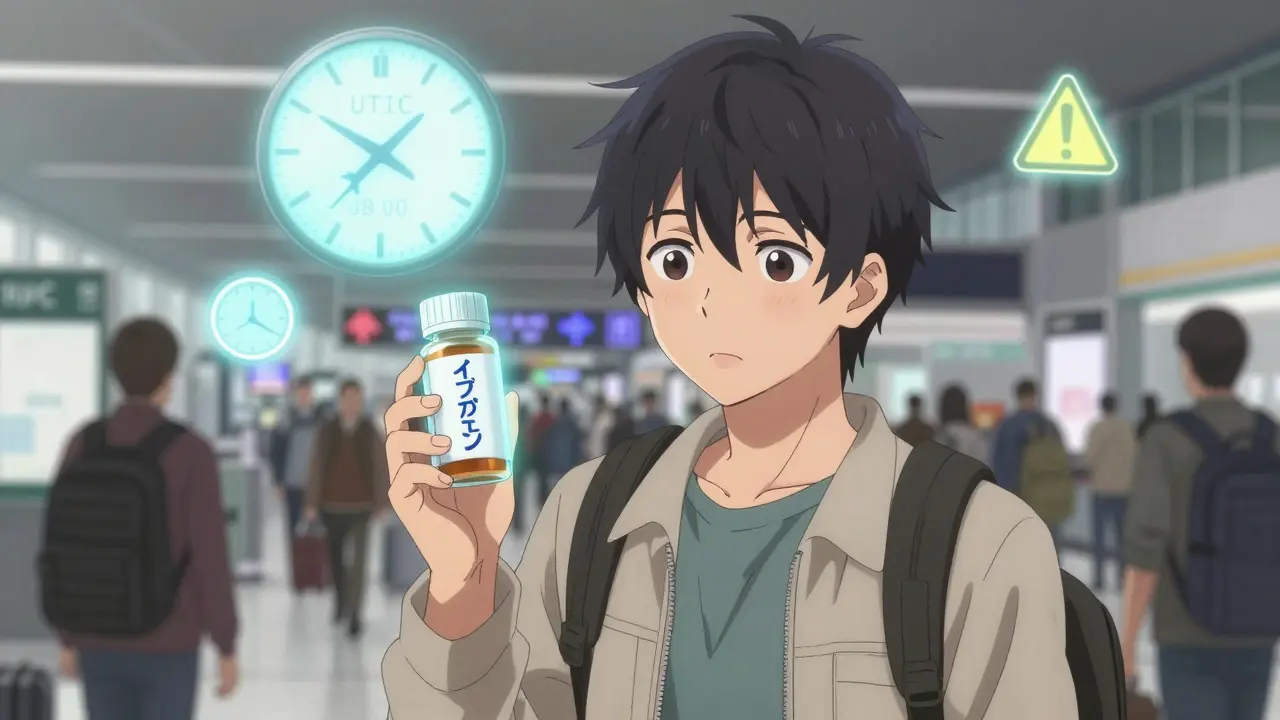
Learn how to read prescription labels for international travel, avoid customs seizures, and manage medication timing across time zones with expert tips and real-world examples.
Generic and brand-name drugs have the same active ingredients, so their risk for drug interactions is essentially identical. Learn the science behind bioequivalence and why switching to generics is safe for most people.
Learn how to report counterfeit or tampered medications safely and effectively. Step-by-step guide for patients and providers on using MedWatch, DEA tips, and global reporting systems to stop dangerous fake drugs.
Generic drugs are safe for older adults-but age-related changes in metabolism, polypharmacy, and drug sensitivity increase risks. Learn how to use generics safely with the Beers Criteria, pharmacist reviews, and smart medication habits.
Sedating antihistamines like Benadryl can impair alertness and reaction time without making you feel sleepy - putting workers in safety-sensitive jobs at serious risk. Learn which meds are safe and how to protect yourself.
Major Depressive Disorder affects 1 in 6 U.S. adults. Antidepressants and psychotherapy like CBT are proven treatments. Combination therapy works best for moderate to severe cases. Learn what actually helps-and what doesn’t.
Medication safety prevents harmful errors in drug use-like wrong doses, interactions, or mislabeling-that cause over 1.5 million ER visits yearly. Every patient can reduce risks by knowing their meds and speaking up.
Mixing alcohol with prescription drugs like opioids, benzodiazepines, or acetaminophen can cause life-threatening reactions. Learn which medications are most dangerous, who's at highest risk, and what steps to take to stay safe.
Learn how to prevent depression from coming back with proven strategies: maintenance medication, evidence-based therapy like CBT and MBCT, and lifestyle changes that actually work. Stop the cycle before it starts.